
Unbiased headlines. Facts, not spin.
Unbiased Headlines is an independently owned news organization. We bring you the facts, not opinions, written fresh from 110+ named sources. Sources linked so you can verify it yourself.
 health
Notable (6/10)
Event date: November 14, 2026 ·
CMS Lets States Hold Off on Medicaid Work-Requirement Disenrollments Until July 1; Jan. 1 Start Date Stays
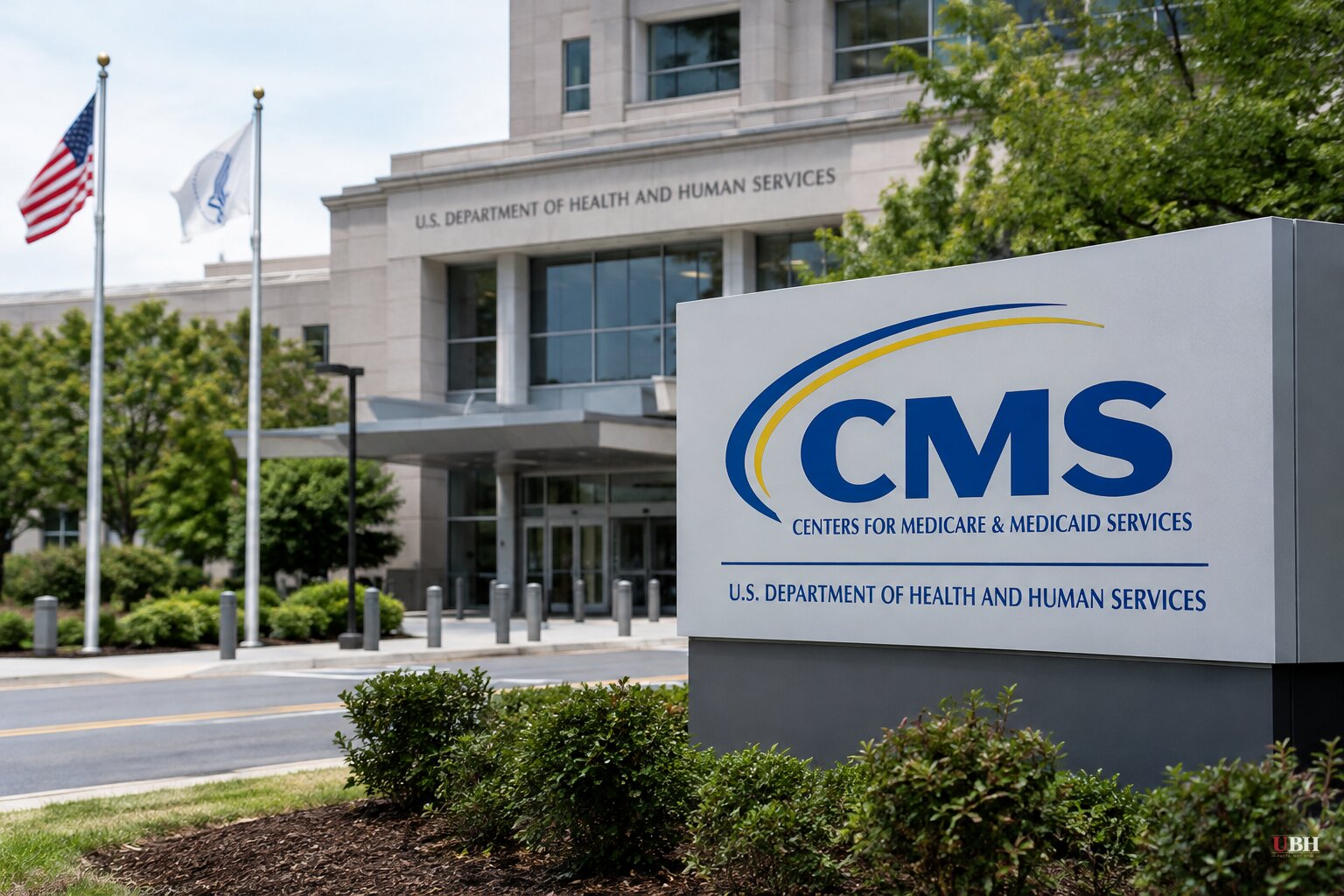
Since 25 states and the District of Columbia sued in June over the Trump administration's Medicaid work-requirement rule, and since a Boston federal judge ruled against part of it on Oct. 29, states have been racing a Jan. 1, 2027 deadline they were not ready for. On Friday, Nov. 13, CMS blinked.
The agency told state Medicaid directors they can request a "hold harmless" period running through June 30, 2027. During that window, states can suspend application denials and disenrollments for otherwise eligible people who fail to show they meet the requirement. Under the letter, the delay is optional. States that want to start enforcing on Jan. 1 still can.
What the delay does and does not change
The requirement itself stays on the books. The 2025 law known as the One Big Beautiful Bill Act requires many adults aged 19 to 64 in the Medicaid expansion population to work, volunteer, train, or attend school at least half-time for 80 hours a month. Forty states adopted that voluntary expansion.
States still have to run the checks. According to the CMS letter, they must determine whether enrollees and applicants meet the requirement or qualify for an exclusion. They just do not have to act on a failure until July 1.
CMS also said states operating within the terms of mitigation plans will avoid formal compliance action and penalties for higher eligibility error rates. The agency said states are making progress but face implementation challenges.
Kate McEvoy, executive director of the National Association of Medicaid Directors, said state Medicaid leaders "appreciate the additional flexibility that CMS is providing."
Kathy Hempstead, senior policy officer at the Robert Wood Johnson Foundation, told the Associated Press the extra six months should mean "fewer people that lose their coverage due to administrative failures." She added that it is unclear which states will use the time.
The court ruling behind the scramble
Judge Richard Stearns of the U.S. District Court in Boston ruled Oct. 29 that CMS went beyond the statute. The law lists categories of "medically frail" people: the blind or disabled, people with substance use disorders or disabling mental disorders, people with disabilities that significantly impair daily activities, and people with serious or complex medical conditions. CMS's rule added a further test, requiring them to show the condition "significantly impairs" their ability to comply with the work requirement.
Stearns found that definition unlawful. "Enforcement of an unlawful definition of 'medically frail' may lead to the disenrollment of otherwise eligible vulnerable individuals," he wrote.
That is an administration-authored complication on top of a law Congress passed. States had to rebuild systems around the rule, and now have to rebuild them again.
The judge did not side with the states across the board. He upheld CMS limits that restrict the lookback for verifying exemptions to 12 months and allow self-attestation only once per enrollment period. "The Government provided a non-frivolous rationale for adopting each provision," Stearns wrote. He also gave states a six-month stay of enforcement on medically frail determinations, according to the ruling as described by The Epoch Times.
A CMS spokesperson told The Epoch Times the agency does not comment on pending litigation.
Under the new CMS letter, states only need to verify that a person's condition falls into one of the five statutory medical-frailty categories, according to KFF's analysis. They do not have to make people prove the condition limits their ability to work.
Democrats set to take over in January
Sen. Ron Wyden (D-Ore.) and Rep. Frank Pallone Jr. (D-N.J.) wrote to CMS Administrator Mehmet Oz this week asking for a delay. Their letter said the frailty question "may not be definitively resolved for months, creating untenable uncertainty for states."
After the announcement, the two issued a joint statement calling the pause "a small step in the right direction" that "does not avert the disaster ahead." They said that as incoming chairs of the committees responsible for Medicaid, they are "preparing to lead a relentless fight" to preserve coverage. Democrats, who take control of both chambers in January, have said they want to roll back the requirements.
KFF's Jennifer Tolbert wrote that most Medicaid enrollees are working or would likely qualify for an exemption, but could lose coverage because of paperwork. Human Rights Watch and Oxfam America researchers estimated in May that 10 million people will likely lose coverage due to the hurdles. That figure is a projection from advocacy groups, not a count.
The administration's position, as stated in the CMS letter, is that states must keep working toward full compliance with the statute. The delay changes timing, not the law.
What comes next
Several questions remain open. Which states will request the hold-harmless period and which will begin enforcing Jan. 1 has not been announced. Litigation over the rule remains pending, according to CMS. And once the window closes on June 30, 2027, states can begin removing people on July 1, unless the Democratic-led Congress changes the law first.
Sources used for this briefing
7 links from 7 independent newsrooms (syndicated copies of the same report count once)
These are the sources it draws on, linked so you can verify.


