
Unbiased headlines. Facts, not spin.
Unbiased Headlines is an independently owned news organization. We bring you the facts, not opinions, written fresh from 110+ named sources. Sources linked so you can verify it yourself.
 economy
Notable (5/10)
Event date: October 30, 2026 ·
Clocks Fall Back at 2 a.m. Sunday as Senate Sits on House-Passed Permanent Daylight Saving Bill
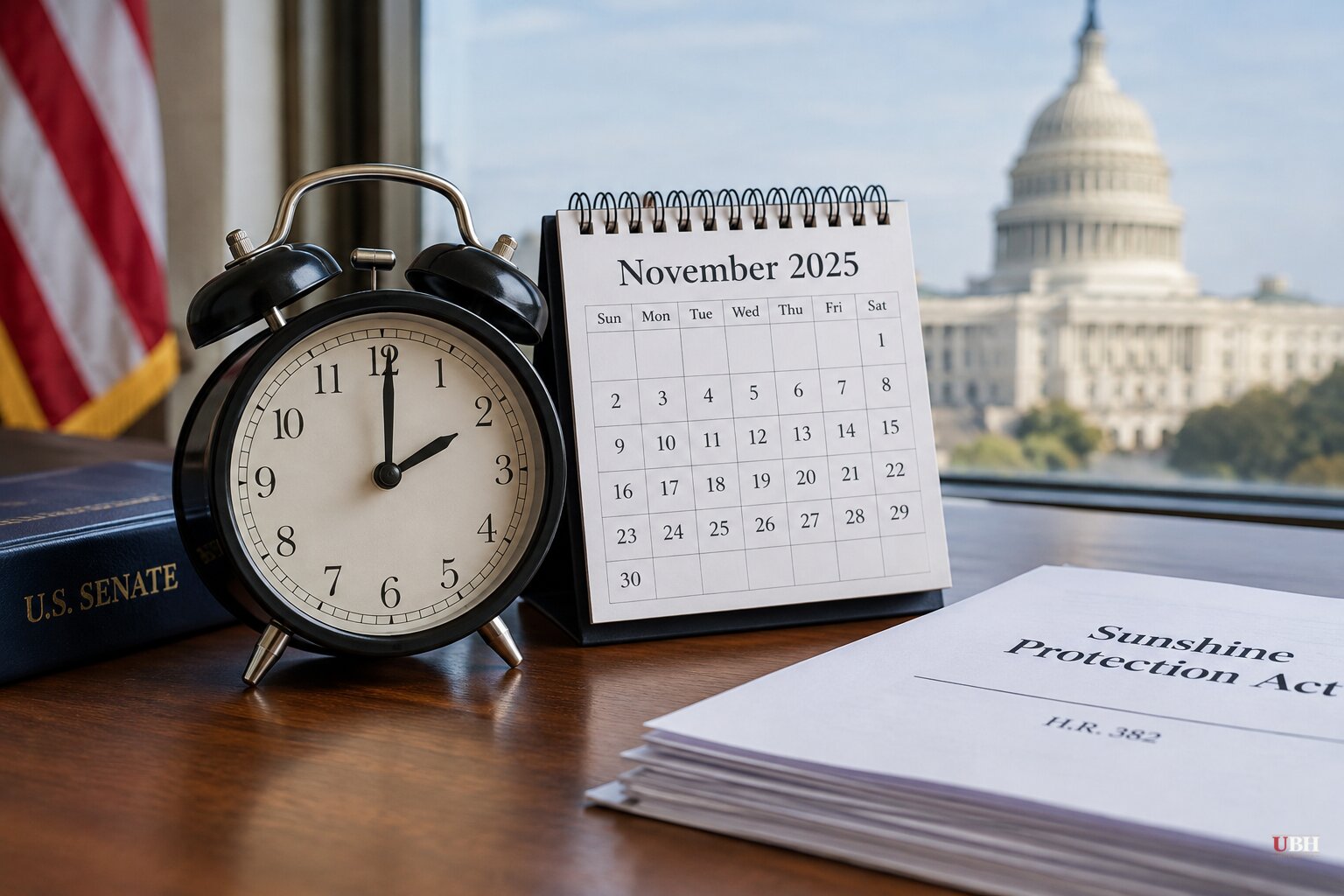
Clocks across most of the country go back one hour at 2 a.m. local time Sunday, Nov. 1. The time jumps from 1:59 a.m. to 1:00 a.m., and standard time returns until March 14, 2027.
Phones set to update automatically will make the change on their own. Anything else, from the oven to the car dashboard, is on you. A good habit is to reset the manual clocks before bed tonight, Oct. 31.
Who changes and who doesn't
Most of Arizona and Hawaii stay on standard time year round. So do American Samoa, Guam, the Northern Mariana Islands, Puerto Rico and the U.S. Virgin Islands.
The Navajo Nation is the exception inside Arizona. It observes daylight saving time, like its neighbors in New Mexico, Utah and Colorado, and will fall back with them.
The current schedule dates to the Energy Policy Act of 2005 and took effect in 2007. Daylight saving time starts the second Sunday in March and ends the first Sunday in November. That works out to roughly eight months of daylight saving and four of standard time.
Washington has tried, and stalled
The House passed the Sunshine Protection Act of 2025 on July 14 by a bipartisan vote of 308-117. Rep. Vern Buchanan of Florida sponsored it. The bill would repeal the part of the Uniform Time Act that sets the temporary annual daylight saving period, effectively locking the country on what is now called daylight saving time all year.
It then went to the Senate Commerce, Science and Transportation Committee and stopped there. The Senate is on an extended recess for the elections, and Newsweek reports it is unlikely to act before the end of 2026.
President Donald Trump wants it done. In August he posted on Truth Social: "PASS THE SUNSHINE PROTECTION ACT, ASAP." He called clock changes "foolish, inconvenient and, in some cases very costly." In a separate post he urged passage of what he called the "NO MORE CHANGING THE CLOCKS ACT," arguing that more evening daylight could help fight crime.
His own party's Senate leader has not delivered. Thune said earlier this month there is "no clear path forward or consensus" in the chamber.
The case against locking in daylight saving
The resistance is not coming from Democrats alone. Sen. Tom Cotton, an Arkansas Republican, wrote on X earlier this month: "No one likes changing the clock, me included, but Congress has enacted permanent Daylight Savings Time multiple times before and repealed it each time once Americans experienced absurdly late sunrises in the winter. Arkansans don't want their kids going to school in the pitch dark, and I'll always put Arkansas first."
The history backs up the pattern he describes. Congress established daylight saving in 1918 and repealed it in 1919. It was re-enacted for World War II and observed from 1942 to 1945. The Uniform Time Act of 1966 then standardized the dates while letting states and localities opt out.
President Richard Nixon moved the country to year-round daylight saving in 1974. The extended morning darkness was widely panned and blamed for incidents of students being struck by vehicles, and Congress reversed the change.
NBC News reports that many health and sleep experts also oppose permanent daylight saving, citing risks to health and safety.
Supporters see it differently. Rep. Gus Bilirakis of Florida argues that predictable daylight hours would benefit the economy and encourage outdoor activity. He points to tourism as a cornerstone of Florida's economy.
What the switch does to your body
This is the easier of the two changes. Dr. Raghu Upender, medical director of the Vanderbilt Sleep Disorders Center, says most people enjoy the extra hour, especially since many sleep in on weekends and Monday morning.
The tradeoff is darkness. "Because it gets darker sooner in the evening, some people may experience more fatigue on their commute home and this could increase the risk of accidents," Upender said.
His advice is to start adjusting several days ahead and get light exposure in the morning. Open the curtains, turn on the bright lights or take a walk. He says most people adjust within a few days.
Fire departments use the date as a reminder to replace batteries in smoke detectors and carbon monoxide alarms. Smoke detectors should be tested monthly.
Halloween quirk
The clock change lands the night after Halloween. The Old Farmer's Almanac says that last happened in 2020 and will not happen again until 2037.
The extra hour does not automatically mean extra bar time. NBC News notes that some jurisdictions let bars follow the updated time for last call. California rules require bars to stop serving alcohol two hours past midnight regardless of the repeated 1 a.m. hour.
What comes next
Standard time stays until daylight saving resumes at 2 a.m. Sunday, March 14, 2027. The clocks fall back again Sunday, Nov. 7, 2027.
The Sunshine Protection Act sits in the Senate Commerce Committee with no vote scheduled. The open question is whether Trump's pressure on Senate Republicans can overcome the objections Thune and Cotton have already put on the record.
If the Senate doesn't act before the end of 2026, the bill would have to start over in the next Congress.
Sources used for this briefing
8 links from 8 independent newsrooms (syndicated copies of the same report count once)
These are the sources it draws on, linked so you can verify.


