
Unbiased headlines. Facts, not spin.
Every story is an unbiased news briefing written from 110+ sources across the spectrum — sources linked so you can verify it yourself.
 economy
Notable (6/10)
June 23, 2026 at 12:52 AM
economy
Notable (6/10)
June 23, 2026 at 12:52 AM
Clive Davis, Who Built Modern Pop Music From a Harvard Law Degree, Dies at 94
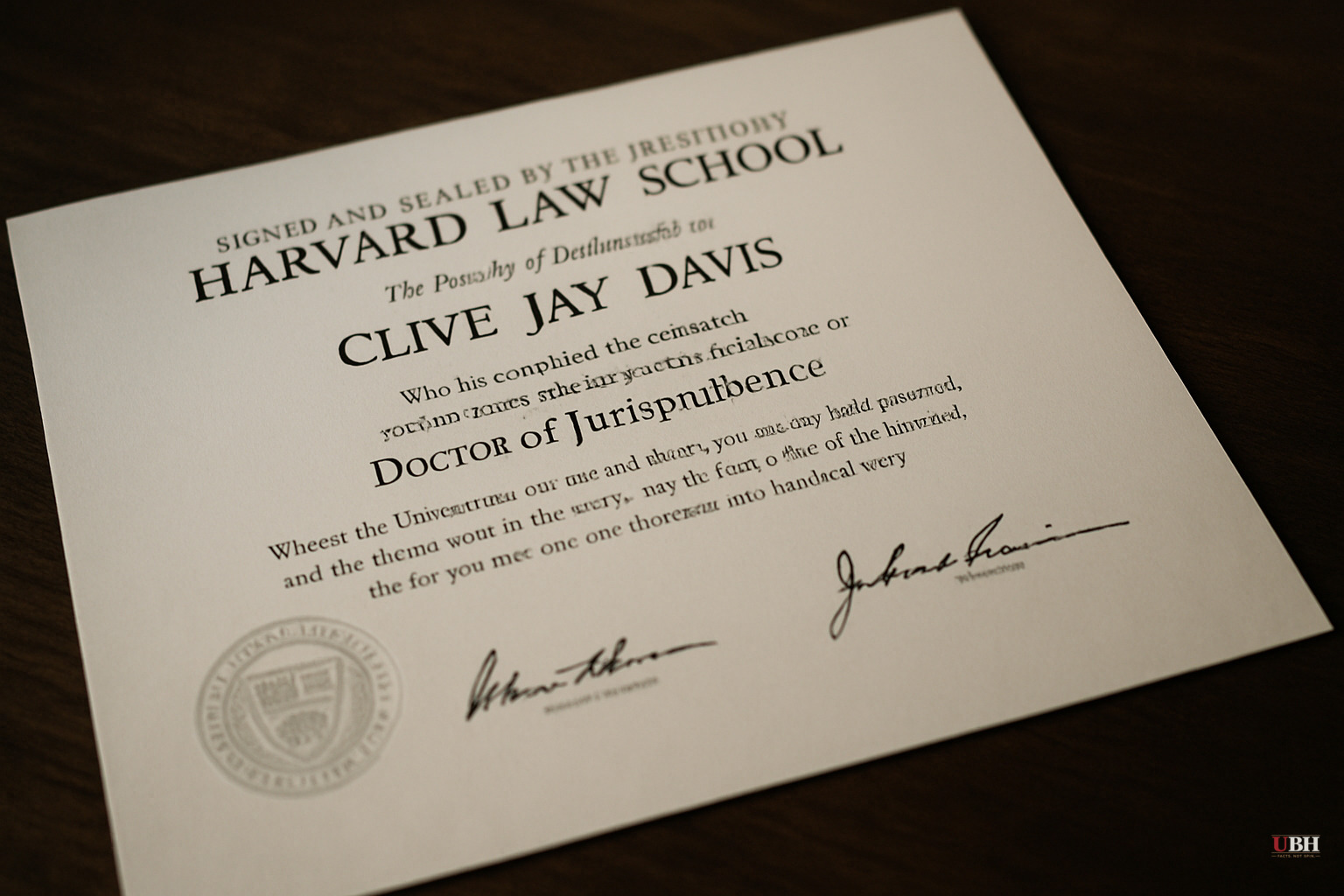
Clive Davis died Monday at his Manhattan apartment at age 94. His family confirmed the death to the New York Times. He had been hospitalized earlier this year for an upper respiratory issue, was released after a few days, and died at home while recovering, according to BBC News.
His family released a statement: "To the world, our father was the iconic music legend whose vision, instincts, and relentless pursuit of excellence shaped the soundtrack of countless lives."
Davis is survived by four children — Fred, Doug, Mitchell, and Lauren — plus eight grandchildren and two great-grandchildren, according to the Daily Wire.
The Lawyer Who Remade an Industry
Davis was born April 4, 1932, in Brooklyn's Crown Heights neighborhood. His parents died while he was still a student. He graduated from Harvard Law School and took a job as legal counsel at Columbia Records by his own account knowing nothing about music.
"I knew nothing about music. I knew nothing about what awaited me," he said in the documentary Clive Davis: The Soundtrack of Our Lives, as reported by Breitbart. "But I did seize that opportunity."
CBS executives pushed him from law into management. He became vice president of Columbia in 1965 and president shortly after, per BBC News. A turning point, by his own telling, was the Monterey Pop Festival, which he later described as life-changing. Awestruck by Joplin and the social and musical revolution she embodied, he signed her that night, per Breitbart.
He later founded Arista Records and then J Records, maintaining influence into his 80s. His longevity in the industry was almost without precedent in a business that discards executives as fast as it discards artists.
What He Built
The roster is almost absurd in its breadth. At Columbia: Santana, Aerosmith, Pink Floyd, Bruce Springsteen, Billy Joel, Simon and Garfunkel, Bob Dylan, Patti Smith, Lou Reed, the Grateful Dead. At Arista: Whitney Houston, Aretha Franklin, Barry Manilow. At J Records: Alicia Keys. He also conceived of Santana's 1999 comeback album Supernatural, which won a record-tying eight Grammys and gave Santana more success than he had ever enjoyed in his decades-long career, according to CNBC.
He had Rod Stewart abandon rock for standards from the Great American Songbook. That album, released in 2003, sold millions and was so successful it spawned four titles in all, CNBC reported.
He won five Grammy Awards over his career and was inducted into the Rock and Roll Hall of Fame as a non-performer in 2000, according to the Daily Wire.
Bruce Springsteen posted on Instagram: "At 22 years old, he changed my life when he signed me to Columbia Records. He treated me with the same respect and kindness as a 22-year-old nobody as he did after all my success. A great man."
Carlos Santana said, per the Daily Wire: "Clive Davis was a visionary. He could hear the intangible before anyone else could see it."
Aretha Franklin once called him "the greatest record man of all time," as quoted by Breitbart. Barry Manilow offered a sharper summary: "Clive has the mind of a bank executive and the ears of a teenager."
The Whitney Houston Chapter
No relationship in Davis's career was more consequential, or more complicated, than his bond with Whitney Houston. He signed her to Arista as a teenager and shepherded her to the top of pop music. She became one of the best-selling artists in history before drug addiction derailed her career.
Houston died in a Los Angeles hotel room in February 2012, hours before she was scheduled to appear at Davis's annual pre-Grammy gala. Davis wrote in his 2013 memoir, The Soundtrack of My Life, that he had believed she was turning her life around: "Maybe I should have been more skeptical, but I've always been optimistic, and I felt hopeful."
CNBC's coverage explores the Houston story in depth and includes Davis's own reflection on the limits of his optimism, a detail the other outlets either skip or compress.
He Also Got Things Wrong
Fairness requires saying plainly: Davis did not bat 1.000. CNBC notes he turned down a chance to sign Meatloaf, and his professional relationships were not without friction. BBC News reported that his editorial instincts could "ruffle feathers." He famously pushed Simon and Garfunkel toward "Bridge Over Troubled Water" when the duo was uncertain about it, and he sent back Springsteen's early demo demanding a hit single. Springsteen went to the beach and wrote "Blinded by the Light" and "Spirit in the Night" the same night. "That was a good call," Springsteen has joked, per Breitbart.
The strongest counterpoint to the hagiography is simply that Davis operated as a powerful gatekeeper in an industry that had, and still has, serious questions about how it treats artists financially and contractually. He was a lawyer first, and the same skills that let him keep Bob Dylan at Columbia and defeat a federal antitrust suit were also tools of leverage in an industry where artists rarely held the power. None of the sources in this report raise that criticism directly, and Davis's artists have spoken warmly of him. But the music industry's structural inequities existed on his watch, and he was among the most powerful people shaping them.
What Comes Next
Davis's annual pre-Grammy party was widely considered the music industry's most important social gathering. Whether that tradition continues, and who if anyone has the stature to fill that particular room, is a genuine open question for the industry he shaped over more than five decades.
Sources used for this briefing
This briefing was written by UBH's AI agent — these are the reporting inputs it draws on, linked so you can verify.


