
Unbiased headlines. Facts, not spin.
Unbiased Headlines is an independently owned news organization. We bring you the facts, not opinions, written fresh from 110+ named sources. Sources linked so you can verify it yourself.
 finance
Notable (6/10)
Event date: October 23, 2026 ·
Circle CEO Says Democrats Won't Repeal GENIUS Act as OCC Finalizes Stablecoin Rules
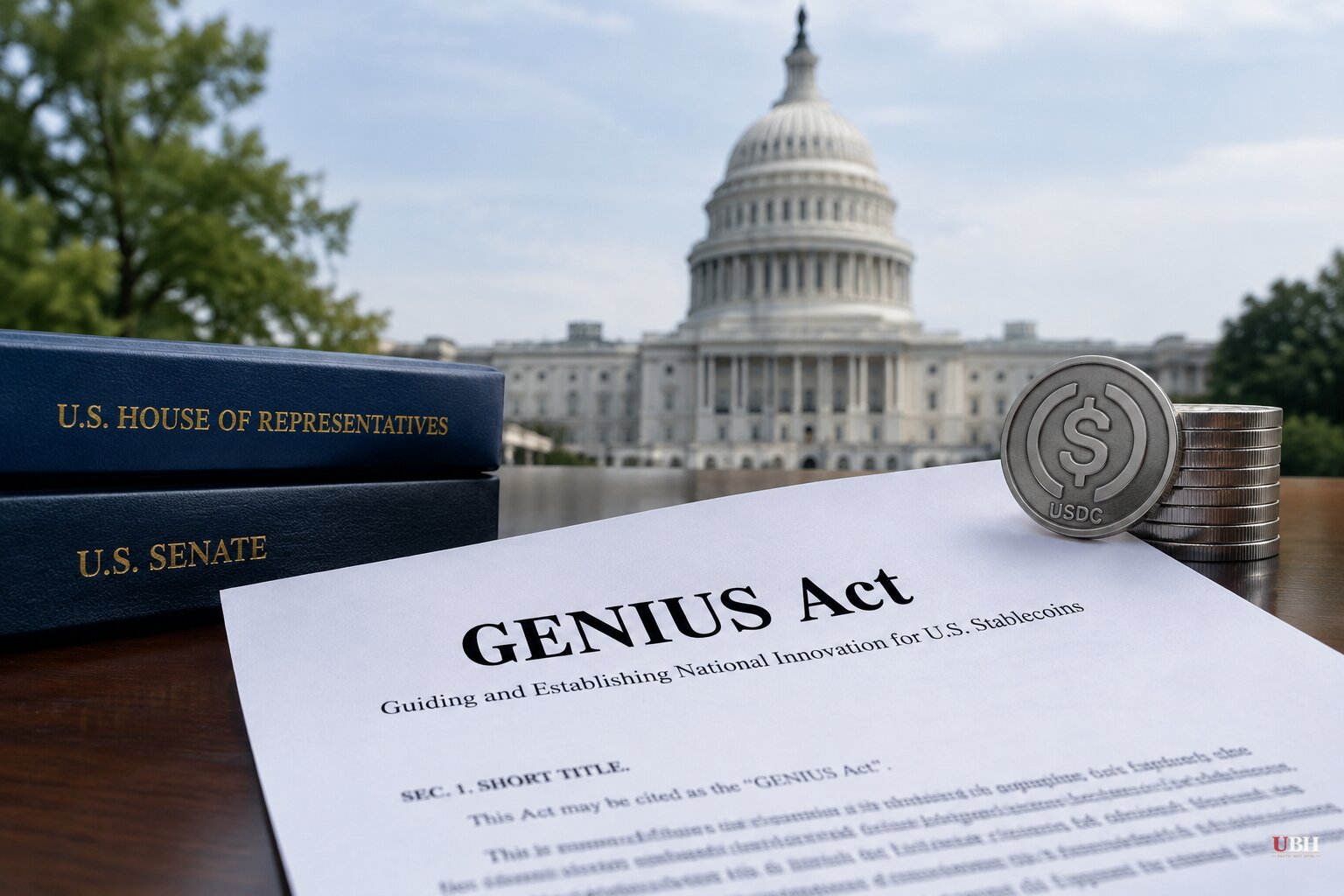
Circle CEO Jeremy Allaire says the stablecoin law is safe whichever party wins the House. His evidence is the vote count.
Allaire made the case in a CNBC interview on Oct. 21. He called the GENIUS Act "the only major piece of bipartisan legislation" passed in two years and said it is not "something that's at risk of being reversed." He allowed that "other areas of crypto" may still face questions.
The vote record
President Trump signed the GENIUS Act on July 18, 2025. The Senate passed it 68-30. The House passed it 308-122.
That included 18 Senate Democrats and 102 House Democrats voting yes. Allaire's argument is that the Democrats who would run a flipped House are largely the ones who helped pass the law.
The numbers cut both ways. House Democrats split 102 to 110 on final passage, so more Democrats voted no than yes. Allaire's claim is a prediction about future behavior, and the vote tally does not settle it.
He also has a stake in the outcome. Circle issues USDC, whose circulation reached $73.3 billion in the second quarter of 2026, up 19% from a year earlier.
The OCC rules land
The Office of the Comptroller of the Currency released its final implementing rules the same day as the interview, Oct. 21. They set standards for permitted payment stablecoin issuers, foreign issuers under OCC jurisdiction, and certain custody activities at institutions the agency supervises. Reserve backing, redemption and risk management are covered, along with capital ratios.
The core requirement is full 1:1 reserves. Every stablecoin in circulation must be backed by an equivalent asset. The law also bars non-permitted issuers from putting payment stablecoins into the U.S. market.
The law firm Orrick, analyzing the OCC's earlier proposal, said it would require redemption at face value within two business days and would prohibit issuers from paying interest to holders.
Treasury Secretary Scott Bessent called the law a "watershed moment in American finance." He compared it to Abraham Lincoln's National Currency Act of 1863, saying the OCC's rule "provides a clear, practical foundation for private-sector innovation, competition, and American leadership in digital assets."
The OCC said it received hundreds of comments from crypto companies, community banks, trade groups and academics.
What is still unfinished
Federal regulators missed the July 18, 2026 deadline in the statute. The law required multiple agencies to build a new supervisory framework from scratch.
The final rule skips the Bank Secrecy Act, anti-money-laundering and OFAC sanctions provisions. Those will go through a separate rulemaking with the Treasury Department.
The OCC has also not said when it will begin accepting applications and waiver requests from prospective issuers. It said that announcement will come separately.
Both the law and the final rule take effect Jan. 18, 2027.
Bitcoin, AI and the pitch
CNBC's Seema Mody pressed Allaire on why Bitcoin has lagged this year. He brushed it off, saying he pays little attention to the price of digital commodities. Stablecoins target $1 and do not track Bitcoin's swings.
Allaire instead pushed digital dollars as infrastructure for AI agents, software that completes tasks on its own. He said that shift will create demand for digital dollars and for blockchains built for machines. He cited JPMorgan, BlackRock and Visa as clients using Circle's platform and pointed to growing activity on Arc, the blockchain Circle launched in September. He offered no figures measuring the AI-driven demand.
The broader crypto rulebook remains unfinished. The CLARITY Act, Congress's wider crypto market-structure bill, did not pass the Senate. Meanwhile banks are moving into the space, and 21 institutions have committed to forming a joint stablecoin issuer.
The next concrete marker is the OCC's announcement of when applications open, ahead of the Jan. 18, 2027 effective date. The separate Treasury-coordinated anti-money-laundering rulemaking has no announced timeline.
Sources used for this briefing
7 links from 6 independent newsrooms (syndicated copies of the same report count once)
These are the sources it draws on, linked so you can verify.


