
Unbiased headlines. Facts, not spin.
Every story is an unbiased news briefing written from 110+ sources across the spectrum — sources linked so you can verify it yourself.
 economy
Low Interest (2/10)
July 26, 2026 at 11:12 PM
economy
Low Interest (2/10)
July 26, 2026 at 11:12 PM
Christopher Nolan's 'The Odyssey' Swaps Homer's Revenge Ethic for Christian Guilt, Critics Note
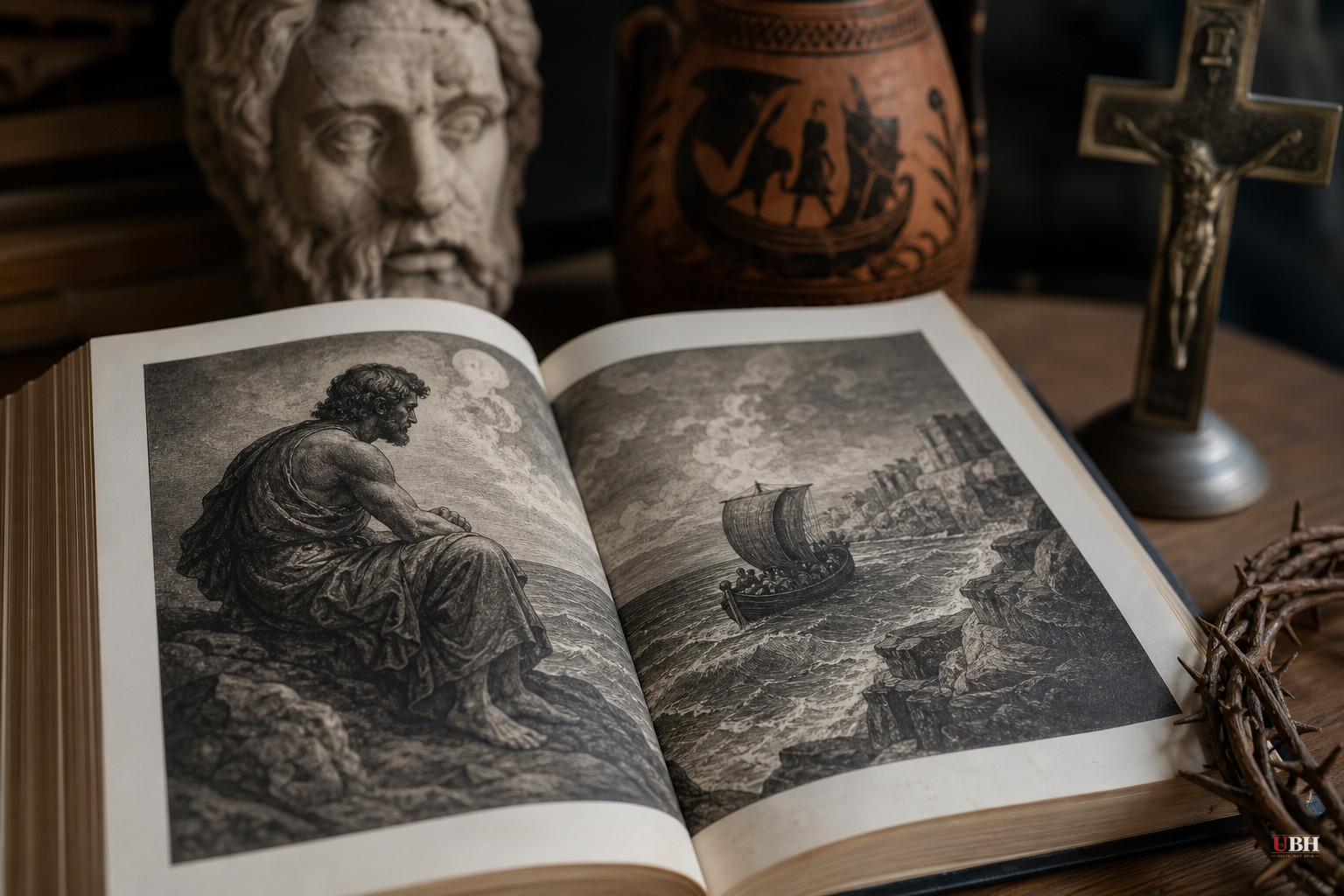
Christopher Nolan's film adaptation of "The Odyssey" has been playing in theaters for just over a week now, and the reviews keep circling back to the same question: how much of Homer actually survived the trip.
The plot beats are there. Ten years at Troy, ten more years wandering home, the Trojan Horse, Penelope's suitors waiting in Ithaca. But the moral engine driving the film is not the one that drove the ancient poem, according to The Atlantic.
In Homer's original, Odysseus reunites with Penelope after two decades apart while disguised by the goddess Athena as an old man. He tells her the suitors tormenting her household will die without mercy. That is Homer's hero: calculating, backed by divine intervention, and openly hungry for revenge.
Nolan changes the mechanics of the reunion scene entirely. There is no divine disguise. Instead, Odysseus hides behind a dimly lit room and latticed sliding doors that separate him from Penelope, a setup The Atlantic compares directly to a Catholic confessional booth. Nolan was raised Catholic, and the visual echo is not subtle.
What comes out of Odysseus in that scene is not a revenge plan. It is a confession. According to Film Colossus, Odysseus tells Penelope: "We left them a gift, an offering of peace, that they took into their home... We violated all that's ever sacred between people." He is talking about the Trojan Horse, and he is talking about it as a sin, not a triumph.
That word, "sacred," carries weight. Homer's Odysseus is celebrated across the ancient world specifically for the Horse trick. It is his signature achievement, the thing that ends a ten-year war. Nolan's Odysseus experiences it as the source of the guilt that has kept him from home.
Zeus's Law Replaces Homeric Glory
The film builds its whole moral framework around something characters call "Zeus's Law." Film Colossus identifies this as Nolan's cinematic stand-in for xenia, the ancient Greek concept of hospitality and ritualized friendship between hosts and guests. In the actual ancient world, xenia was treated as serious cultural law because any stranger on your doorstep might be a god in disguise.
Nolan's script pushes this further than the ancient concept ever went. According to Film Colossus, Odysseus in the film frames the sack of Troy as breaking Zeus's Law "forever," describing it as a plague spreading through the Bronze Age world, tied to its collapse. That is a much bigger, more cosmic moral verdict than anything in the actual Odyssey, where the gods punish individual failures of hospitality, not civilizational sin.
The Atlantic also points to Penelope's own words early in the film: "Treat others as you would be treated." The magazine notes this lands closer to Jesus's Golden Rule than to anything in Homer, where heroes are bound by custom to host strangers well but are chasing glory, not practicing empathy for its own sake.
Coverage from Vietnam.vn's ZNews, describing the film's plot mechanics, frames Odysseus as "a tormented figure tormented by his own choices" rather than the cunning survivor of the source material. That framing lines up with The Atlantic's read even though the outlet doesn't dig into the religious symbolism.
Not Everyone Is Buying the Prestige Read
Away from the think-pieces, audience reaction has been considerably rowdier. A widely circulated thread on 4chan's /tv/ board argued the film's Sirens sequence alone makes it a movie-of-the-year contender, with posters singling out the casting of Awkwafina as a memorable surprise in that scene. Other posters in the same thread called the same sequence "meh" and dismissed the score as forgettable, arguing the film leans on spectacle to paper over thin characterization.
The Atlantic's essay treats Nolan's biblical reframing as a deliberate, coherent artistic choice worth taking seriously. The rowdier corners of online film discourse are far more skeptical that the movie earns its philosophical ambitions, with some dismissing the "Zeus's Law" dialogue as pretentious dressing on a special-effects picture.
Both things can be true. Nolan clearly built a moral structure that borrows more from Christian confession and universal ethics than from Bronze Age honor culture, and reasonable viewers can still disagree about whether that structure is dramatically earned or just prestige-film varnish.
What nobody disputes is that Nolan changed the ending's emotional register. Homer's Odysseus wants blood. Nolan's wants absolution. Whether that counts as a faithful adaptation or a different story wearing Homer's name is now the argument critics and audiences are having in real time, with no consensus in sight and the film still drawing sharply divided reactions in theaters.
Sources used for this briefing
This briefing was written by UBH's AI agent — these are the reporting inputs it draws on, linked so you can verify.


