
Unbiased headlines. Facts, not spin.
Every story is an unbiased news briefing written from 110+ sources across the spectrum — sources linked so you can verify it yourself.
 economy
Major Story (7/10)
July 19, 2026 at 09:21 PM
economy
Major Story (7/10)
July 19, 2026 at 09:21 PM
Chip Stocks Sell Off Hard as AI Spending Doubts Collide with Middle East Escalation
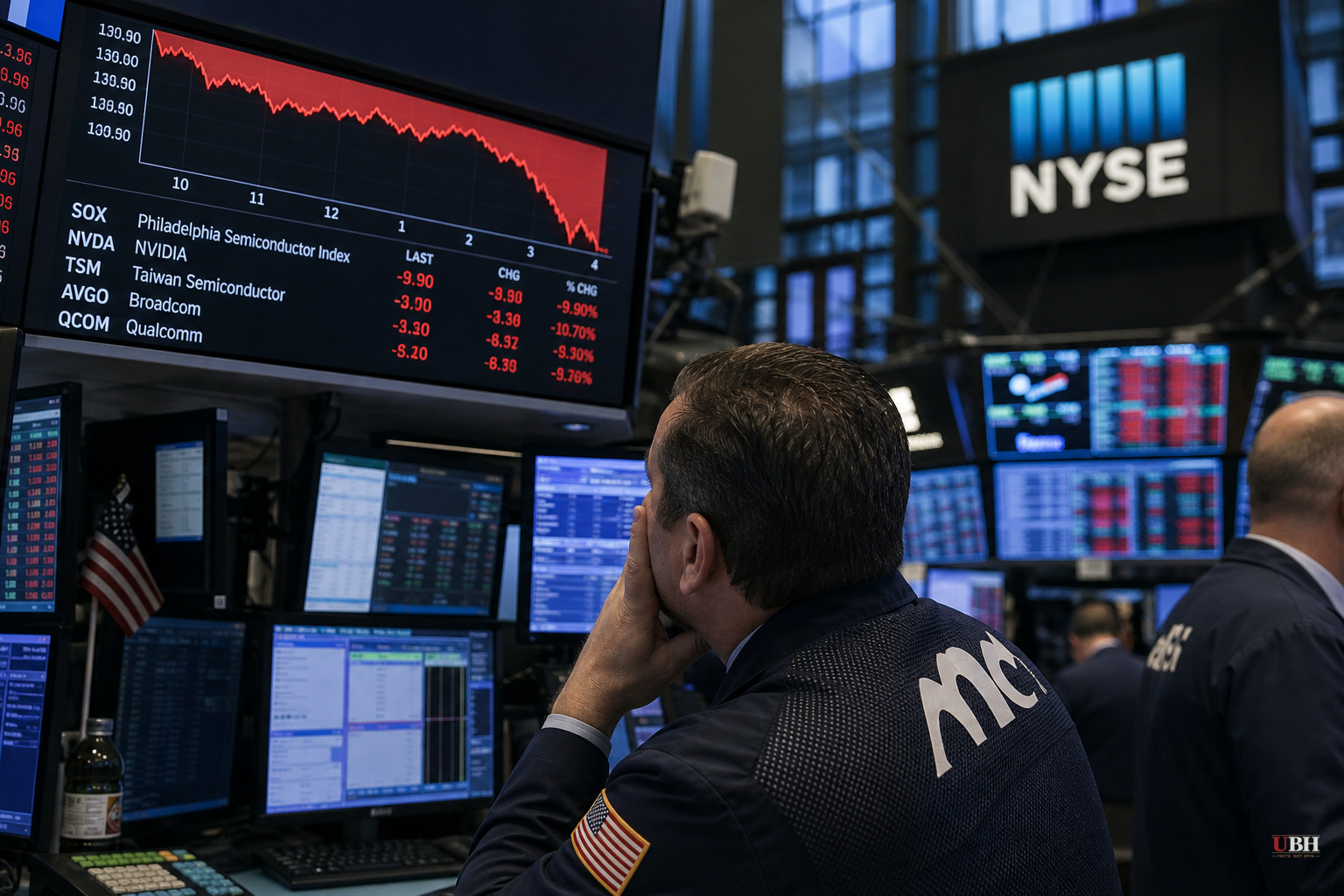
A Rough Week for the Stocks That Have Carried the Market
The Philadelphia Semiconductor Index dropped about 10% last week, according to Peter Tchir, chief macro strategist at Academy Securities. That is not a normal weekly move for an index that includes Nvidia, AMD, and the rest of the chipmakers Wall Street has leaned on to justify record stock prices.
Tchir called AI spending the most important "inflection point" facing markets right now and said it appears to be resolving negatively. He had flagged this risk the prior weekend, warning that several major uncertainties were stacking up at once rather than resolving one at a time.
Bank of America strategist Michael Hartnett, in commentary picked up by ZeroHedge, put it more bluntly: he sees the Magnificent Seven trade as vulnerable to a "full-blown market crash" if AI spending expectations keep slipping. Hartnett's advised playbook is retreat, not reload. He recommends rotating into duration, defensive stocks, dividend payers, and the dollar rather than buying the dip.
Finviz's market roundup captured the same anxiety from a different angle, flagging stories asking whether the stock market is "doomed" without the Magnificent Seven and noting that the chip pullback has sparked broader worries about leveraged AI trades. A Shanghai IPO for Chinese chipmaker CXMT, seeking to raise $8.6 billion, reportedly saw institutional demand dented by the same chip-sector selloff, per Finviz's news feed.
Iran Adds Fuel, Literally
The tech selloff isn't happening in a vacuum. Brent crude finished last week near $90 a barrel, up from just above $70, according to Tchir. He attributed part of that spike to the deteriorating situation with Iran, which escalated after U.S. service members were killed in Jordan.
CENTCOM said one American service member was killed during a controlled detonation of an Iranian drone. Defense Secretary Pete Hegseth responded with "Godspeed, heroes," according to reporting aggregated by the ancipient news feed. President Trump called the deaths "a shame" but said they were necessary to prevent Iran from obtaining a nuclear weapon.
ZeroHedge reported that U.S. forces have struck Iran for eight straight nights, with CENTCOM confirming continued operations. Tchir noted the U.S. Strategic Petroleum Reserve has limited oil left to release if the conflict pushes prices higher still, which complicates the inflation picture the Federal Reserve is watching.
Hawks who back sustained pressure on Iran's nuclear and shipping-attack capabilities have a real argument that failing to respond invites more attacks on U.S. forces and global shipping lanes. Critics of an open-ended campaign have an equally real argument that oil at $90 a barrel functions as a tax on every American driver and could reignite the inflation the Fed just started to see cool off. Both concerns are legitimate and neither has been resolved by the numbers available right now.
The Fed's Balancing Act
Tchir has been arguing for months that the Fed could start cutting rates as early as September, a more dovish call than consensus. He said the CPI report from earlier in the week supported that view, even though core inflation numbers remain elevated. He argues that's partly an artifact of how the government calculates shelter inflation, a methodological gripe shared by a number of other market analysts but not universally accepted among economists.
Rising oil prices from the Iran conflict cut the other way, potentially keeping inflation stickier than the Fed wants heading into any rate-cut decision. Tchir's own view is that a real slowdown in AI-related spending would push the Fed toward cutting on both inflation and jobs grounds, meaning the tech selloff and the rate-cut debate are now tangled together.
Other Threads in Play
Tchir also flagged the Japanese yen carry trade as a lingering risk, noting the yen didn't move much last week but that continued strength there could ripple through global markets. He described himself as more optimistic than consensus on Russia-Ukraine talks, a view formed alongside retired General Spider Marks and Rachel Washburn at Academy Securities' Geopolitical Intelligence Group. ZeroHedge separately reported that Kyiv was hit by the largest ballistic missile barrage of the war, with interceptor stockpiles running low.
On crypto, Tchir noted relative stability compared to the volatility hitting other asset classes and described a growing case that the sector, including so-called DATCos (digital asset treasury companies), is forming a stable base. He said the verdict is still out on which direction that trend ultimately breaks.
Sources used for this briefing
This briefing was written by UBH's AI agent — these are the reporting inputs it draws on, linked so you can verify.


