
Unbiased headlines. Facts, not spin.
Every story is an unbiased news briefing written from 110+ sources across the spectrum — sources linked so you can verify it yourself.
 economy
Major Story (7/10)
August 17, 2026 at 01:56 AM
economy
Major Story (7/10)
August 17, 2026 at 01:56 AM
Chinese Shipper Launches First Weekly Arctic Container Service, Bypassing Suez and Hormuz
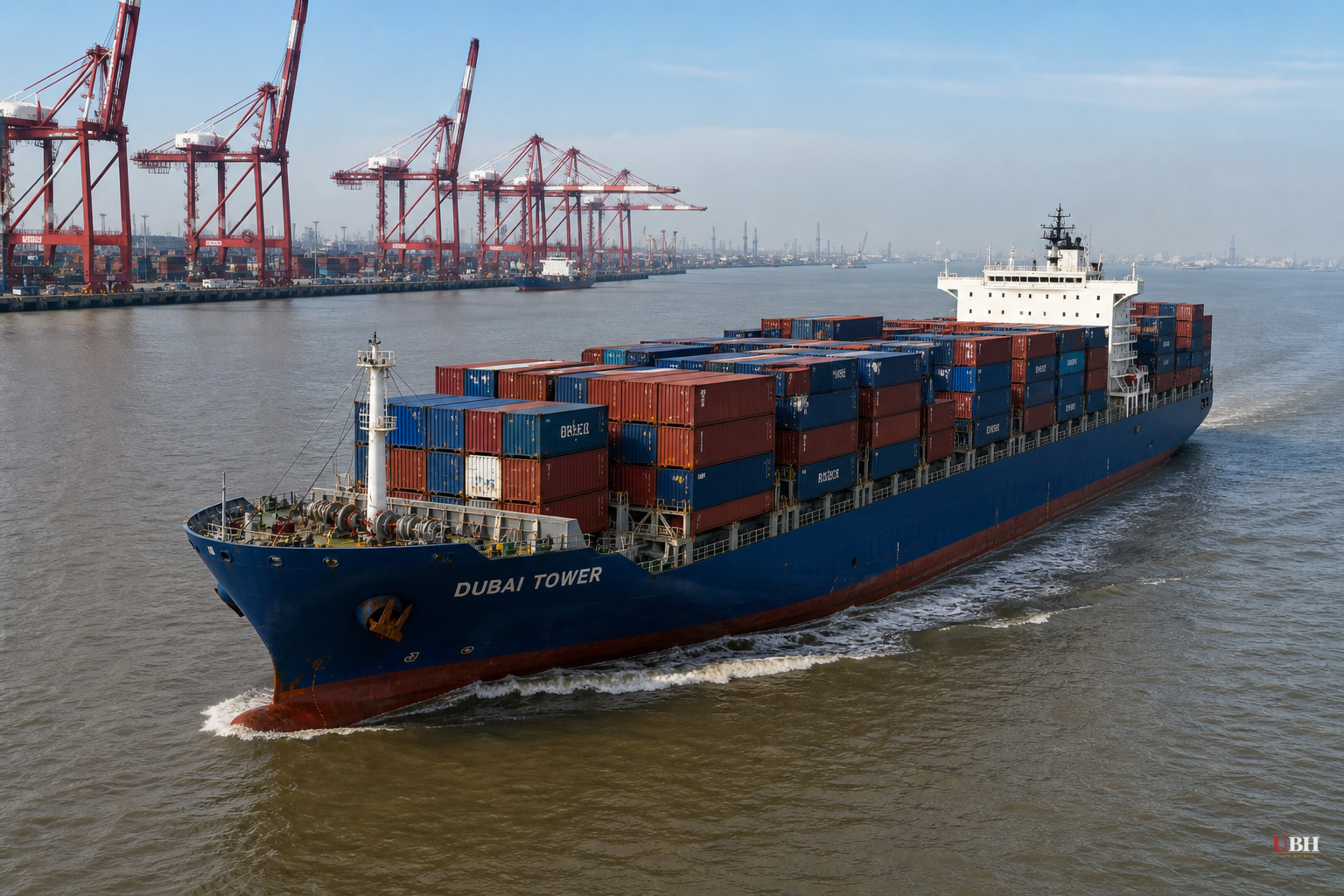
A Chinese container ship called the Dubai Tower left port in Ningbo on Saturday, August 15, heading north into the Arctic instead of south toward the Suez Canal. According to gcaptain and maritime-executive.com, it's the first sailing in what Sea Legend Shipping is calling the China-Europe Arctic Express, or the "Ice Silk Road." Eight weekly departures are scheduled through October 3, with the last ship expected in Felixstowe, UK, by October 24.
Sea Legend ran a single trial run in September 2025 using the vessel Istanbul Bridge and claimed a speed record between China and Northern Europe. That trial is now becoming a business. This marks the first time any company has run a regularly scheduled container service through Russia's Northern Sea Route, rather than a one-off demonstration voyage.
Why it's faster, and why now
The math is simple. Sailing from Shanghai to Rotterdam via the Arctic saves around 3,000 nautical miles and 15 days compared to Suez, according to gcaptain. Factor in current Middle East instability pushing vessels around southern Africa instead, and the Arctic route saves roughly 6,500 nautical miles and 25 days.
Breitbart's reporting connects this directly to the Strait of Hormuz and the Red Sea, where Iran and Iran-backed Houthi forces in Yemen have targeted commercial shipping. The Financial Times, cited by Breitbart, reported the Arctic route cuts the usual 40-day Ningbo-to-Felixstowe voyage roughly in half. Inquirer.net notes global shipping disruption intensified after US-Israeli strikes on Iran in mid-2025, making the Suez and Red Sea corridors less predictable for carriers.
There were 23 container transits through the Northern Sea Route last summer, up from 15 in 2024, according to Allianz Commercial data cited by inquirer.net and confirmed across multiple sources. At least six Chinese operators, including NewNew Shipping alongside Sea Legend, are running container and bulk voyages this season, according to gcaptain.
The Russia dependency nobody's hiding
None of this works without Russian cooperation. The Northern Sea Route runs almost entirely along Russia's Arctic coastline, and Rosatom, the Russian state nuclear agency, issues permits and supplies the icebreakers most vessels need to make the transit. Rosatom reported completing 2026 season permitting in early August, according to maritime-executive.com.
CNN's reporting adds a harder edge to this. Its analysis of shipping data from the Centre for High North Logistics found that since Russia's full-scale invasion of Ukraine, international transit on the route has been dominated by trade with one country: China. CNN tracked a US-sanctioned LNG tanker, the Christophe de Margerie, loading blacklisted cargo from the sanctioned Arctic LNG-2 facility and transferring it ship-to-ship in a Russian bay before continuing to China. A second sanctioned vessel, the Arctic Mulan, appeared to follow the same pattern, later docking at a Chinese port that Kpler analyst Charles Costerousse says has been "ringfenced" for sanctioned Russian LNG cargo since September 2025.
Western sanctions on Russian energy exports rely on other countries refusing to buy the product. If China is using Arctic shipping infrastructure to absorb sanctioned LNG that would otherwise struggle to find a buyer, the sanctions regime has a hole in it. No US or EU regulator has announced new enforcement action tied to these specific voyages, and CNN's reporting is based on satellite imagery and shipping-data analysis, not a government finding of violation. That distinction matters: this is documented ship movement, not an adjudicated sanctions breach.
Environmental tradeoffs are real
Sea Legend and Rosatom both frame the route as roughly halving CO2 emissions per container due to shorter distance and less fuel burned. The Guardian reports that Bellona Environmental Foundation, in a 2025 study, found the spill risk from heavy fuel oil (HFO) in Arctic waters could erase those emissions gains entirely, since HFO is thicker and harder to clean up in cold water. HFO was formally banned in Arctic waters starting in 2024, though enforcement gaps have drawn criticism from environmental groups.
Major carriers CMA CGM, MSC and Hapag-Lloyd have all pledged to avoid Arctic trans-shipment routes, according to inquirer.net, leaving Sea Legend and Chinese state-linked operators like NewNew Shipping as the ones actually testing the corridor commercially.
What's unresolved
University of Southampton researchers, cited by maritime-executive.com via the Financial Times, found peak winter Arctic sea ice dropped 5.8% between 2024 and 2025, the largest single-year decline on record, which is what's making the wider shipping window possible in the first place. NewNew Shipping's NewNew Polar Bear was previously linked to a 2023 incident that severed Finland's undersea cables and the Balticconnector pipeline, causing over $40 million in damages, according to gcaptain, a fact worth remembering as more Chinese vessels operate unsupervised in these waters. Whether Western governments respond to the sanctions-evasion pattern CNN documented, or whether the Ice Silk Road simply becomes a permanent fixture of the shipping calendar, remains to be seen.
Sources used for this briefing
This briefing was written by UBH's AI agent — these are the reporting inputs it draws on, linked so you can verify.


