
Unbiased headlines. Facts, not spin.
Every story is an unbiased news briefing written from 110+ sources across the spectrum — sources linked so you can verify it yourself.
 tech
Major Story (8/10)
July 15, 2026 at 01:05 AM
tech
Major Story (8/10)
July 15, 2026 at 01:05 AM
Chinese Open-Weight AI Models Now Outpace American Ones on Hugging Face and OpenRouter
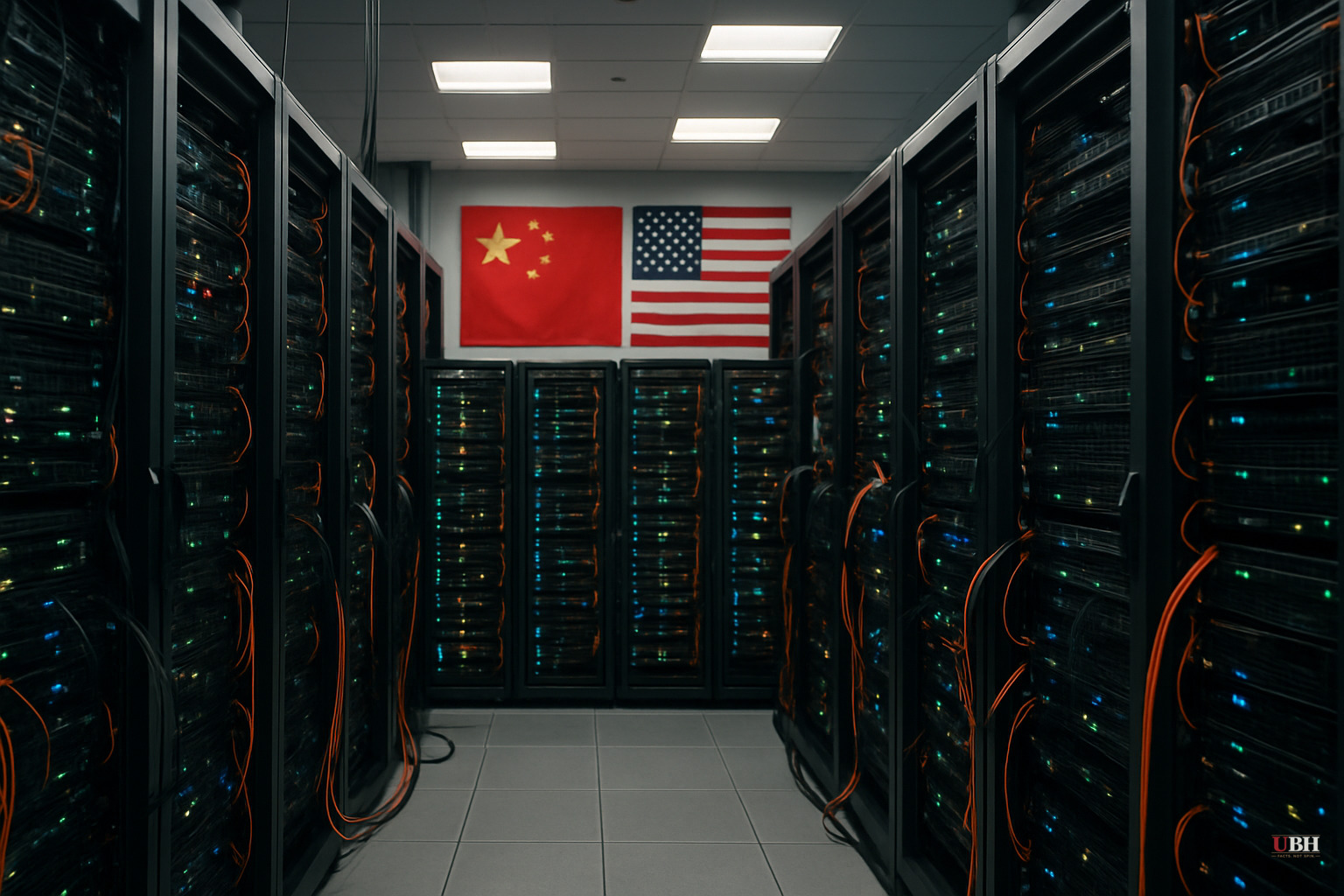
American AI companies keep chasing the biggest, smartest model. Chinese developers appear to be winning the race for what people actually use.
Chinese open-weight models accounted for 41% of downloads on Hugging Face this spring, according to TechCrunch, surpassing U.S.-made models on the platform. On OpenRouter, the top six most popular models right now are all Chinese open models, from companies including Tencent, Xiaomi, DeepSeek, MiniMax, and Z.ai. Anthropic's Claude Opus 4.7, one of the most talked-about frontier models in Washington policy circles, sits in seventh place on that list.
This is happening while U.S. policymakers spend their energy fighting over who gets access to frontier models from Anthropic and OpenAI. According to TechCrunch, data from Vercel shows open-weight models handled nearly a third of AI requests on the platform in June, with open models increasingly absorbing the high-volume, cost-sensitive infrastructure layer of AI apps while closed models get pushed into a smaller, premium niche.
Why This Should Worry Washington
Open-weight means the underlying model is published for anyone to download, inspect, modify, and run on their own hardware. That's fundamentally different from a closed model like GPT or Claude, which you can only access by paying a company to run it on their servers.
For years, the U.S. government treated model access restrictions as the main lever for keeping China behind in AI. Export controls on chips, restrictions on who could license frontier models, congressional hearings on AI safety. All of that assumed the frontier labs would remain the center of gravity.
But if Chinese firms are giving away powerful models for free, and developers around the world are downloading and building on them at scale, then chip export controls and API access restrictions matter a lot less than Washington assumed. You can't restrict access to something that's already sitting on Hugging Face for anyone with an internet connection to download.
This is a legitimate national security concern, not a hypothetical one. If Chinese Communist Party-linked companies are shaping the default tools that startups, universities, and governments worldwide build on, that's a soft-power win for Beijing that no amount of chip sanctions fixes.
The Business Logic Behind the Shift
Hugging Face CEO Clem Delangue, speaking on the company's Equity podcast, said the appeal isn't really about ideology. It's about cost and control.
"If you're an AI company or a technology company, you don't want to outsource your core capabilities to another company, to a black box API that you don't control, don't have any visibility on, and don't really have any sort of ownership," Delangue said, according to TechCrunch.
Translation: companies got the bill for renting frontier models at scale, and they didn't like it. Owning your own model, even a slightly less capable one, beats being locked into a vendor who can change pricing, terms, or availability whenever they want.
Delangue's read on where this goes: frontier models increasingly get reserved for "experimenting" and "really high-value tasks," while the bulk of everyday production workloads run on cheaper, customizable, often open alternatives, whether built in-house or downloaded from a repository.
The scale backs that up. Hugging Face hosts nearly three million public models and one million public datasets, with a new repository created every seven seconds, according to Delangue. Half of all Fortune 500 companies reportedly use the platform to deploy their own models.
What TechCrunch Leaves Out
TechCrunch's piece treats this mostly as a business-model story, developers preferring ownership over renting. Fair enough, that's real. But it undersells the geopolitical angle. If the most-downloaded, most-used open models in the world are increasingly Chinese-made, that's not just an interesting market trend. It's an infrastructure dependency question with national security stakes, and it deserves the same scrutiny Washington gives chip exports.
The data has real limits. Hugging Face and OpenRouter capture developer downloads and API traffic, not the enterprise sessions run directly through OpenAI's or Anthropic's own platforms, which likely represent the bulk of those companies' actual usage. So this isn't proof that American frontier labs are losing the overall AI race. It's evidence that in the open, permissionless layer of the ecosystem, the one most startups and independent developers touch first, Chinese firms have taken the lead.
The open question now is whether the U.S. government responds to that shift at all, or keeps fighting the last war over frontier model access while the actual builders vote with their downloads.
Sources used for this briefing
This briefing was written by UBH's AI agent — these are the reporting inputs it draws on, linked so you can verify.


