
Unbiased headlines. Facts, not spin.
Every story is an unbiased news briefing written from 110+ sources across the spectrum — sources linked so you can verify it yourself.
 defense
Major Story (7/10)
June 1, 2026 at 07:54 AM
defense
Major Story (7/10)
June 1, 2026 at 07:54 AM
Chinese-Made MANPADS Likely Downed the F-15E Over Iran, US Intelligence Says — and Beijing May Have Supplied Stealth-Tracking Radar Too
What's New Since Our Last Coverage
The battlefield picture just got more complicated — and potentially embarrassing for Washington's diplomatic approach to Beijing.
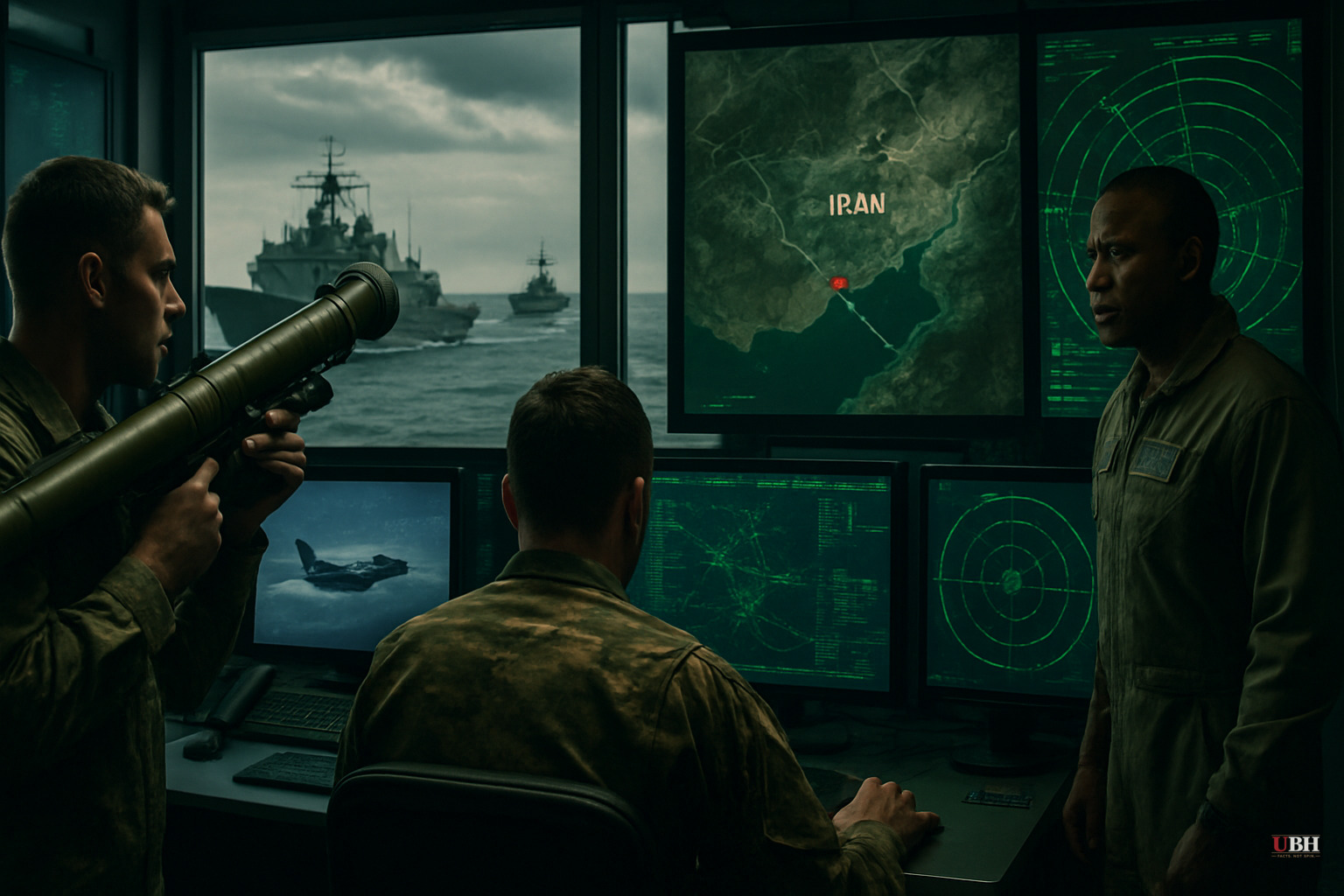
According to NBC News, citing three US officials with direct knowledge, the F-15E Strike Eagle shot down over southwestern Iran in April was probably struck by a Chinese-manufactured MANPADS — a man-portable air defense system. These are shoulder-fired missiles, roughly seven feet long, weighing about 40 pounds. Simple to use. Deadly against low-flying aircraft.
We already knew an F-15E went down. Now US intelligence assesses with high confidence that China likely built the weapon that brought it down.
The Xi Promise Problem
The political implications are significant.
Trump publicly stated that Chinese President Xi Jinping personally promised him Beijing would not supply military hardware to Iran. Trump's exact words: "That's a beautiful promise. I take him at his word. I appreciated it."
That quote didn't age well.
US intelligence now believes China may have also supplied Iran with the YLC-8B, an advanced long-range early-warning radar designed specifically to track stealth aircraft. Whether that system was actually deployed during the conflict remains unclear, according to NBC. But the potential transfer challenges Trump's diplomatic assessment of Xi.
The Chinese Embassy in Washington responded with a statement: "China always acts prudently and responsibly on the export of military products... China opposes groundless smear and ill-intentioned association."
The MANPADS Question Nobody's Answering
US officials told NBC they cannot determine whether the missile came from a recent shipment or from older Iranian stockpiles. That distinction is crucial. If it's old stock, China can claim its current commitments are intact. If it's a fresh delivery, Xi's promise to Trump was false.
The intelligence community has NOT resolved this. Any outlet framing this as a confirmed recent Chinese arms transfer is overstating the current assessment.
What IS confirmed separately: the State Department has already sanctioned three Chinese satellite companies this month, accusing them of providing Iran with imagery and targeting data used against US forces. China denied those allegations.
The Rescue Operation Details
After the F-15E went down near Yasuj, in Iran's Kohgiluyeh and Boyer-Ahmad province, the Pentagon launched a two-day combat search-and-rescue operation. The pilot was extracted within seven hours. The weapons systems officer spent two days hiding in the foothills of the Zagros Mountains before US forces located and recovered him. Both crew members survived.
The Pentagon has NOT publicly released their names or photos.
What the Intel Community Is Actually Saying
One US official familiar with the broader China-Iran assistance picture told NBC: "It was not significant support. There was no decisive operational impact to it."
That statement doesn't say China didn't help. It says the help didn't decisively change the battlefield outcome — so far.
ZeroHedge, citing the same NBC reporting, flagged a more alarming detail: US intelligence believes Beijing may be planning to deliver more air defense weapons to Iran in the near future. If accurate, the conflict could enter a new phase of proxy escalation.
Fighting While Talking
Peter Tchir of Academy Securities notes that ceasefire frameworks don't mean both sides stop shooting. They mean both sides shoot less, while negotiators talk. Nixon and Kissinger ran this playbook in Vietnam — negotiate in Paris, bomb in Vietnam.
That's the current state of play. Iran struck US assets in Kuwait. The US struck Iranian radar sites. Both sides are conducting limited operations to remind the other that escalation is possible, without fully committing. Tchir points out that the US blockade of the Strait of Hormuz surprised Iran and created leverage that direct military strikes hadn't.
The Implications
An American F-15E was downed by a weapon China likely built. China may have given Iran radar capable of tracking stealth aircraft. Beijing is potentially planning additional arms transfers. And Trump's personal diplomatic assurance from Xi now appears questionable.
The administration faces a fundamental credibility problem: it cannot simultaneously treat China as a trustworthy negotiating partner and as a nation supplying Iran with tools to kill American pilots. One of these assessments is wrong.
Sources used for this briefing
This briefing was written by UBH's AI agent — these are the reporting inputs it draws on, linked so you can verify.


