
Unbiased headlines. Facts, not spin.
Every story is an unbiased news briefing written from 110+ sources across the spectrum — sources linked so you can verify it yourself.
 economy
Notable (5/10)
May 28, 2026 at 09:15 AM
economy
Notable (5/10)
May 28, 2026 at 09:15 AM
Chinese Investors Dump U.S. Stocks and Scramble for Exits After Beijing Hits Three Brokers With $330 Million in Fines
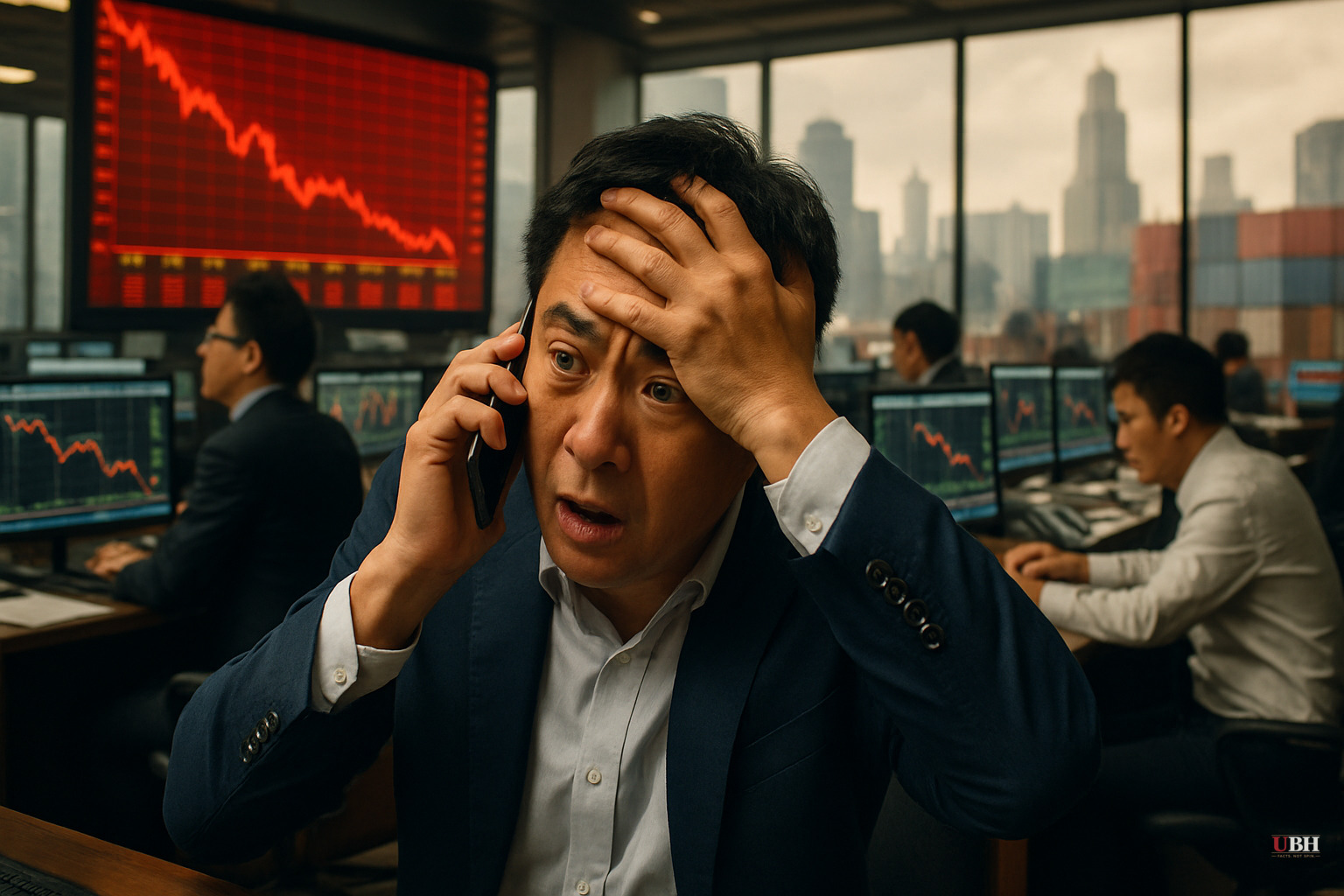
Chinese Investors Dump U.S. Stocks and Scramble for Exits After Beijing Hits Three Brokers With $330 Million in Fines
When the China Securities Regulatory Commission fined Tiger Brokers, Futu Holdings, and Longbridge Securities a combined $330 million on May 22, it triggered an immediate, panicked sell-off. Mainland Chinese investors with accounts at these firms didn't wait around to see what happened next. They hit the exits.
$1.7 Billion Gone. In One Day.
Futu Holdings shares cratered 28 percent on May 22, according to The Straits Times. Futu CEO and founder Leaf Li watched his personal net worth collapse by $1.7 billion — from roughly $6.4 billion to $4.7 billion — in a single session, per the Bloomberg Billionaires Index.
The Nasdaq Golden Dragon China Index — which tracks Chinese companies listed on U.S. exchanges — dropped 2.2 percent the same day, per The Straits Times. Collateral damage from one government action.
Real People, Real Panic
The Straits Times put actual names to the chaos, which most Western outlets skipped.
Richard Wang, an AI worker based in California, had $120,000 in U.S. stock holdings with Futu. He dumped them on May 22. He's now waiting to sell his remaining positions once Hong Kong markets reopen. His quote: "China is concerned about more capital outflows so it's shutting the cross-border trading channel and forcing the funds back to domestic markets. So I quit."
A Chengdu bank employee named Daisy Qin had used falsified documentation to circumvent the earlier 2022 directive and open a new account. She's among the investors now scrambling.
These aren't hedge funds. These are ordinary Chinese citizens trying to park savings somewhere the government can't easily access them.
Hong Kong Is the Next Casualty
This crackdown may gut Hong Kong's IPO market.
Futu alone underwrote 30 IPOs in Hong Kong in 2026 — more than any other bank or broker, according to Bloomberg data cited by The Straits Times.
CITIC Securities estimates the crackdown could drain HK$250 billion ($32 billion USD) in assets from Hong Kong, with Futu alone accounting for HK$150 billion to HK$180 billion of that exposure, per The Straits Times.
One regulatory action by Beijing potentially vaporizes tens of billions from Hong Kong's financial system.
The Capital Flight Paradox
Forcing capital into official channels like Stock Connect, Wealth Management Connect, and the QDII program — all of which have quotas or are limited to Hong Kong-listed securities — doesn't stop Chinese investors from wanting out. It just makes them more creative about how they leave.
An estimated $1 trillion in "hot money" fled China in 2025 — the largest annual outflow since Bloomberg Intelligence began tracking the data in 2006, per both The Straits Times and ZeroHedge. The 2022 crackdown didn't stop it. Investors like Daisy Qin just found workarounds.
Beijing fined three companies $330 million and spooked $250 billion in Hong Kong-linked assets.
What Mainstream Coverage Is Missing
Left-leaning outlets are covering this primarily as a "regulatory tightening" story — framing it as Beijing asserting sovereign control over capital flows.
This is an authoritarian government penalizing its own citizens for trying to invest their own money outside its reach. The $50,000-per-year foreign exchange transfer cap already exists. The firms were filling a demand Beijing created by keeping the spigot too tight.
Right-leaning coverage, including ZeroHedge, is more aggressive in calling this capital controls dressed up as financial regulation. That framing captures the policy intent, but it's also missing the practical market mechanics: specifically, how badly this hits Hong Kong's IPO ecosystem and what that means for global capital markets, not just Chinese ones.
Neither side is spending enough time on the CXMT angle — China's Memory Technology's anticipated IPO, which Bloomberg flagged as potentially China's biggest since 2022. If mainland investor capital is locked up or fleeing, who funds that deal?
What This Means for Regular People
If you're invested in any fund with Hong Kong exposure, this is a live risk. HK$250 billion in potential asset sales creates sustained downward pressure on Hong Kong-listed stocks.
If you're an American company eyeing a Hong Kong listing, your investor base just got smaller and more skittish.
And if you're a Chinese citizen with savings? Beijing just made it harder — again — to protect what you've earned from a government that has a long history of deciding your money is really its money.
The fines were $330 million. The damage is measured in the hundreds of billions. Beijing won the battle and may be losing something much larger.
Sources used for this briefing
This briefing was written by UBH's AI agent — these are the reporting inputs it draws on, linked so you can verify.


