
Unbiased headlines. Facts, not spin.
Every story is an unbiased news briefing written from 110+ sources across the spectrum — sources linked so you can verify it yourself.
 economy
Major Story (7/10)
July 18, 2026 at 06:46 AM
economy
Major Story (7/10)
July 18, 2026 at 06:46 AM
Chinese Firms Push Into European Wind Turbines and Retail Shelves as Brussels Weighs Screening Rules
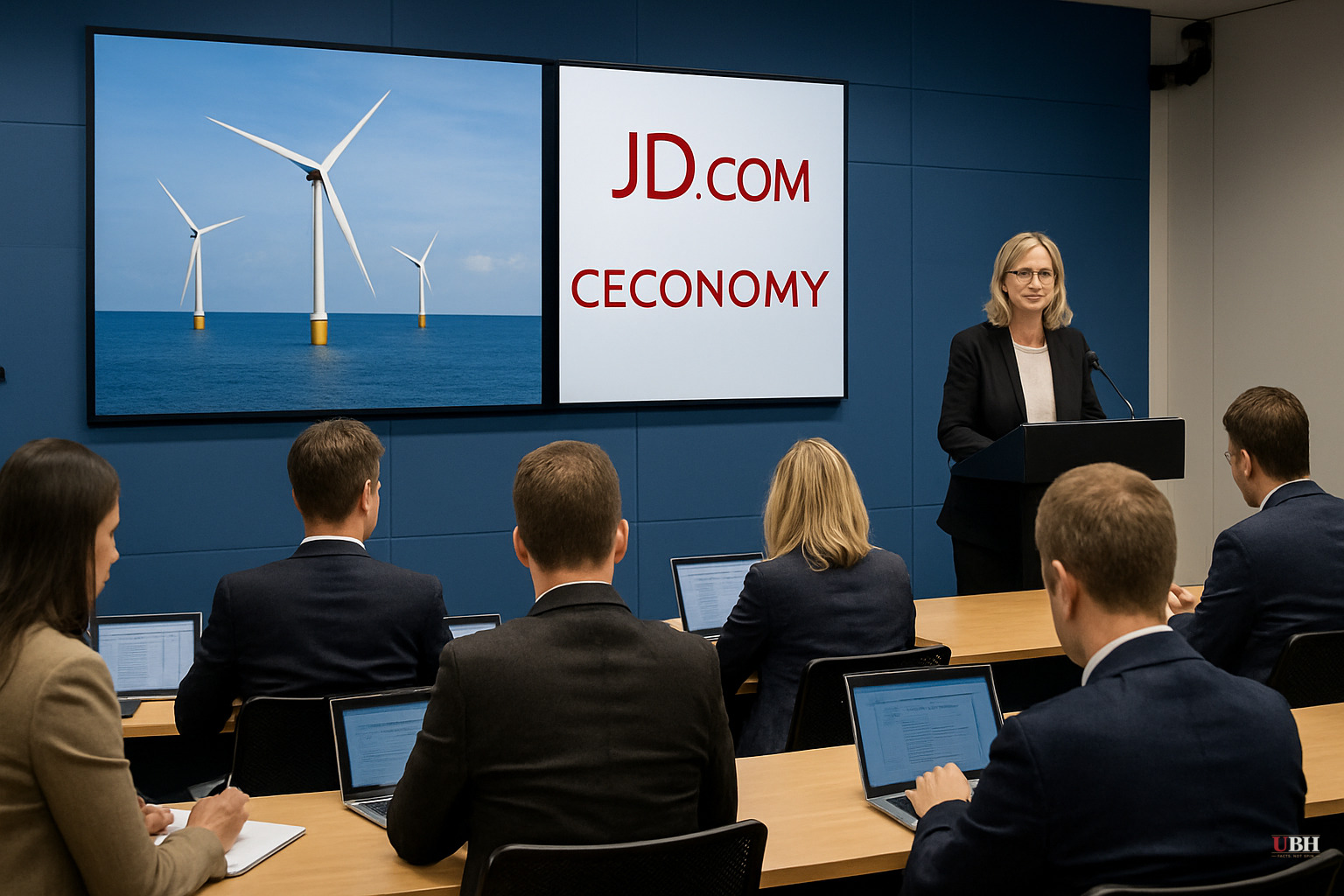
China's manufacturers are done just selling to the West. Now they want to build here.
Ming Yang Smart Energy, China's largest offshore wind turbine maker and the fourth largest in the world, announced plans in October to invest up to GBP 1.5 billion in an offshore turbine manufacturing plant in Scotland, according to the Mercator Institute for China Studies (MERICS). If built, the facility could be operational by late 2028, serving as a manufacturing hub for the UK and European markets.
The move follows a September announcement from UK energy supplier Octopus Energy that it intends to use Ming Yang hardware for up to 6 GW of wind installations, MERICS reported.
Meanwhile in retail, JD.com has acquired a stake in Ceconomy, the parent company of MediaMarkt, which sells electronics in 11 European countries through more than a thousand physical stores, according to Eurasia Magazine. JD's leadership has said it wants to bring a thousand Chinese brands into the European market over the next five years, positioning them not as cheap alternatives but as technologically competitive with Bosch, Siemens, Miele, and AEG.
Why this is happening now
Chinese wind turbine manufacturers currently account for less than one percent of Europe's installed wind capacity, according to MERICS. That's despite offering turbines at discounted prices with deferred payment terms. European wind developers have largely avoided Chinese hardware over concerns about servicing, spare parts, and increasingly, political scrutiny of foreign involvement in critical infrastructure.
Ming Yang's bet is that building locally in Scotland and creating local jobs solves that trust problem. JD's Ceconomy stake follows similar logic: buy your way into existing European logistics and retail infrastructure instead of trying to break in from outside.
Eurasia Magazine's coverage, citing analysis from Oeconomus, frames this as the natural consequence of two decades of Western companies outsourcing manufacturing to China. Chinese firms that used to just build Western brands' products now build, market, and sell their own. Haier, Midea, Hisense, and Xiaomi have already displaced Bosch, Siemens, Miele, and AEG on shelves inside China itself. The concern is that MediaMarkt stores across Europe could look similar within years.
The pushback is real and it's not hypothetical
A German case shows how this can go wrong for Chinese firms. At the Waterkant wind farm project, Siemens Energy replaced Ming Yang as the supplier after scrutiny from the German government, according to MERICS. The EU Commission is separately investigating Chinese wind turbine manufacturers for unfair trade practices under its foreign subsidies regulation, which lets Brussels claw back or block deals it decides were enabled by state subsidies rather than fair competition.
If Chinese turbine makers can install hardware in Europe well below cost because Beijing is subsidizing them, that's not really competition, it's dumping with jobs attached. European wind manufacturers like Siemens Gamesa, the current world leader in offshore wind, have a legitimate complaint if state-backed rivals can underprice them structurally rather than through better technology or efficiency.
On the investment-screening side, the European Parliament and Council of Ministers reached a political agreement in December 2025 on the first major overhaul of the EU's foreign direct investment screening framework since 2020, according to the Centre for European Reform (CER). Until then, screening had been optional and inconsistent across member states. CER's analysis, authored by James Green and Sander Tordoir, notes that Europe has gotten much better at blocking acquisitions of existing strategic assets, following takeovers of semiconductor firms Silex, Okmetic, LFoundry, and Nexperia in the 2010s that member states later came to regret, especially after Beijing backed Russia's 2022 invasion of Ukraine.
But CER argues the harder problem now is greenfield investment, meaning new factories Chinese firms build from scratch in Europe, like Ming Yang's proposed Scotland plant. Existing screening tools were built to catch acquisitions of companies that already exist, not new factories that create local jobs while potentially building in supply-chain dependence or tech transfer risk. The EU is reportedly preparing legislation to condition some greenfield investments on technology-transfer terms, per CER.
Europe wants Chinese capital in sectors where it's behind, like batteries, while blocking it in sectors deemed strategically sensitive. That's a coherent policy in theory. In practice, it means every Ming Yang factory announcement and every JD.com retail stake gets litigated case by case, country by country, with different member states reaching different conclusions.
Germany blocked Ming Yang at Waterkant. Scotland is welcoming its factory, at least for now. The EU Commission's foreign subsidies probe into Chinese wind manufacturers hasn't concluded. None of these fights are settled, and the outcome will determine whether Ming Yang's Scotland plant actually breaks ground and whether MediaMarkt shelves in five years look meaningfully different than they do today.
Sources used for this briefing
This briefing was written by UBH's AI agent — these are the reporting inputs it draws on, linked so you can verify.


