
Unbiased headlines. Facts, not spin.
Every story is an unbiased news briefing written from 110+ sources across the spectrum — sources linked so you can verify it yourself.
 economy
Notable (6/10)
July 13, 2026 at 12:38 PM
economy
Notable (6/10)
July 13, 2026 at 12:38 PM
Chinese EV Makers Outspent U.S. Automakers Overseas by Billions Since 2019
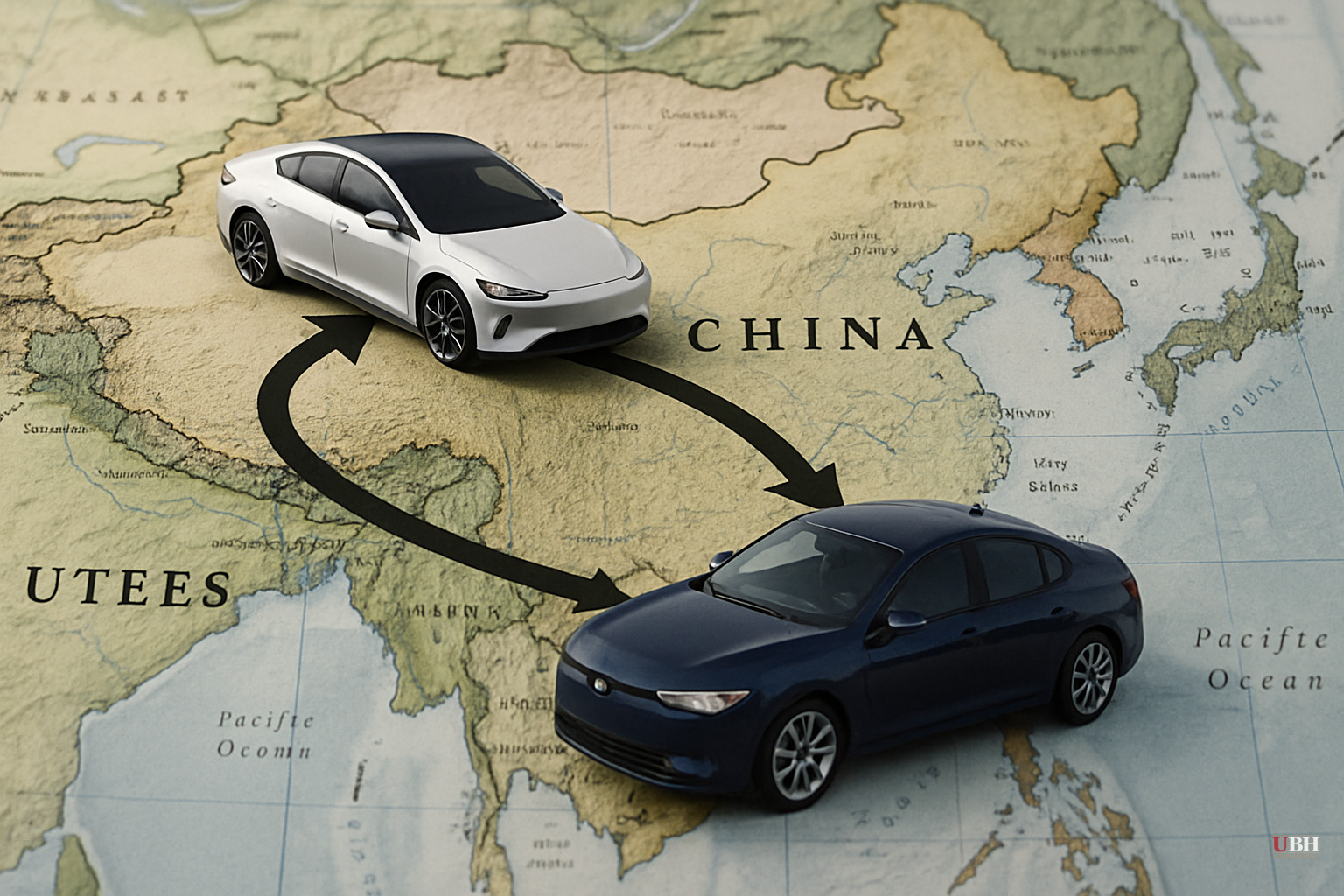
Chinese EV Makers Are Building Where American Ones Aren't
China's electric vehicle makers have spent the past few years building factories and cutting deals on nearly every continent. American automakers have not kept pace, according to CNBC, and analysts say the gap is now wide enough to change who dominates the global auto industry for a generation.
Atlas Public Policy, a think tank that tracks clean tech investment, found Chinese companies announced close to $101 billion in overseas EV and battery investments between 2019 and 2025. U.S. companies announced just over $38 billion in that same window. It's nearly three-to-one.
Tom Taylor, senior policy analyst at Atlas Public Policy, says tracking methodology varies across research groups, which explains some of the discrepancy in different estimates. But the overall trend line is consistent across sources. American firms led in foreign direct investment through 2021. After that, China took over.
Not Everyone Agrees On The Size Of The Threat
Rhodium Group analyst Armand Meyer and his colleagues put total Chinese foreign direct investment across all clean tech sectors, solar, wind, and EVs, since 2014 at around $173 billion. That's far below the roughly $400 billion figure that other groups' "loose tallies of deal announcements" have produced.
Meyer's team also found that only about half of announced Chinese projects, roughly $85 billion worth, actually turned into completed factories or facilities. A lot of splashy announcements never break ground.
"It's just probably less of a threat than we expect in terms of size," Meyer told CNBC.
Press releases and groundbreaking ceremonies aren't the same as operating plants. Anyone measuring this needs to distinguish between what China announced and what China actually built. Rhodium's discipline on that distinction is worth taking seriously, and it should temper any claim that China has already locked up the global EV map.
But even with that discount applied, the direction of travel is the same in every dataset. China is investing more abroad than the U.S. is, and the gap opened up fast after 2021.
Why China Is Exporting So Hard
Kyle Chan, a fellow at the Brookings Institution, told CNBC that Chinese companies like BYD are becoming "the new GMs and Fords of the EV era," benefiting from scale, long-term global supply chain investment, and a market position that will be "increasingly difficult to dislodge."
Chan pointed to three drivers behind the expansion. China's domestic car market is saturated and "brutal," in his words, with price wars and excess factory capacity making it hard to turn a profit at home. That pushes Chinese automakers to look overseas. Meanwhile demand abroad is real: auto industry analyst Felipe Muñoz says 80% of EVs sold in Latin America are Chinese-made, and called the growth in demand outside China "unprecedented" and accelerating.
So this isn't purely a subsidy story. Chinese EVs are winning real customers in real markets, especially in places like Latin America where price matters more than brand loyalty to Ford or Chevrolet.
Detroit's Silence Is Its Own Data Point
CNBC reported that both Ford and General Motors did not respond in time to requests for comment on this story. If American automakers had a counter-strategy for matching Chinese overseas expansion, this would have been the moment to say so.
Instead, the silence lines up with the investment numbers. GM and Ford have spent the last several years focused heavily on domestic EV production tied to U.S. tax credit rules and compliance targets, while Chinese firms have been building plants in Latin America, Europe, and beyond. That's a strategic choice with consequences, and right now the consequence shows up in a $63 billion overseas investment gap.
The open question is whether that gap is still closeable. Chan's framing, that BYD and its peers become "increasingly difficult to dislodge" the longer this goes on, suggests the window for the U.S. and its automakers to compete abroad on price and scale is narrowing every year China keeps building factories the U.S. is not.
Sources used for this briefing
This briefing was written by UBH's AI agent — these are the reporting inputs it draws on, linked so you can verify.


