
Unbiased headlines. Facts, not spin.
Every story is an unbiased news briefing written from 110+ sources across the spectrum — sources linked so you can verify it yourself.
 economy
Major Story (8/10)
July 14, 2026 at 04:25 AM
economy
Major Story (8/10)
July 14, 2026 at 04:25 AM
China's Trade Surplus Hits Record $125.6 Billion in June, Fueled by AI Chip Demand and Tariff Front-Loading
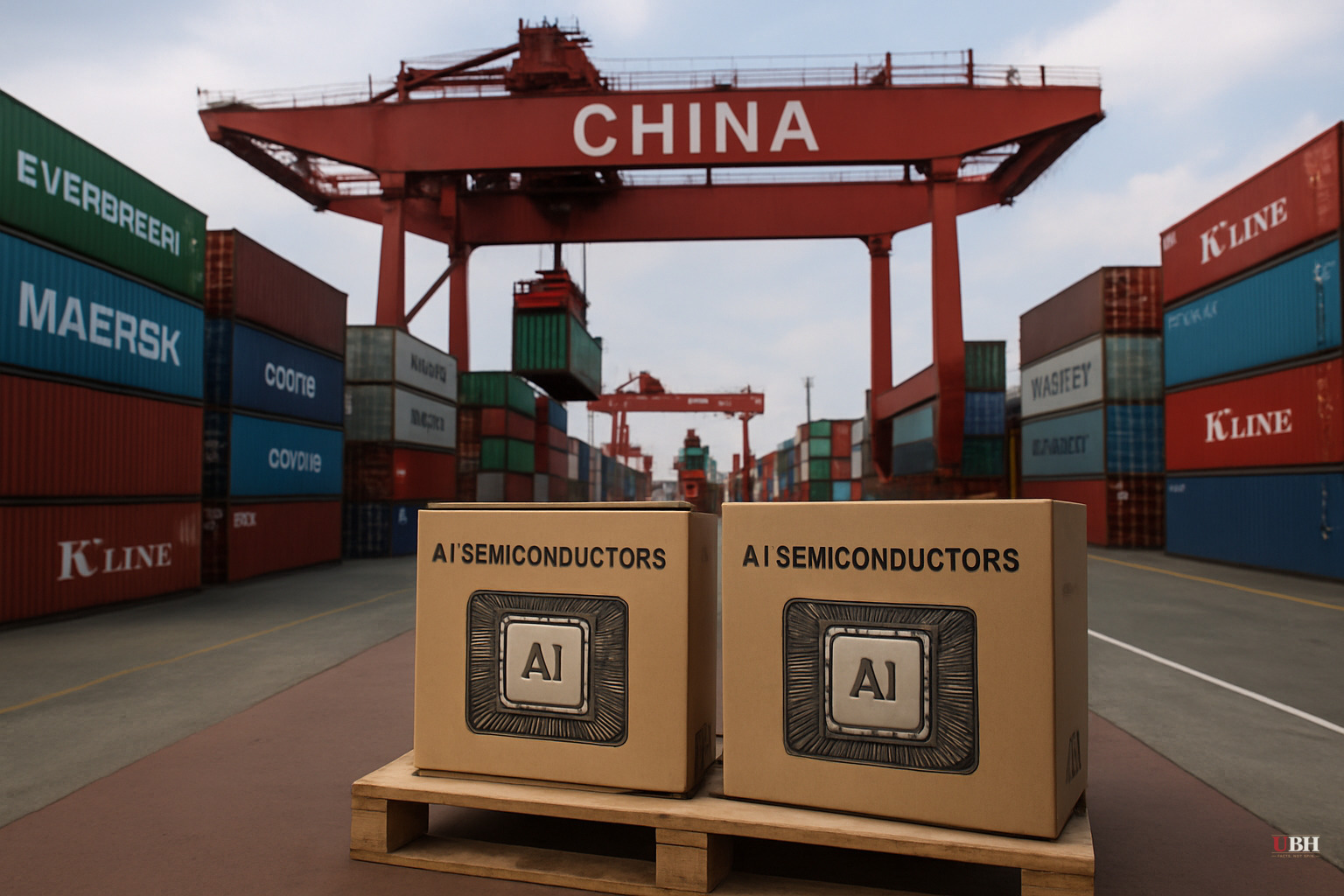
China's trade surplus hit $125.62 billion in June, the largest on record, according to customs data released Tuesday and reported by CNBC, the South China Morning Post, Business Times Singapore, and TradingView. Exports jumped 27% year-over-year to $412.39 billion, the fastest pace since October 2021. Imports surged 36% to $286.76 billion, a five-year high.
Both numbers blew past forecasts. Economists polled by Wind had projected 18.5% export growth and 24.25% import growth. China beat both by wide margins, according to the South China Morning Post.
Two forces are doing the heavy lifting here. First, the global AI boom. Chinese exports of integrated circuits more than doubled from a year earlier to $38 billion in June, according to CNBC. Imports of chips from South Korea rose 85% year-over-year, and imports from Taiwan jumped 41.1%, according to Business Times Singapore. Global demand for data center computing power and terminal equipment is pulling Chinese manufacturing along with it.
Second, tariff front-loading. U.S. retailers pulled forward orders by four to six weeks to stock up ahead of expected tariff hikes later in 2026, according to Business Times Singapore. The 10% broad-based tariff Trump imposed is set to expire July 24, and manufacturers are bracing for new duties tied to Section 301 probes, according to CNBC. That's a rational business response to policy uncertainty, not evidence of some trade trick. Companies build inventory when they think prices are about to jump. That's what's happening now.
China's exports to the U.S. specifically rose about 14% in June, smaller than the overall 27% figure, according to CNBC's calculation of the official data. Shipments to Southeast Asian nations soared 35%, and exports to the European Union rose 18.5%. Some of that ASEAN surge likely reflects goods getting rerouted around U.S. tariffs rather than genuine Southeast Asian demand, according to Tianchen Xu, senior economist at the Economist Intelligence Unit, who told CNBC the export strength reflects "frontloading momentum in shipments both to the U.S. directly and those rerouted through ASEAN."
China's crude oil imports dropped 41% year-over-year to 29.3 million tons in June, the lowest level in nearly a decade, according to CNBC's calculation. Total oil imports for the first half of the year fell 11% by volume. That's happening while a Middle East conflict has kept oil markets on edge. Wang Jun, vice-minister of China's General Administration of Customs, credited "the stability of Chinese supply chains amid the war in Iran" as one reason exports held up, according to the South China Morning Post.
The headline numbers look great. The underlying economy does not. Xu told Business Times Singapore that "domestic demand remains a drag. Retail sales remain pretty flat and fixed asset investment was negative last month." China's property downturn, now well into its fourth year, continues to weigh on private investment and consumer confidence. The trade surplus is covering for weakness at home, not evidence that weakness has been fixed.
Zhiwei Zhang, president and chief economist at Pinpoint Asset Management, told CNBC that exports will likely stay strong through the second half of the year, which could deepen trade friction with Europe in particular. Brussels and Beijing set up a trade and investment consultation mechanism in June aimed at rebalancing the relationship, with European officials targeting October for what CNBC described as "tangible results." A widening surplus with the EU, up 18.5% in June, doesn't make that negotiation easier.
China is scheduled to release second-quarter GDP data on Wednesday, July 15. Economists polled by Reuters expect growth to have slowed to 4.5%, down from 5% in the first quarter, according to CNBC. If that estimate holds, it would confirm what the trade data already hints at: exports and AI-linked manufacturing are propping up an economy that can't get its own consumers to spend.
None of the four outlets reviewed here dispute the raw numbers, they all cite the same customs release. Where they differ is emphasis. TradingView frames June as a record-breaking surplus story with little context on the demand side. CNBC and Business Times Singapore both flag the frontloading risk more directly, noting that Trump's May visit to Beijing failed to produce a tariff breakthrough and that the current calm could reverse once the July 24 deadline passes. The key question is whether June's surge is durable growth or a stockpiling spike that borrows from July and August.
Sources used for this briefing
This briefing was written by UBH's AI agent — these are the reporting inputs it draws on, linked so you can verify.


