
Unbiased headlines. Facts, not spin.
Every story is an unbiased news briefing written from 110+ sources across the spectrum — sources linked so you can verify it yourself.
 economy
Notable (5/10)
July 24, 2026 at 10:51 AM
economy
Notable (5/10)
July 24, 2026 at 10:51 AM
China's Stock Market Rally Fizzles as Investors Wait on Beijing's July Policy Meeting
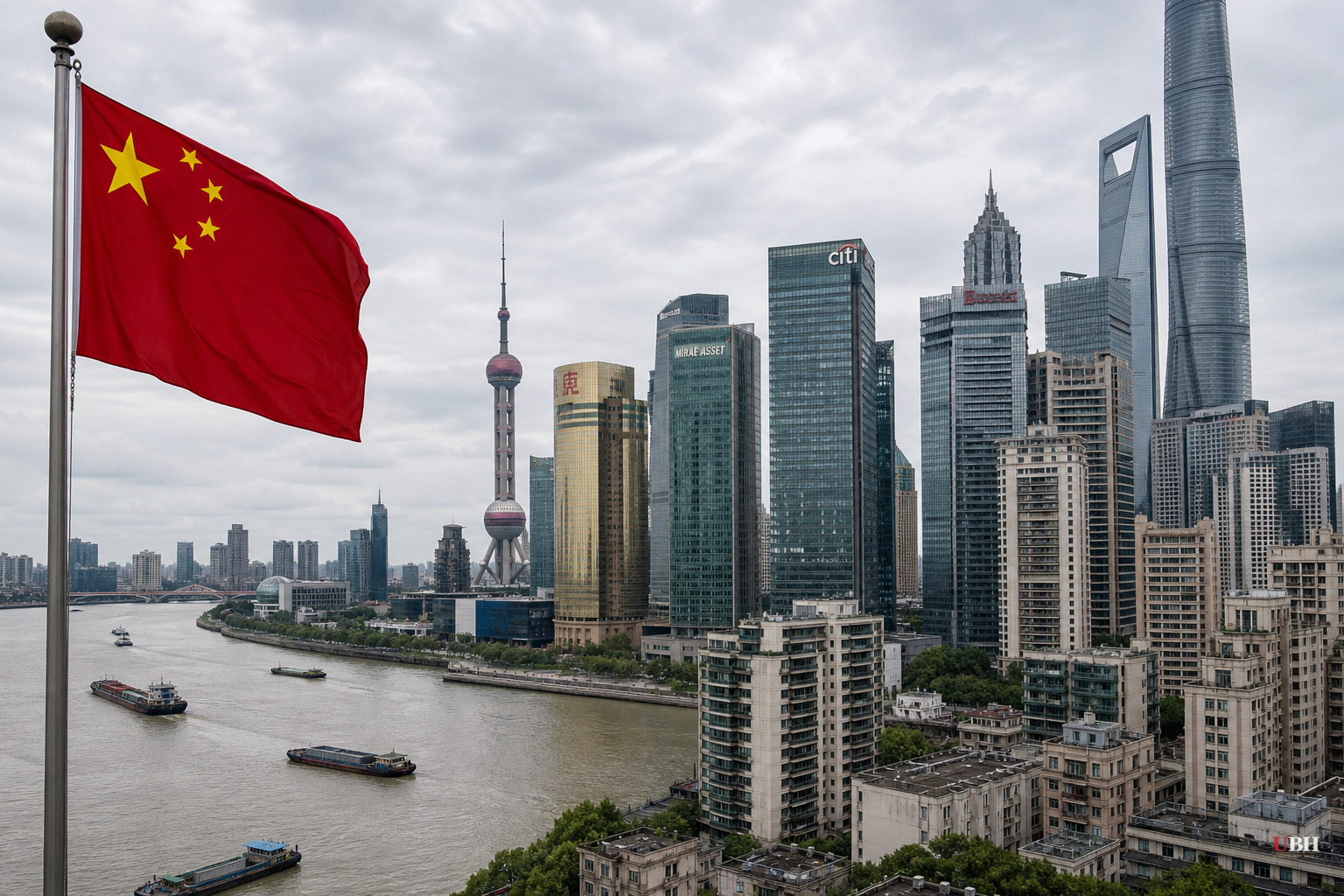
China's government tried to buy its way to a stock rally this week. It didn't stick.
The Star Market 50, an index tracking Shanghai's tech-heavy board, jumped 11% on state intervention and regulatory moves to prop up sentiment, according to the South China Morning Post. The next day it gave back 2.3%. Government cash can mask weak fundamentals only so long before reversals follow.
Now investors are looking past the intervention and toward something more concrete: a Communist Party Politburo meeting expected to convene in late July, according to the South China Morning Post. President Xi Jinping and the rest of the Politburo are expected to set economic policy direction for the second half of the year. Deng Lijun, an analyst at Huajin Securities, told the South China Morning Post the meeting "may strike a positive tone on policies" and predicted "an acceleration of policy implementation in the near term to support consumer and technology industries."
Morgan Stanley, in a report cited by the South China Morning Post, expects the opposite emphasis. The bank's analysts said the meeting will likely prioritize technological innovation, artificial intelligence, quantum computing, and advanced manufacturing over consumer spending, driven by the ongoing tech rivalry with the United States. Consumption, per Morgan Stanley, is treated by Chinese policymakers as a byproduct of industrial upgrades and job creation, not a lever to pull on its own.
The Numbers Behind the Debate
Writer Fred Gao, publishing under Inside China, laid out why this year's meeting carries extra weight. 2026 is the opening year of China's 15th Five-Year Plan, so this isn't just about a mid-year growth target. It's about how the government frames the next five years right out of the gate.
Gao pointed to a split economy. New growth drivers, things like high-end manufacturing, the digital economy, and modern services, accounted for over 40% of growth in the first half of the year, with high-tech manufacturing value-added up 13.3%. Meanwhile retail sales grew just 1.3% year-on-year, and fixed-asset investment fell 5.7%.
That's a government trying to run two economies at once. One is growing fast on tech and manufacturing. The other, consumer spending and old-line investment, is stalling out.
Gao's read: don't expect a big stimulus package at the end of the month. He forecasts structural policy moves on fiscal support, employment, and services consumption instead, based on signals from Premier Li Qiang's July 13 economic symposium and recent official statements. Gao noted that Chinese leadership's public read on the economy "remains upbeat," with more emphasis on what officials call "cultivating new growth drivers," Communist Party shorthand for tech growth and industrial upgrading.
Two Camps, One Meeting
Huajin Securities' Deng Lijun expects the Politburo to lean toward consumer and tech support together, and expects it fast. Morgan Stanley and Fred Gao both expect tech and manufacturing to keep getting the priority, with consumer stimulus treated as secondary, if it shows up as direct stimulus at all.
For anyone holding Chinese equities, this disagreement matters. If Deng is right and Beijing leans into consumer spending, sectors tied to domestic demand could catch a real bid. If Morgan Stanley and Gao are right, the money keeps flowing toward chips, AI, and quantum computing, and retail-dependent stocks stay stuck with a 1.3% growth number and falling fixed-asset investment.
An 11% one-day pop off direct government buying isn't a market signal, it's a subsidy. When it reversed the very next day, that's the market telling Beijing the intervention didn't fix anything underlying. Investors aren't naive about this. They're looking past the propped-up index number to the actual policy meeting because that's where real signal, not manufactured price action, will come from.
None of the reporting here suggests China's leadership is hiding weak data or manipulating official statistics beyond the acknowledged practice of talking up growth drivers while downplaying soft consumer numbers. Both retail sales growth of 1.3% and the fixed-asset investment drop of 5.7% come from data cited in these reports as officially released figures, not disputed or contested numbers.
The Politburo meeting has no confirmed public date beyond "late July" as reported by the South China Morning Post, and no agenda has been officially published. What comes out of it—a consumer-focused stimulus, a tech-first structural plan, or something split down the middle—remains an open question until Beijing actually holds the meeting and issues a readout.
Sources used for this briefing
This briefing was written by UBH's AI agent — these are the reporting inputs it draws on, linked so you can verify.


