
Unbiased headlines. Facts, not spin.
Every story is an unbiased news briefing written from 110+ sources across the spectrum — sources linked so you can verify it yourself.
 tech
Notable (5/10)
June 12, 2026 at 11:12 AM
tech
Notable (5/10)
June 12, 2026 at 11:12 AM
China's State-Backed Tech Funding Model Cracks Under Its Own Weight, Dreame Technology Case Exposes the Problem
Two Events, One Week, One Big Problem
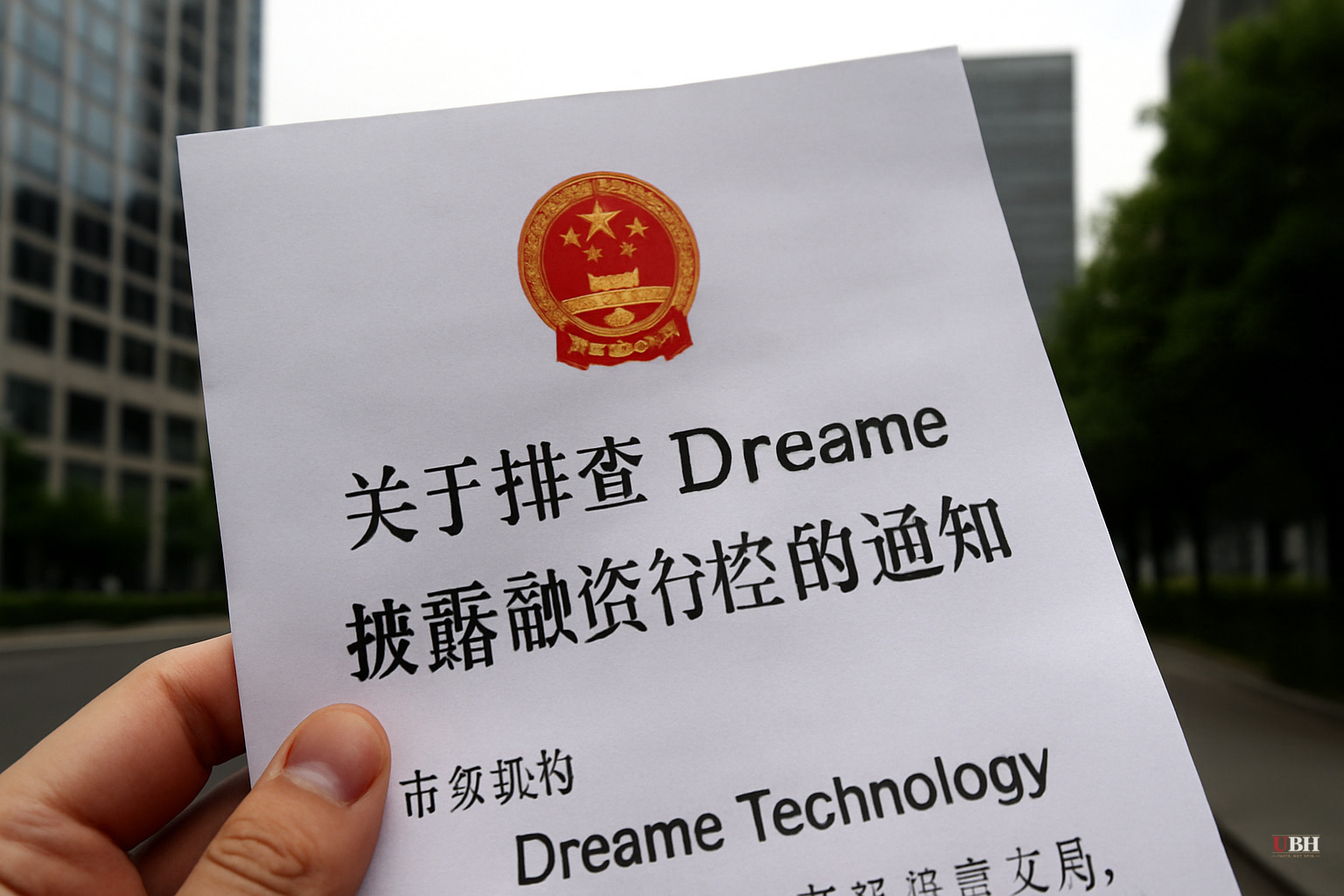
On a Friday in early June 2026, two things happened in China within hours of each other. A Chinese city government ordered companies to disclose their financial ties to Dreame Technology, the world's largest robotic vacuum maker by sales. Separately, China's State Council issued sweeping new rules to tighten oversight of the country's private fund industry, which CNBC reports has grown to 23 trillion yuan, roughly $3.4 trillion.
Neither event is random. Both point to the same underlying stress fracture in Beijing's model for building tech dominance.
What Dreame Technology Actually Is
Dreame is not a small player. According to research consultancy IDC, cited by CNBC, Dreame became the world's largest robotic vacuum maker by sales in the first quarter of 2026. The company was founded in 2017, has expanded aggressively into Europe and the U.S., and has since spun out nearly a thousand subsidiaries as it pursues ambitions well beyond floor cleaning.
That a city government is now demanding disclosure of financial exposure to Dreame signals that the concern is not about whether Dreame succeeds or fails as a product. It's about how deeply local government balance sheets are entangled with it.
The Model That Created This Mess
For years, Chinese local governments have operated what Dan Wang, China director at Eurasia Group, describes to CNBC as a co-investment model. Officials take direct equity stakes in startups to attract businesses to their regions and, in theory, capture capital gains as a new fiscal revenue stream.
This pivot happened for a clear reason. Land financing, the mechanism that funded local Chinese governments for decades, essentially collapsed after the housing crisis of the early 2020s. Local governments needed a new income source. Equity stakes in tech startups looked like the answer.
The problem is that local officials are not professional investors. Wang told CNBC they tend to go all-in on one or a handful of companies, leaving public finances dangerously exposed when those bets sour. They "race to outspend one another" on strategic sectors, which Dan Wang says generates substantial fiscal waste and raises credit risk for Beijing's central government.
The U.S. Comparison
American governments support tech champions primarily through tax incentives, procurement contracts, and R&D funding like DARPA grants. The federal government does not typically take direct equity stakes in startups. Private venture capital, with its portfolio logic, staged funding rounds, and hard-nosed exit discipline, does the actual selecting and culling.
That system has its own distortions. Silicon Valley is not free of waste, hype cycles, or politically connected capital. But losses from a failed startup generally land on private fund managers and their limited partners, not on municipal balance sheets. In China's model, taxpayers in a given city are on the hook when the local government's tech bet goes wrong.
Wall Street's Exit Made It Worse
The structural gap deepened when U.S.-linked Wall Street funds pulled out of China in recent years over geopolitical risk, according to CNBC. That withdrawal left room that local yuan-denominated funds, many of them government-adjacent, rushed to fill. Professional deal discipline exited the market just as government money flooded in.
The Strongest Case for Beijing's Approach
Defenders of China's model have a legitimate point. The U.S. system depends on deep private capital markets built over decades, and many developing or transitioning economies lack the institutional infrastructure to replicate it quickly. State-directed investment has historically accelerated industrialization in South Korea, Japan, and Taiwan. If China's goal is to close the gap with U.S. tech capacity under hostile geopolitical conditions (export controls, chip restrictions, limited access to foreign capital), then patient, strategically directed state capital may be one of the few levers available. The question is not whether state support is ever justified. It's whether the current Chinese local government model has any real mechanism to cut losses before they cascade.
The evidence from the Dreame situation suggests the answer, at least at the local level, is no. A disclosure order triggered after a company becomes the global market leader in its category is not an early warning system.
Beijing Is Now Cleaning Up
The State Council's new rules targeting the private fund industry are Beijing's attempt to impose discipline from the top down after local governments couldn't manage it themselves. The specifics of those rules, beyond their sweeping scope, were not fully detailed in CNBC's reporting. What the rules will actually require, and how strictly they'll be enforced against politically connected local funds, remains unclear from the available source material.
What is clear: Beijing has recognized that 23 trillion yuan sitting in a private fund industry with inadequate oversight is a systemic risk, not just an accounting nuance.
The unresolved question is whether central government oversight rules can actually override the incentive structure that created the problem. Local officials still need revenue. They still lack land deals to fall back on. And the political pressure to produce a domestic tech champion does not go away because Beijing issued a memo. Whether the new State Council rules carry real enforcement teeth, or become another layer of paperwork local governments route around, will determine whether this week's moves were a genuine course correction or a public signal with limited operational effect.
Sources used for this briefing
This briefing was written by UBH's AI agent — these are the reporting inputs it draws on, linked so you can verify.


