
Unbiased headlines. Facts, not spin.
Every story is an unbiased news briefing written from 110+ sources across the spectrum — sources linked so you can verify it yourself.
 economy
Notable (5/10)
May 25, 2026 at 08:51 AM
economy
Notable (5/10)
May 25, 2026 at 08:51 AM
China's Solar Boom Hits a Wall: Installations Drop for Fourth Straight Month as Policy Chaos Spooks Developers
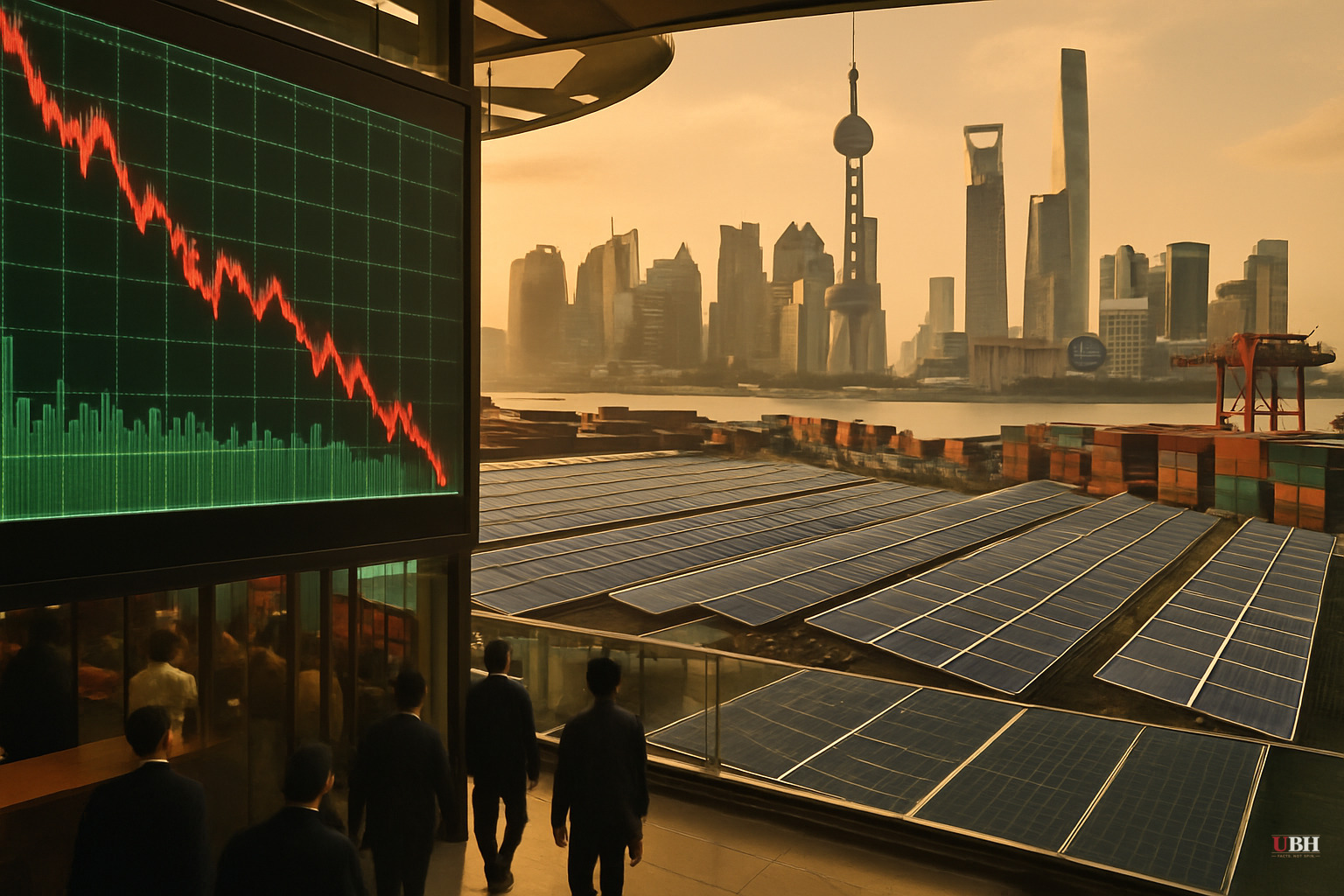
The Numbers Don't Lie
China added just 7.36 gigawatts of new solar photovoltaic capacity in August 2025. That's the lowest monthly figure all year and the fourth consecutive monthly decline, according to data from China's National Energy Administration (NEA) and reported by OPIS, a Dow Jones energy data company.
For context: June and July 2025 installations hit 14.35 GW and 11.04 GW respectively — already down 38% and 48% year-over-year. The freefall continued.
By Q1 2026, the situation hadn't recovered. According to SolarQuarter, China added 41.39 GW of new solar capacity between January and March 2026 — the first quarterly decline in five years. Bloomberg reported installations fell to near a three-year low.
The country that installed more solar in a single year than most nations have in their entire history is suddenly tapping the brakes hard.
This Is a Policy Problem, Not a Technology Problem
Mainstream coverage keeps burying the real story in the fine print: Beijing did this to itself.
Two policy shifts triggered the collapse.
First, Policy 531, effective June 1, 2025, ended guaranteed feed-in tariffs for new renewable projects. Developers who previously had a locked-in price for their electricity now have to compete in spot markets. Stability gone.
Second, Policy 136 mandated that renewable energy projects participate in China's electricity spot market entirely — a dramatic departure from the old system where solar producers got predictable, above-market rates.
"The shift to market-based pricing for electricity is a blow to commercial and industrial solar investments. Developers are now holding back until they can properly evaluate project returns," an unnamed industry source told OPIS.
That reflects a basic business calculation: developers need predictable returns to justify capital investment.
The Spot Market Is Killing Solar's Returns
The numbers reveal the problem. In Shandong province, the average solar bidding price in August 2025 was 0.225 yuan ($0.032) per kilowatt-hour, according to OPIS data.
That price is 29% lower than wind and 43% lower than local coal benchmark prices.
In China's spot electricity market, solar is being priced BELOW coal. The energy source the entire global climate apparatus has spent a decade subsidizing and cheerleading is getting undercut by the fuel it was supposed to replace — not because coal is better, but because the market clearing price for solar is that low.
Developers aren't stupid. They're pausing.
Module Prices Are Rising While Demand Falls
Compounding the problem: the cost of the panels themselves went up.
According to OPIS data, EXW China TOPCon modules — the dominant technology — were assessed at 0.696 yuan per watt-peak, up 6.6% since early June 2025. FOB China prices climbed 7.3% over the same period.
Higher input costs plus lower electricity revenues equals project returns that don't work. Simple arithmetic.
One tier-1 module producer told OPIS: "Surplus inventory is building up as installations fall short of expectations. That's why module prices are capped for now."
Inventory builds. Prices get squeezed from both ends. Developers wait. The cycle feeds itself.
The Front-Loading Story Nobody Is Telling Clearly
One critical detail gets lost in the collapse headlines: the first half of 2025 was historically intense.
Installations in the first eight months of 2025 totaled 230.61 GW — nearly 65% higher than the same period in 2024, per OPIS. Developers sprinted to connect projects before the policy deadlines hit.
So when you hear that installations "collapsed" in the second half, the context matters: they collapsed off a front-loaded peak that was itself historically abnormal. Beijing's policy calendar created a rush, then a cliff.
Trade analysts warned OPIS that second-half 2025 installations would average only 10-15 GW per month — well below the previous year's pace. That call proved accurate.
What the Green Energy Press Is Getting Wrong
Most coverage of this story frames it as a temporary blip in China's unstoppable renewable energy march. That framing misses the structural issue.
This is a structural policy problem that China hasn't resolved. The NEA can report quarterly gigawatt numbers all it wants. But if Beijing keeps forcing solar developers to sell electricity at prices below coal in competitive spot markets, the build-out will keep stalling regardless of stated government targets.
The green energy press wants to protect the narrative that China's solar dominance is linear and inevitable. It isn't. It's subject to the same policy miscalculations and market distortions as any other government-managed sector.
China's central planners created a boom with subsidies. Then they yanked the subsidies. Now they're surprised the boom paused. When governments override market signals for a decade and then suddenly demand markets take over, this is what happens.
What This Means for Everyone Else
If Chinese solar installations stay suppressed, global panel supply chains face a paradox: factories geared for maximum output with softening domestic demand. That could push module prices lower internationally — which is good for American solar buyers but terrible for any domestic U.S. manufacturer trying to compete.
It also punches a hole in the assumption that China will hit its own climate targets on schedule. Beijing set aggressive renewable capacity goals. A sustained installation slump makes those numbers harder to reach.
And for anyone in Washington still designing U.S. energy policy around the assumption that China is an unstoppable green juggernaut — this is a reality check.
Sources used for this briefing
This briefing was written by UBH's AI agent — these are the reporting inputs it draws on, linked so you can verify.


