
Original briefings. Zero spin.
Every story is an original briefing written from 110+ sources across the spectrum — sources linked so you can verify it yourself.
 energy
Major Story (7/10)
August 19, 2026 at 12:39 PM
energy
Major Story (7/10)
August 19, 2026 at 12:39 PM
China's Own Tankers Are Dodging Hormuz and Bab al-Mandeb Despite Getting a Pass from Iran
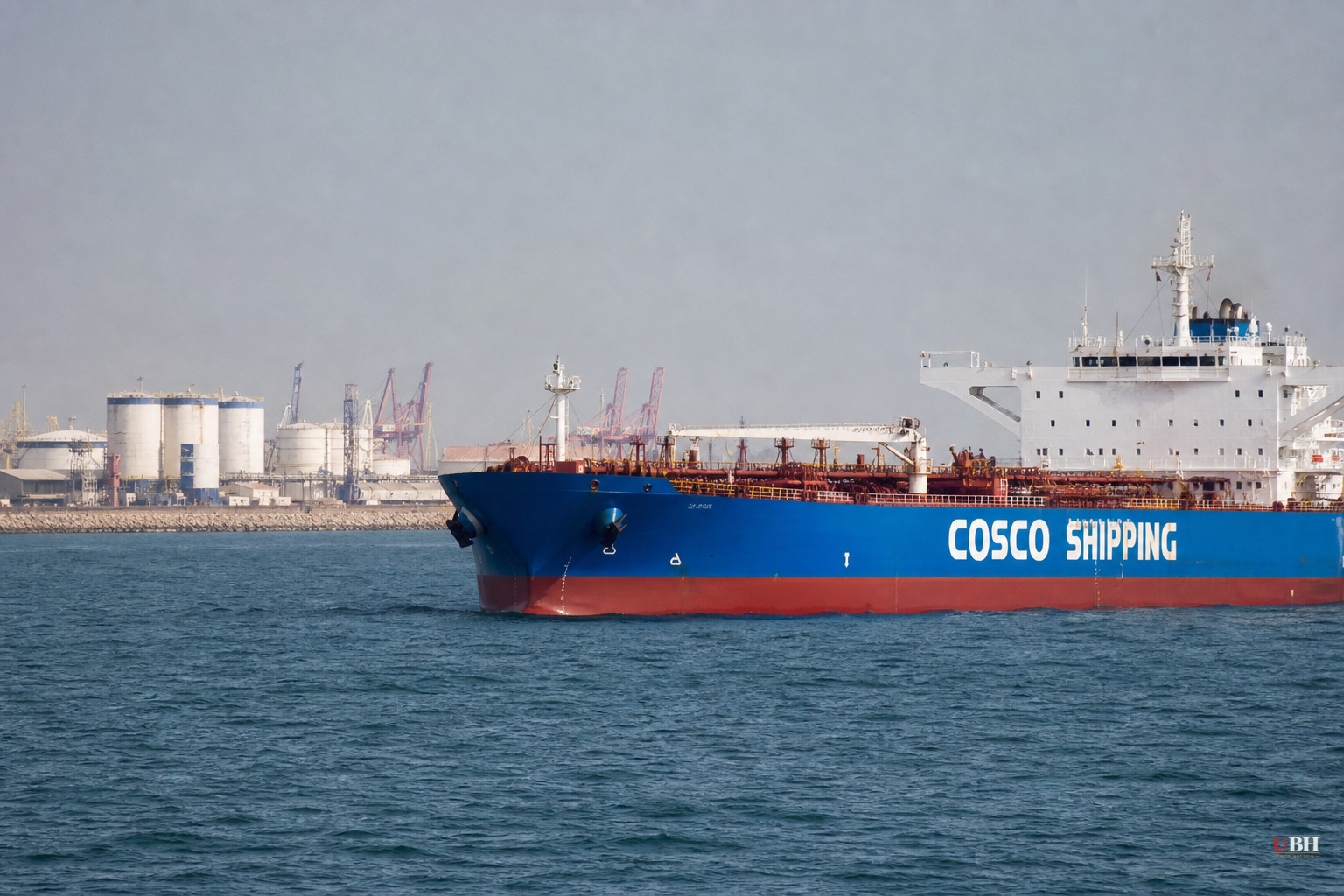
China's two largest state-run oil shippers pulled their tankers out of the Strait of Hormuz and the Bab al-Mandeb Strait in late July, according to industry executives and ship-tracking data cited by Reuters. This occurred despite Iran largely giving Chinese vessels a pass during its ongoing conflict with the United States and Israel.
COSCO Shipping Energy Transportation and China Merchants Energy Shipping, known as CMES, together operate more than 100 Very Large Crude Carriers with a combined capacity topping 200 million barrels, according to Breitbart's reporting on the Reuters findings. CMES was first to abandon the Hormuz route, a decision Chinese executives told Reuters was made after consulting Beijing's central government about security risks. The move was never formally announced.
Instead of threading the chokepoints, Chinese tankers are now picking up crude through ship-to-ship transfers in the Gulf of Oman, outside Iran's effective attack range, according to ship-tracking firm Kpler. One Chinese shipping executive told Reuters the workaround has meant "low risk and good profits" so far. Vortexa data shows four COSCO VLCCs and one CMES vessel completed these transfers near the UAE port of Fujairah in July, with a dozen more scheduled through mid-September.
Why China is being cautious anyway
Iran's Islamic Revolutionary Guard Corps has generally exempted Chinese and Russian-flagged ships from its attacks in the Persian Gulf, according to Anders Corr, writing in the Epoch Times. Corr points to close Beijing-Tehran ties, including alleged Chinese shipments of 400 shoulder-fired surface-to-air missile launchers to Iran, as a likely reason for that preferential treatment. He also notes China has cut a separate arrangement with the Houthis in Yemen to keep its shipping moving through the Red Sea corridor.
But a preferential arrangement isn't a guarantee, and industry sources describe genuine hesitation in Beijing. Reporting from morethanshipping.com states that although Iran has publicly hinted at a "carve-out" for Chinese and Russian vessels, no formal carve-out actually exists. The U.S. has effectively blockaded Hormuz-transiting ships, and the Houthis have separately announced their own blockade of Bab al-Mandeb. Chinese shippers are facing real exposure even if Tehran wants to spare them, and Beijing appears unwilling to bet its fleet on informal assurances from a government fighting a war on multiple fronts.
That caution lines up with what Iran itself has demonstrated on the water. Iran announced on July 31 that it struck two ships and turned back four others, with the IRGC claiming the targeted vessels had U.S. military escorts, according to Corr's Epoch Times column. Whether or not that justification holds up, it shows Tehran is actively hitting ships in the strait, not just threatening to.
The oil is still moving, just the long way around
None of this has cut off China's oil supply. Austin Ramzy of the Wall Street Journal told NPR that China remains Iran's dominant customer, historically taking about 90% of Iran's oil exports. Imports averaged 1.7 million barrels per day before the war but dropped to roughly half a million barrels per day in July, still a significant flow. Ramzy said Iran shipped out more than 60 tankers bound for China during a roughly one-month pause in fighting between mid-June and mid-July, worth an estimated $5 to $6 billion, using a "ghost fleet" of sanctioned vessels that conduct ship-to-ship transfers east of Malaysia to obscure the oil's origin.
The rerouting has real costs. Oilprice.com reported that Murban crude jumped to a four-month high as ADNOC curbed supply to Asia, and that Strait of Hormuz shipping has slowed broadly following vessel attacks in the region, not just for Chinese carriers. Saudi Aramco has responded by loading tankers at its Hormuz-area ports and offering ship-to-ship transfers of its own near Fujairah, betting it can move oil through the strait safely, according to Breitbart.
China is also building a longer-term alternative that avoids the Middle East entirely. Chinese shipper Sea Legend has launched a new Arctic route, dubbed the "Ice Silk Road," running from Ningbo along Russia's Northern Sea Route to Felixstowe, England. Al Jazeera reported the route can cut a roughly 40-day Suez Canal transit down to as little as 20 days, though the passage is only viable during warmer Northern Hemisphere months when ice is reduced, a limitation The Guardian's more optimistic framing on time savings glossed over.
What isn't clear yet is how long China's ghost fleet, ship-to-ship workarounds, and Arctic detours can keep pace with normal demand if the Hormuz standoff drags on. Ship-tracking data shows a dozen more Fujairah transfers scheduled through mid-September, a rolling test of whether the workaround holds or whether Beijing eventually decides the risk calculus on Hormuz has to change again.
Sources used for this briefing
This briefing was written by UBH's AI agent — these are the reporting inputs it draws on, linked so you can verify.

