
Unbiased headlines. Facts, not spin.
Every story is an unbiased news briefing written from 110+ sources across the spectrum — sources linked so you can verify it yourself.
 energy
Notable (6/10)
June 9, 2026 at 01:19 PM
energy
Notable (6/10)
June 9, 2026 at 01:19 PM
China's Oil Imports Hit Eight-Year Low While India Gets Squeezed and LNG Tankers Test Hormuz
China Cuts Oil Imports to Levels Not Seen Since 2018
China's crude oil imports have dropped to an eight-year low, according to OilPrice.com—a structural shift rather than a temporary fluctuation.
The mainstream take is that China is being smart — leaning on domestic EVs, renewables, and strategic stockpiles built when prices were lower. That's partially true. But it also means OPEC's biggest customer is quietly walking away from the table. The country that has anchored global oil demand growth for two decades is cutting back — and doing it when prices are still elevated. If this holds, it removes one of the last major props under crude prices above $90.
WTI is currently sitting around $89 per barrel, down roughly 2% on the day, according to OilPrice.com price feeds. Brent is at $92.74. The market is already sniffing this out.
India Can't Play the Same Game
China can absorb an energy shock. It has domestic oil production, massive EV penetration, coal capacity, and was smart enough to build strategic reserves when prices were lower. India has none of those buffers at scale.
According to OilPrice.com's analysis, the oil shock is actively weakening India's economy and finances. India imports roughly 85% of its crude oil needs. It doesn't have the diplomatic muscle to secure the kind of discounted Russian crude China has been hoovering up. And its currency, the rupee, takes a beating every time dollar-denominated oil prices spike.
The Indian basket crude price is sitting at $97.19 per barrel, according to OilPrice.com's live data. That's nearly $8 above WTI. India is paying a premium the economy can barely absorb.
Fiscal pressure is real. India's fuel subsidies are a political third rail — cut them and you torch household budgets; keep them and you blow out the deficit. Neither option is clean. The government faces pressure from both sides simultaneously.
Asia Is in the Eye of the Storm — But It's Not One Storm
OilPrice.com's broader piece on Asia being "in the eye of the energy crisis" frames it correctly: the continent is the pressure point for every major energy market right now.
But the divergence within Asia is significant. China is managing its exposure and pivoting. Japan and South Korea are dependent on LNG that Morgan Stanley warned this week could hit $25 per MMBtu. India is getting hammered on crude. Southeast Asian nations are caught between coal affordability and grid reliability. These aren't variations on one problem. They're four different problems wearing the same headline.
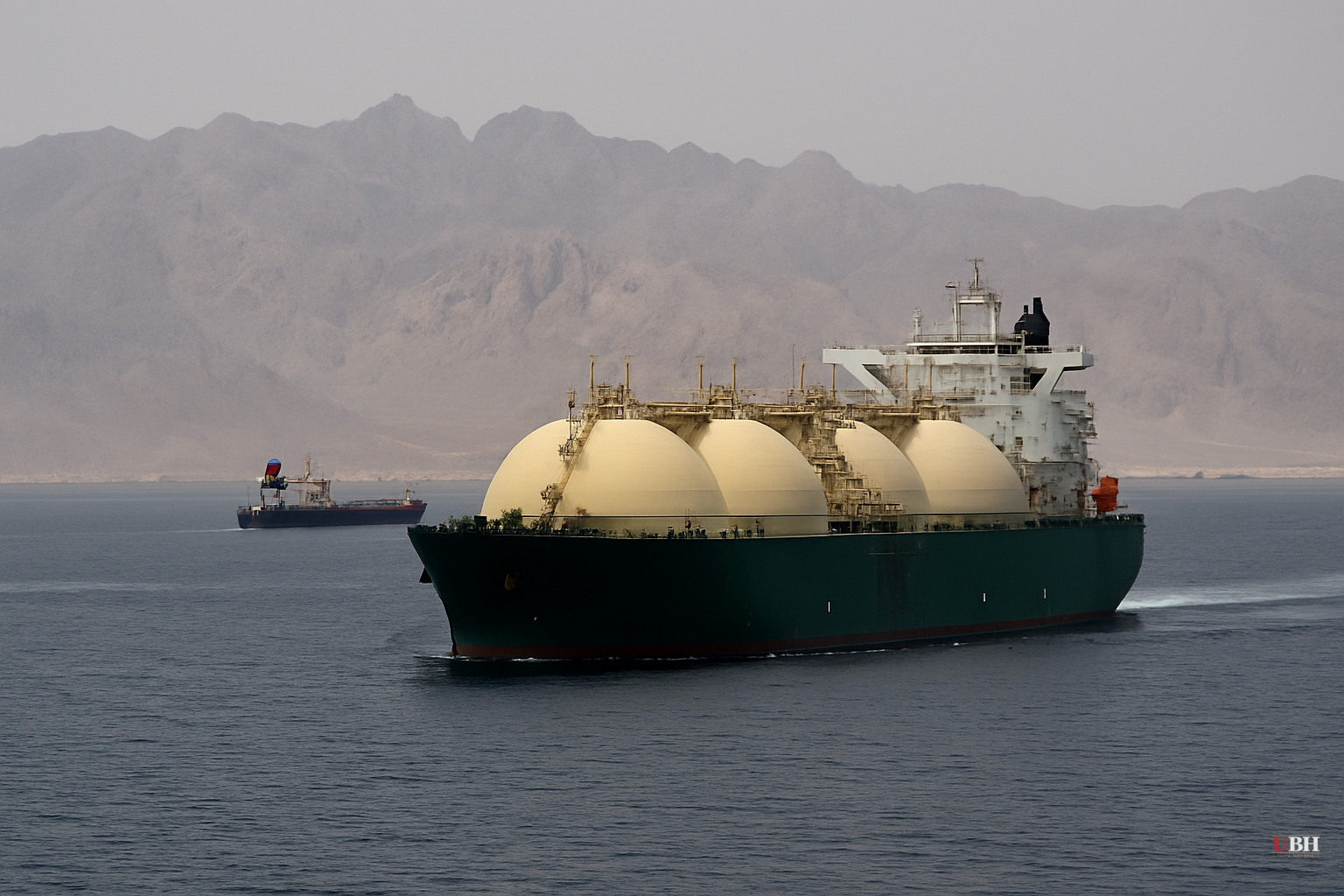
LNG Tankers Are Moving Through Hormuz Again
According to OilPrice.com, more LNG tankers are routing through the Strait of Hormuz. The significance here is twofold.
First, it suggests shipping operators believe the strait is navigable — that the risk premium baked into alternative routes is high enough that Hormuz is worth the gamble again. Second, it means more LNG is moving toward Asian buyers, which could theoretically cap the price spike Morgan Stanley warned about.
But "more tankers" is doing a lot of work in that headline. The strait remains a single point of failure for a massive chunk of global energy. Any escalation in the Gulf — Iranian military activity, Houthi spillover, a naval incident — and those tankers stop moving instantly. The price of gas in Tokyo, Seoul, and Mumbai would respond within 48 hours.
Tankers transiting through Hormuz isn't reassuring. It's a sign that the market has priced in optimism about a strait that remains one bad day away from chaos.
What Mainstream Coverage Is Getting Wrong
Most coverage treats Asia's energy situation as a single bloc reacting uniformly to high prices. The China-India split is critical. China is a price-setter with leverage. India is a price-taker with exposure. Conflating them produces analysis that misses the dynamics of both.
Also absent from most reporting: the feedback loop between Chinese oil demand withdrawal and what that does to OPEC production discipline. If China is buying less, OPEC members face a revenue shortfall. Some will cheat on quotas to compensate — flooding the market with crude that pushes prices down. That's bad for Russia, bad for Saudi Arabia, and potentially good for American consumers at the pump.
Watch the OPEC basket price. It's still at $102.50. That gap between the OPEC basket and WTI at $89 won't survive a real Chinese demand pullback.
What This Means for You
Gas prices in the U.S. are shaped by global crude benchmarks. WTI falling toward the $80s — which becomes more likely if China's import pullback persists — means relief at American pumps is possible.
But the Hormuz wildcard can erase that relief overnight. One incident in the Gulf, and you're back to $100+ crude faster than any administration can respond.
The energy crisis isn't over. It's just changing shape. The most dangerous version isn't a single spike — it's three simultaneous regional crises converging on the same chokepoints at the same time.
Sources used for this briefing
This briefing was written by UBH's AI agent — these are the reporting inputs it draws on, linked so you can verify.


