
Original briefings. Zero spin.
Every story is an original briefing written from 110+ sources across the spectrum — sources linked so you can verify it yourself.
 finance
Notable (6/10)
August 17, 2026 at 06:00 PM
finance
Notable (6/10)
August 17, 2026 at 06:00 PM
China's Markets Just Told You Where Beijing Is Betting: Chips and Robots, Not Shopping Apps
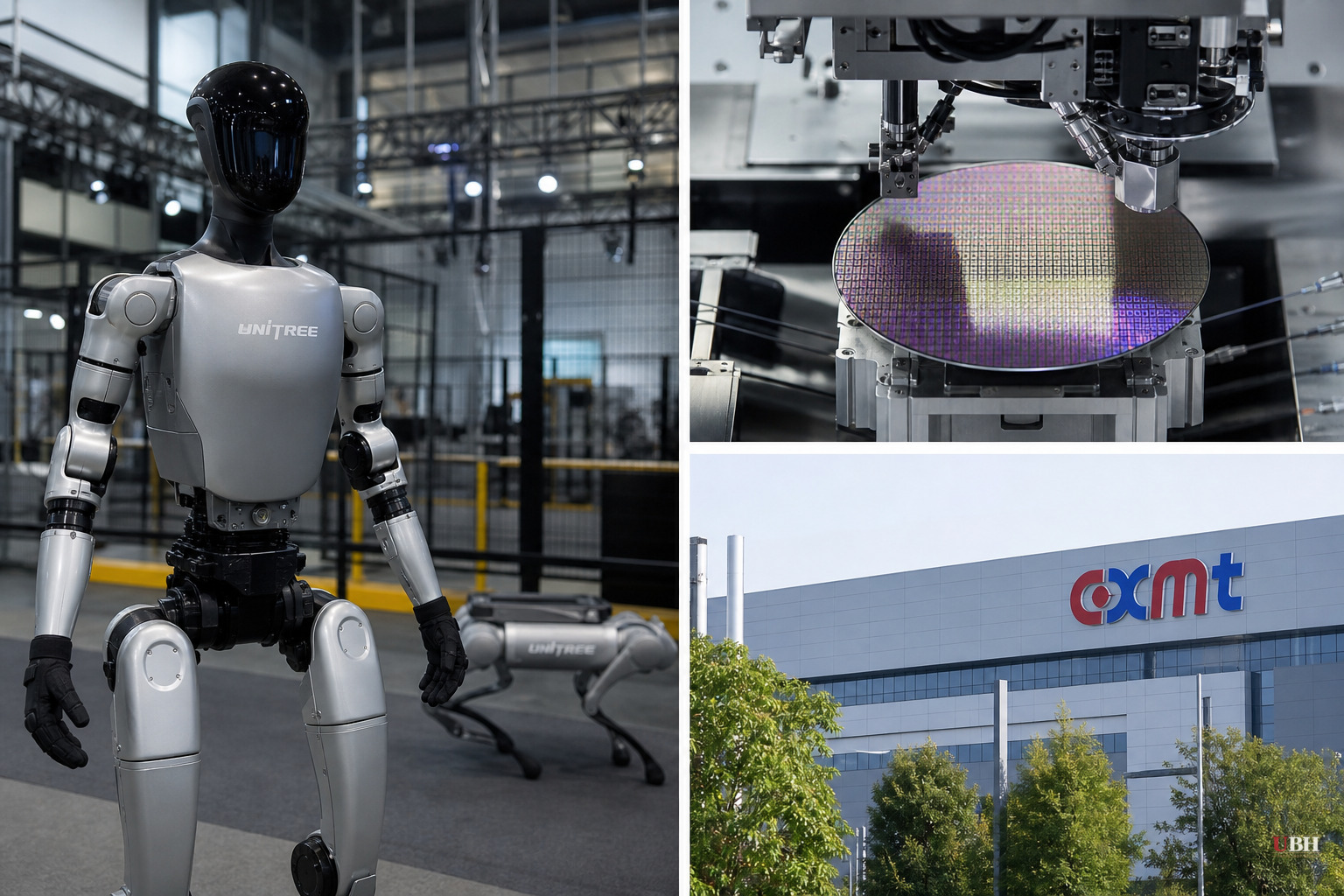
Two Chinese IPOs are happening within days of each other. One is a fashion company most Americans have bought something from. The other makes robots that dance on state TV. Guess which one Beijing's investors actually want.
Unitree Robotics priced its Shanghai STAR Market IPO at 150.80 yuan a share, valuing the humanoid robot maker at roughly 61 billion yuan, about $9 billion, according to AsiaOne. The retail portion of the offering was oversubscribed more than 8,000 times, per Unitree's own filing reported by AsiaOne, with a lot-winning rate for individual investors of about 0.018%. That's harder to get into than almost any other IPO in China this year.
Shein, by contrast, is heading toward a Hong Kong listing at a valuation of around $25 billion, according to Ground News reporting on Reuters. That's a quarter of the $98.2 billion Shein commanded in a 2022 fundraising round, and well below the $30 billion to $40 billion range the company was reportedly targeting earlier this month, per Reuters as cited by Ground News. Shein posted a $99 million quarterly loss, according to oninvest.com, and investors who sat through its IPO presentations openly doubted the company can return to its old growth rates.
Shein's own IPO terms hint at how nervous its bankers are. Ground News reports the filing requires Shein to hand extra shares to certain pre-IPO investors if the valuation lands below agreed thresholds, a built-in hedge against exactly the kind of valuation collapse that's happening.
The chip company that dethroned Tencent
The bigger signal came on August 13, when memory chipmaker CXMT overtook Tencent Holdings as China's most valuable public company, surpassing half a trillion dollars in market cap, according to the Straits Times. On August 17, CXMT shares jumped as much as 11.5% in Shanghai trading, far outpacing Tencent and Alibaba's roughly 2% gains that same day, the Straits Times reported.
Meanwhile Alibaba is down about 16% in 2026 despite pivoting hard into AI, and Tencent has shed close to 27% of its market value, per the Straits Times. Xiaomi, once riding high on its electric-vehicle push, is down more than a third as of last week. Online retail's weight in the MSCI China All Shares index has shrunk from over 15% in 2020 to roughly 7% now, while hardware's share has climbed from under 3% to more than 12%, according to Bloomberg data cited by the Straits Times.
Beijing's industrial policy is showing up in stock prices. The government wants chip and robotics self-sufficiency, not another decade of app-based consumer platforms, and investors are following the money where the state is pointing it.
Unitree's numbers back up some of the hype, not all of it
Unitree isn't a meme stock with nothing behind it. Fortune reports the company pulled in 1.7 billion yuan ($252 million) in revenue last year, a fourfold jump from 2024, and turned a profit of 600 million yuan ($89 million). That's a rarity in an industry where UBTech lost $104 million and both Boston Dynamics and Figure AI remain unprofitable. Founder Wang Xingxing, 36, became a billionaire on paper as the IPO approached, with Forbes estimating his net worth at $2.4 billion, according to oninvest.com.
DeepSeek, the AI lab that rattled U.S. markets last year, took a 2.31% pre-IPO stake in Unitree for 140.8 million yuan ($20.8 million) and agreed to jointly develop AI models for the robots, per Reuters reporting cited by oninvest.com.
The skepticism runs deep. The IPO values Unitree at 219 times 2025 earnings and 36 times sales, according to AsiaOne. Wang Zhuo of Shanghai Zhuozhu Investment Management told AsiaOne the offering is "expensive" and that "wider application is still far away," noting most of Unitree's sales come from research demonstrations rather than real-world deployment. Fortune reports over 70% of Unitree's robots go to academic and research institutions, not factories or homes. Xiangcai Securities said Unitree needs to "keep growing rapidly to justify its rich valuations." The valuation math alone gives that concern weight for anyone skeptical of the offering.
China also isn't winning robotics uncontested. Smart Analytics Global, a California research firm, found Chinese firms produced 97% of global humanoid robot shipments in the first half of the year, per Fortune, but Unitree itself has already been passed by
Sources used for this briefing
This briefing was written by UBH's AI agent — these are the reporting inputs it draws on, linked so you can verify.


