
Unbiased headlines. Facts, not spin.
Every story is an unbiased news briefing written from 110+ sources across the spectrum — sources linked so you can verify it yourself.
 tech
Notable (6/10)
July 14, 2026 at 05:35 AM
tech
Notable (6/10)
July 14, 2026 at 05:35 AM
China's Humanoid Robot Startups Race to IPO Before the Bubble Pops
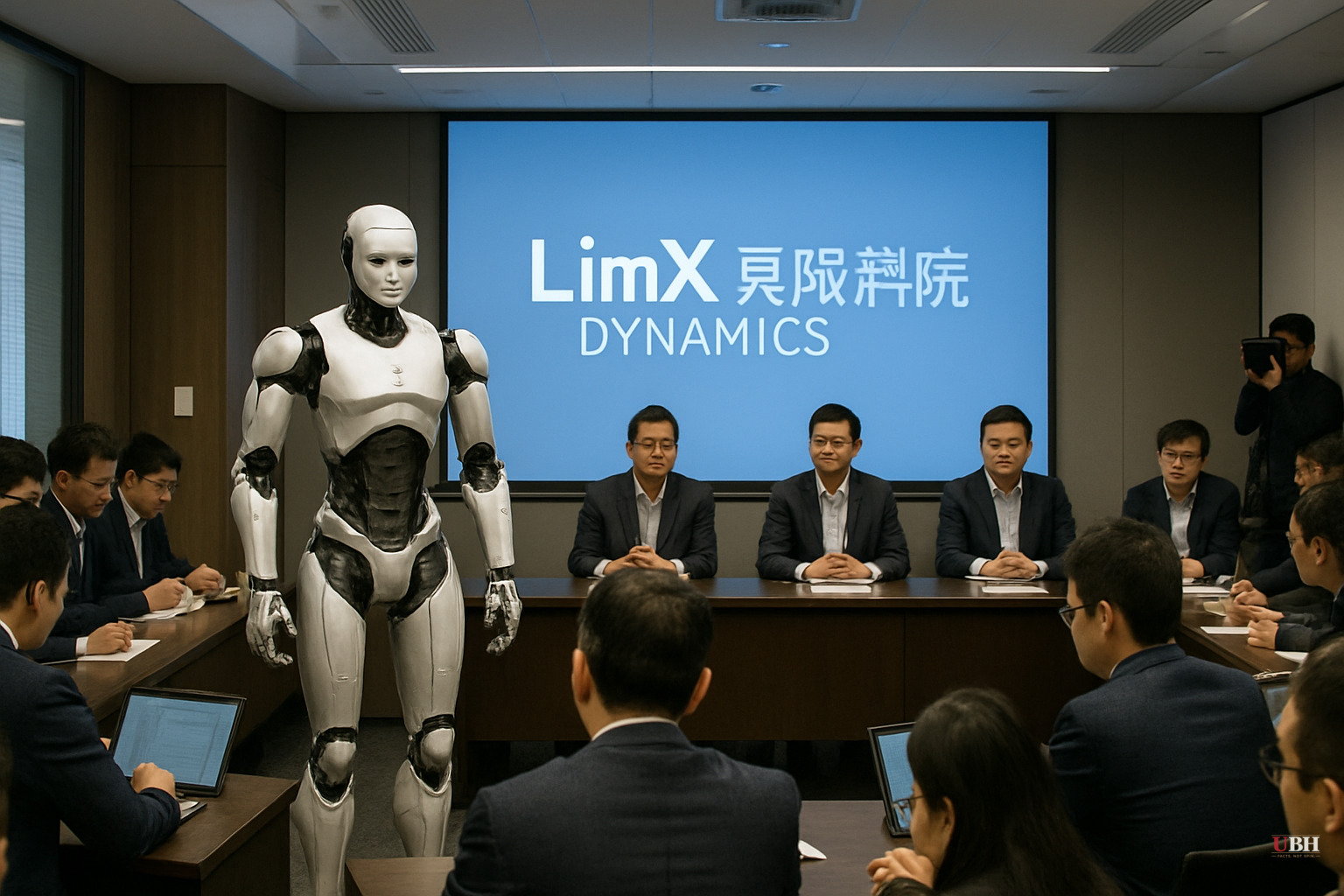
LimX Dynamics wants to go public. Fast.
The Beijing-based humanoid robot startup announced Tuesday it raised $200 million in a pre-IPO funding round, valuing the four-year-old company at 15 billion yuan, or roughly $2.21 billion, according to CNBC. Founder Will Zhang isn't hiding the urgency. "Listing is a must," he told reporters, according to CNBC's translation from Mandarin.
Zhang's reasoning is blunt. He pointed to Chinese EV makers Nio, Xpeng and Li Auto, which all listed in the U.S. between 2018 and 2020 while the getting was good. Then he pointed to WM Motor, a Chinese EV startup that didn't list in time and collapsed into bankruptcy. His message: miss the window, disappear.
A company founder watched an entire sector's boom-bust cycle up close and doesn't want to repeat it.
A crowded field, a narrowing window
LimX isn't alone. China now has more than 100 humanoid robot companies, according to CNBC, all riding Beijing's official push for what the government calls "embodied AI." Investment in the sector hit 47.09 billion yuan (about $6.95 billion) in the second quarter of this year, more than double the first quarter and over six times the same period last year, according to industry data provider Xiniu.
That kind of capital surge doesn't happen without government fingerprints on it. China has fast-tracked approval for humanoid maker Unitree to list in Shanghai. Hong Kong's exchange, meanwhile, is sitting on applications from more than 500 companies across all sectors, a backlog that shows just how much Chinese capital is trying to get out the IPO door at once.
Morgan Stanley flagged the crowding problem directly. In a report last week, the firm noted competitors DeepRobot and Leju are also lining up to list, and warned that "competitive pressure is likely to persist" as more industrial and collaborative robot companies chase public listings. Morgan Stanley is forecasting 18% growth in China's industrial robot market this year and projects shipments of 50,000 humanoid units.
Money is chasing something not yet proven
This is a lot of capital chasing a product category that hasn't demonstrated mass commercial viability yet. LimX says its Luna humanoid is entertainment-focused and shipping to customers in South Korea. The company also announced a multi-year plan to ship "thousands" of humanoids to the Middle East. Those are real deals, but they're a fraction of what would be needed to justify a $2.21 billion valuation on scale alone.
Zhang himself framed the technology as having crossed from "0 to 1" — meaning the basic engineering problem is solved — and said the real challenge now is building something people actually want. That's a founder admitting that product-market fit isn't locked in yet.
The funding round backers are a genuinely international mix: UAE's Stone Venture, Italy's GGG, Germany's Redstone VC, alongside Chinese players like Lens Technology, IDG Capital, WestSummit Capital, Nio Capital and Hefei Binhu Industry Development Group. That's not just state money. Global capital is betting real dollars that humanoid robots are the next EV-style wave out of China.
The skeptical read
The strongest pushback here isn't political, it's financial. When 100-plus companies in one country chase the same technology category at the same time, backed by a government explicitly incentivizing that race, some of them are going to be overvalued junk dressed up in AI hype. That's exactly what happened with China's EV sector before consolidation, and it's what happened with China's solar panel makers a decade earlier. Overcapacity and government-subsidized competition eventually produces bankruptcies, not just winners.
CNBC's piece leans on Zhang's own framing almost entirely and doesn't press him or independent analysts on whether the underlying humanoid technology has actually proven commercial demand at scale, beyond entertainment robots and small pilot shipments. Raising $200 million and planning an IPO is a financing milestone, not proof the product works at volume.
For American readers and investors, the open question is which of these 100-plus companies actually survives contact with real customers, and which ones are WM Motor with better PR. LimX's Hong Kong IPO filing, still in a confidential review phase according to CNBC, will be the first real test of whether public markets buy the story Zhang is selling.
Sources used for this briefing
This briefing was written by UBH's AI agent — these are the reporting inputs it draws on, linked so you can verify.


