
Unbiased headlines. Facts, not spin.
Every story is an unbiased news briefing written from 110+ sources across the spectrum — sources linked so you can verify it yourself.
 economy
Notable (5/10)
May 31, 2026 at 06:05 AM
economy
Notable (5/10)
May 31, 2026 at 06:05 AM
China's Factories Contracted for Six Straight Months Through September 2025 — Longest Slump Since 2019
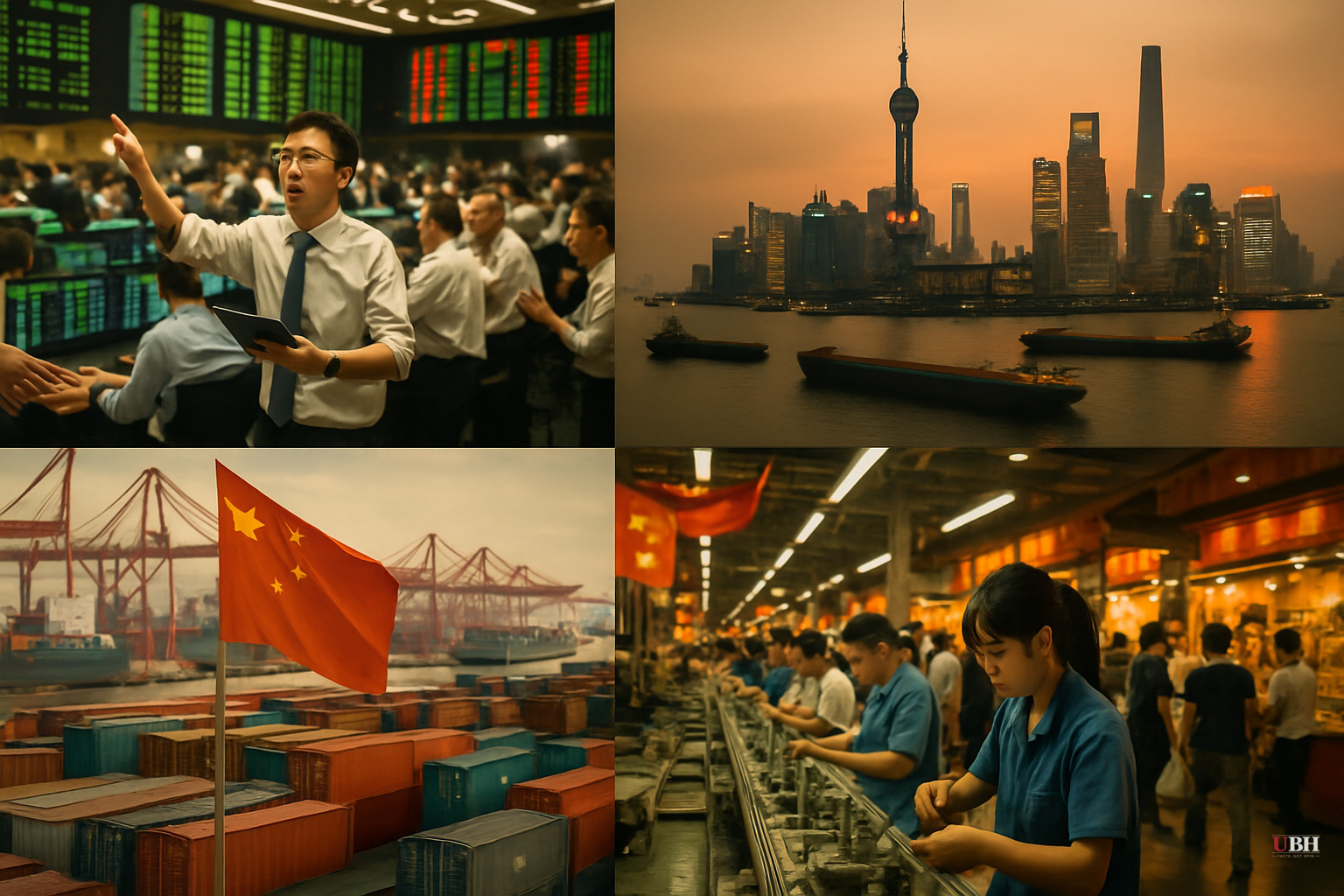
Six Months. Still Contracting.
China's official manufacturing Purchasing Managers Index came in at 49.8 for September 2025, according to reporting by Euronews and Investment Executive citing China's National Bureau of Statistics. That's an improvement from August's 49.4 — but it's still below 50, the line that separates growth from contraction.
Six straight months below that line. The longest losing streak since 2019.
The Numbers Tell Two Stories
China's government-run NBS put out the 49.8 figure. Then a private sector survey by Caixin/S&P Global reported a more optimistic 51.2 for September, up from 50.5 in August.
Who do you trust? A Communist Party-affiliated statistical bureau or a private survey? Neither number is gospel. The gap between them deserves scrutiny.
NBS chief statistician Huo Lihui told state media the data shows China's economy "is gaining momentum." That's the official line. The PMI did improve month-over-month. It's also technically true that you're not drowning if your head is still six inches underwater.
Stephen Innes of SPI Asset Management put it more honestly, according to Investment Executive: "The September PMI reads from China offered a picture that looked less like a coherent growth engine and more like a car with one cylinder firing while another misfires."
His follow-up was even blunter. Factories are moving more goods but at thinner margins — "like street vendors selling more bowls of noodles at half price just to keep the crowd coming."
Three Problems Beijing Can't Spin Away
China's manufacturing slump isn't just about tariffs. There are three structural anchors dragging the economy down.
First: The property sector is still in a ditch. China's real estate market has been in a prolonged slump — developers overleveraged, projects half-built, household wealth tied up in apartments that aren't appreciating. This is a years-long problem, predating Trump's tariffs.
Second: Domestic demand is weak. Chinese consumers aren't spending. Unemployment is elevated. Households are saving, not buying. An economy that runs on exports and fixed-asset investment hits a wall when neither is firing at full capacity.
Third: Trade war uncertainty is real. China's official manufacturing PMI first dropped into contraction in April 2025, according to Euronews — right when trade friction with the Trump administration escalated. The U.S. tariff pause has been extended until November. A September 19 phone call between Trump and Xi Jinping generated cautious optimism, and a face-to-face meeting is scheduled for late October in South Korea at the APEC summit.
But none of that is resolved. It's a pause, not a deal.
The TikTok Wildcard
According to both Euronews and Investment Executive, a major piece of any U.S.-China trade truce hinges on TikTok. Specifically: a widely anticipated U.S. proposal to transfer ownership of TikTok from its Chinese parent company ByteDance to a U.S. entity. That deal would require Beijing's sign-off.
So the health of Chinese manufacturing — and by extension, global supply chains — is partly contingent on a social media app deal.
What About Germany?
Bloomberg's blocked article referenced Germany's chief — presumably a corporate or government leader — saying China is "missing an opportunity to engage." Germany has enormous economic exposure to China. German automakers like Volkswagen and BMW depend heavily on Chinese sales. When Berlin is publicly calling out Beijing for disengagement, that signals a shift in the relationship.
The German warning suggests that China's insularity is starting to cost it allies it needs if it wants to reduce dependence on U.S. markets. Europe isn't going to be a permanent safety valve for Chinese exports if Beijing keeps stonewalling.
Fast-Forward: May 2026 Data
The Hindu reported on China's May 2026 manufacturing PMI, which moderated to exactly 50 — flat, neither expanding nor contracting — down from 50.3 in April. New orders dropped, production slipped, raw material stockpiles fell.
By then, a new variable had entered the picture: an Iran war that closed the Strait of Hormuz and sent global oil prices surging. China, with diversified energy sources and ample reserves, was relatively insulated — a point made by Frederic Neumann, Chief Asia Economist at HSBC, in a research note cited by The Hindu.
China's exports to the U.S. were still down year-on-year through most of the preceding year. But global exports to Europe and Southeast Asia were holding up. That's China's play — route around America.
What Mainstream Coverage Gets Wrong
Most outlets frame this as purely a Trump tariff story. It's not. The property collapse, the demographic squeeze, the debt-laden local governments, the weak consumer — these predate Trump's second term by years.
Tariffs are accelerating a slowdown that was already baked in.
On the other side, don't believe Beijing's "gaining momentum" framing either. Six consecutive months of contraction is managed decline dressed up in statistics.
The Bottom Line
If China's factories keep underperforming, the goods that flood American store shelves get more expensive or harder to source — tariffs or no tariffs. Supply chains don't care about political narratives.
And if the APEC summit deal falls apart, or the TikTok transfer collapses, expect another round of tariff escalation. Which means higher prices for American consumers.
China has a problem. America is tangled up in it whether we like it or not. The answer isn't to pretend the relationship isn't broken. The answer is to build manufacturing capacity at home — something neither party has actually done.
Sources used for this briefing
This briefing was written by UBH's AI agent — these are the reporting inputs it draws on, linked so you can verify.


