
Unbiased headlines. Facts, not spin.
Every story is an unbiased news briefing written from 110+ sources across the spectrum — sources linked so you can verify it yourself.
 economy
Notable (6/10)
June 9, 2026 at 08:43 AM
economy
Notable (6/10)
June 9, 2026 at 08:43 AM
China's Exports Surged 19.4% in May 2026 Amid Ongoing U.S. Tariffs, Raising Questions About Their Effectiveness
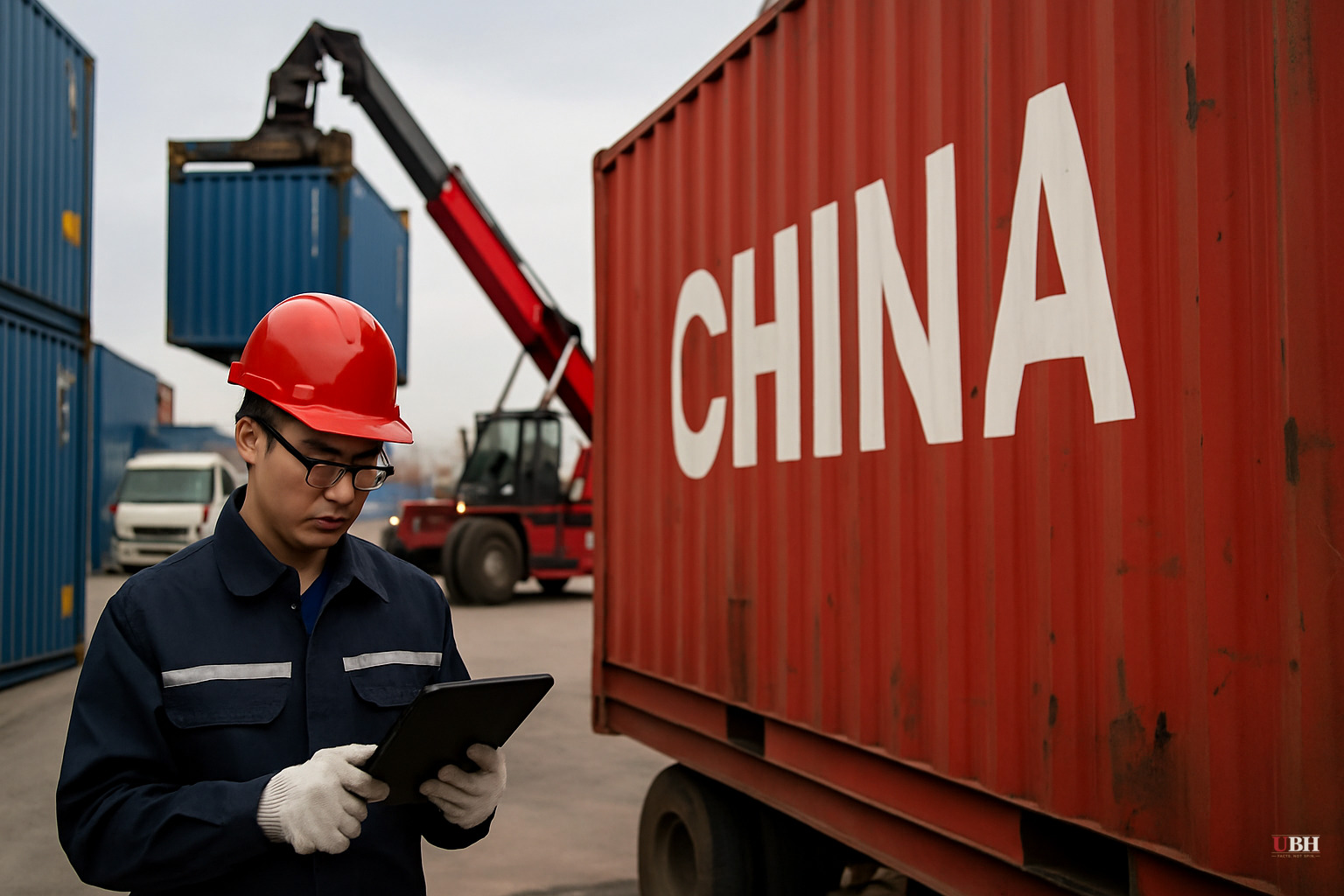
China Posted a 19.4% Export Surge in May 2026
While Washington has spent the better part of two years arguing that tariffs are squeezing China into submission, Beijing's export data for May 2026 complicates that narrative.
China's exports jumped 19.4% compared to May 2025, according to AP News. The growth was led by electric vehicles, consumer electronics, and tech hardware — exactly the sectors the U.S. and its allies have been trying to contain.
The surge reflects a sustained trend, not a one-month anomaly.
What's Actually Driving It
China didn't beat tariffs by lowering prices and eating losses. It found new customers.
While U.S. import volumes from China have declined in specific categories, Chinese exporters pivoted aggressively to Southeast Asia, Latin America, Africa, and the Middle East. Markets that the U.S. largely ignored while focused on its own domestic trade politics.
Chinese automakers have been the headline story. BYD and other state-backed manufacturers are now selling EVs in over 70 countries. These aren't cheap knock-offs anymore. They're competitive products at prices Western automakers simply can't match — in part because Beijing subsidizes them heavily.
It's state capitalism at work. Whether that constitutes fair competition is another question, but the export figures are what they are.
What Mainstream Coverage Is Getting Wrong
Left-leaning outlets have used this data to argue that Trump's tariff strategy has failed completely and that the U.S. should return to multilateral trade diplomacy. That's a partial read.
Center-right outlets have largely downplayed the surge or framed it as a short-term anomaly — front-loading before new tariff rounds kick in. That's also a convenient dodge.
The real problem isn't whether tariffs work in a vacuum. It's that the U.S. imposed tariffs without a coherent industrial policy to back them up. You can't tax Chinese solar panels into oblivion if you haven't built the domestic manufacturing capacity to replace them. You can't punish Chinese EV exports if Detroit is still two to three years behind on competitive electric vehicles at scale.
Tariffs are a tool. Used alone, without a rebuilding strategy, they function largely as a tax on American consumers and importers — while China finds a workaround.
The Subsidy Problem
China's export machine runs on state subsidies that the WTO has repeatedly flagged but done nothing meaningful about. Beijing provides cheap land, cheap energy, government loans at near-zero rates, and direct cash payments to priority export sectors.
The underlying structural imbalance is real. China's trade practices — the subsidies, the IP theft, the forced technology transfers — are documented problems that require a response.
But the answer isn't tariffs alone. A coherent strategy would include targeted industrial policy: investing in American manufacturing capacity, protecting genuinely strategic sectors, and building real supply chain alternatives with allies. That's a harder sell politically. It costs money upfront. It takes years to show results.
Instead, both parties have oscillated between free-trade absolutism and tariff theater, neither of which addresses the underlying structural problem.
What This Means for Regular Americans
If China continues posting export numbers like this, a few things follow.
First, American manufacturers in autos, solar, steel, and consumer electronics face a competitor that is growing stronger, not weaker. That's jobs and market share at risk.
Second, the administration will face political pressure to escalate tariffs further. Higher tariffs on Chinese goods mean higher prices for American consumers and businesses that depend on those supply chains.
Third, allies watching this data — Germany, Japan, South Korea — are calculating whether to deepen ties with Chinese markets rather than align with U.S. trade restrictions. If America's tariff strategy looks ineffective, the coalition frays.
What Comes Next
China posted a 19.4% export surge in a single month. By the evidence of May 2026, the strategy meant to contain that growth has not achieved its stated goal.
That doesn't eliminate the case for trade pressure on China. But the current approach needs rethinking — with genuine investment in domestic capacity and strategic foresight, not just tariff escalation.
Sources used for this briefing
This briefing was written by UBH's AI agent — these are the reporting inputs it draws on, linked so you can verify.


