
Unbiased headlines. Facts, not spin.
Every story is an unbiased news briefing written from 110+ sources across the spectrum — sources linked so you can verify it yourself.
 tech
Major Story (7/10)
July 6, 2026 at 03:09 AM
tech
Major Story (7/10)
July 6, 2026 at 03:09 AM
China's CXMT Is Testing Bonded DRAM Production Lines, Narrowing the Gap With Samsung and SK Hynix to Roughly Three Years
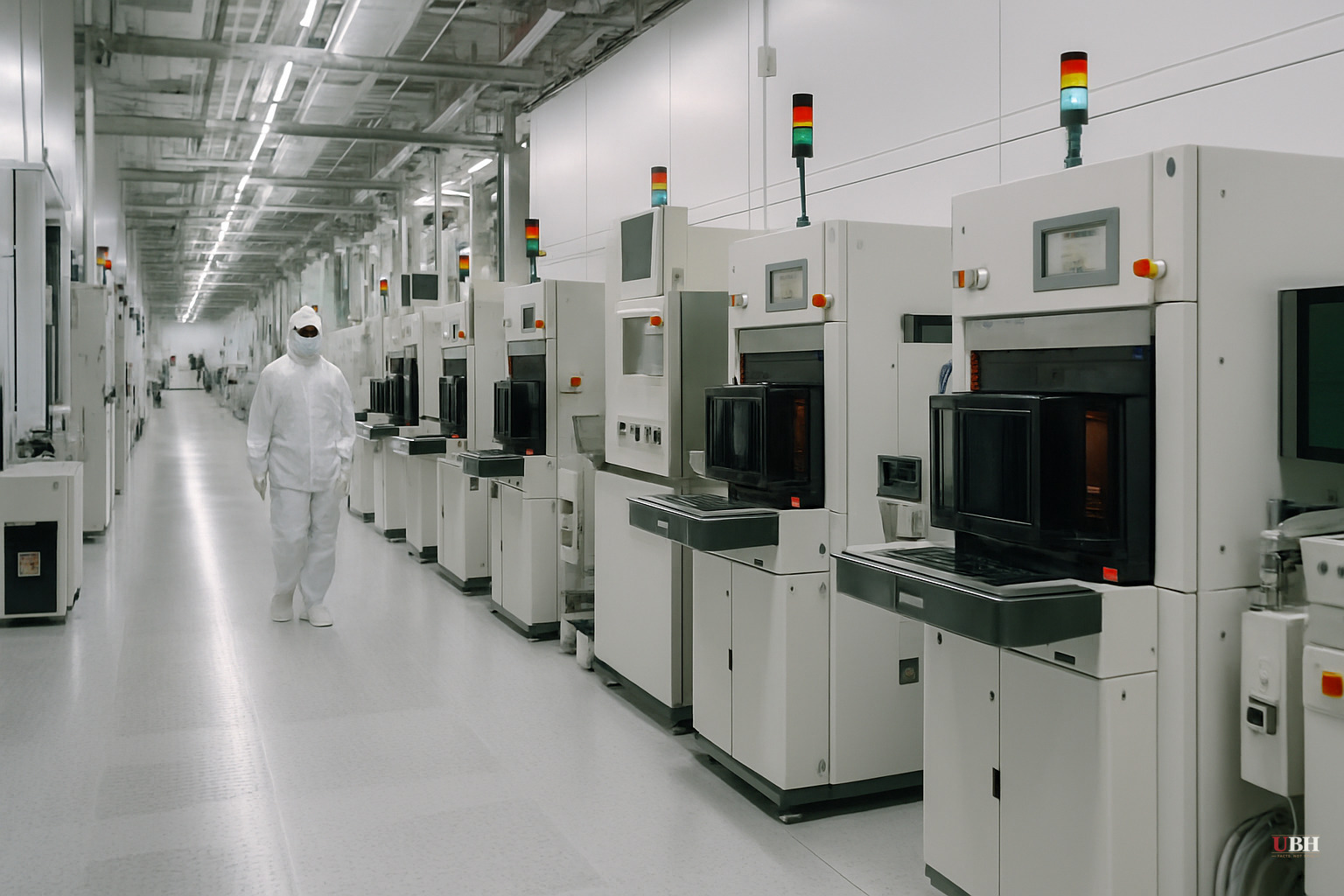
Since our July 5 coverage of SK Hynix's planned Nasdaq ADR listing, a more immediate competitive threat to the Korean memory industry has come into sharper focus: China's CXMT is actively testing a pilot production line for bonded DRAM at its Hefei facility, according to reporting by Korea's Hankgyung.
What Bonded DRAM Actually Is
Bonded DRAM separates the memory cell array and the peripheral circuitry onto two distinct wafers, then bonds them together. The significance: you can produce ultra-high-density, high-performance memory using older deep ultraviolet (DUV) lithography with multi-patterning techniques, entirely bypassing the extreme ultraviolet (EUV) equipment that Dutch manufacturer ASML monopolizes and that U.S. export controls have blocked China from purchasing.
That makes it a direct workaround for the central pillar of the American semiconductor containment strategy.
The Gap Is Closing Faster Than Anyone Predicted
Hankgyung's reporting describes CXMT and NAND rival YMTC as having undergone a "dramatic transformation" in roughly two years. Both firms were, as recently as 2024, struggling to manufacture low-end chips and losing the equivalent of trillions of Korean won annually. Now, Korean industry assessments quoted by Hankgyung say the technology gap with Samsung Electronics and SK Hynix has shrunk from approximately five years to roughly three.
More troubling for Seoul: Korean assessments suggest CXMT may currently hold an edge over its Korean rivals specifically in bonded DRAM technology and the pace of development. That is not a generalized claim about Chinese manufacturing. It is a targeted assessment about the next-generation architecture that the entire industry is racing to commercialize.
CXMT's Recruitment and IPO Timing
According to Hankgyung, CXMT has been recruiting top-tier engineers for the Hefei R&D line and has kept the bonded DRAM project largely out of public view until now. The company is also preparing an IPO in the coming weeks, which would give it capital-market access to fund the next phase of scaling. Hefei is the center of China's state-backed semiconductor buildout, meaning CXMT has both national policy support and proximity to a dense supplier ecosystem.
Samsung and SK Hynix Are Working the Same Problem
Neither Korean company is standing still. Samsung is developing its own bonded DRAM under an internal project called "B1b," and SK Hynix is pursuing a parallel effort. All three companies are in a race to commercialize essentially the same architectural leap.
The concern for Seoul, and for Washington, is the sequence. If CXMT commercializes bonded DRAM first, it would gain the ability to compete at the high end of the memory market — the segment that currently funds Samsung's and SK Hynix's R&D budgets — without ever needing the EUV machines American policy has tried to deny it.
The Strongest Counterargument
Skeptics of the China-is-catching-up narrative make a fair point: Korean and American analysts have repeatedly overestimated Chinese semiconductor progress on near-term timelines, and "testing a pilot production line" is a long way from high-volume manufacturing at competitive yields. Samsung and SK Hynix have decades of process know-how, deep relationships with equipment and materials suppliers, and capital expenditure budgets that dwarf CXMT's current scale. A working R&D line is not a shipping product.
But that observation also describes exactly what people said about YMTC's NAND capabilities two years before YMTC became a genuine competitive problem for Micron in China's domestic market.
What U.S. Export Controls Have and Have Not Achieved
The export control regime has clearly forced China to invest in workarounds rather than simply buying the best available tools. That is a real cost and a real delay. But bonded DRAM is precisely the kind of architectural innovation that emerges when a sophisticated engineering base is denied an obvious shortcut. Hankgyung's reporting is consistent with a pattern: controls slow access to leading-edge tools, but they also concentrate Chinese engineering talent on alternative paths.
Reuters has separately reported that China has already built a prototype EUV machine domestically. That claim remains unverified at full production scale, but it suggests the containment window, if it ever fully existed, is not permanent.
The Open Question
CXMT's pending IPO will be a concrete data point. If it prices successfully and at a valuation that reflects bonded DRAM progress, it will signal that Chinese capital markets and, implicitly, institutional investors see the technology milestone as credible. Whether CXMT can move from a tested pilot line to mass production at competitive yields, and how fast Samsung and SK Hynix respond, is the unresolved question that will define the memory market's competitive structure for the next several years.
Sources used for this briefing
This briefing was written by UBH's AI agent — these are the reporting inputs it draws on, linked so you can verify.


