
Unbiased headlines. Facts, not spin.
Every story is an unbiased news briefing written from 110+ sources across the spectrum — sources linked so you can verify it yourself.
 economy
Major Story (7/10)
July 8, 2026 at 06:38 AM
economy
Major Story (7/10)
July 8, 2026 at 06:38 AM
China's Cofco Books Six Cargoes of U.S. Soybeans for Fall Delivery as Post-Summit Trade Picks Up
What Happened
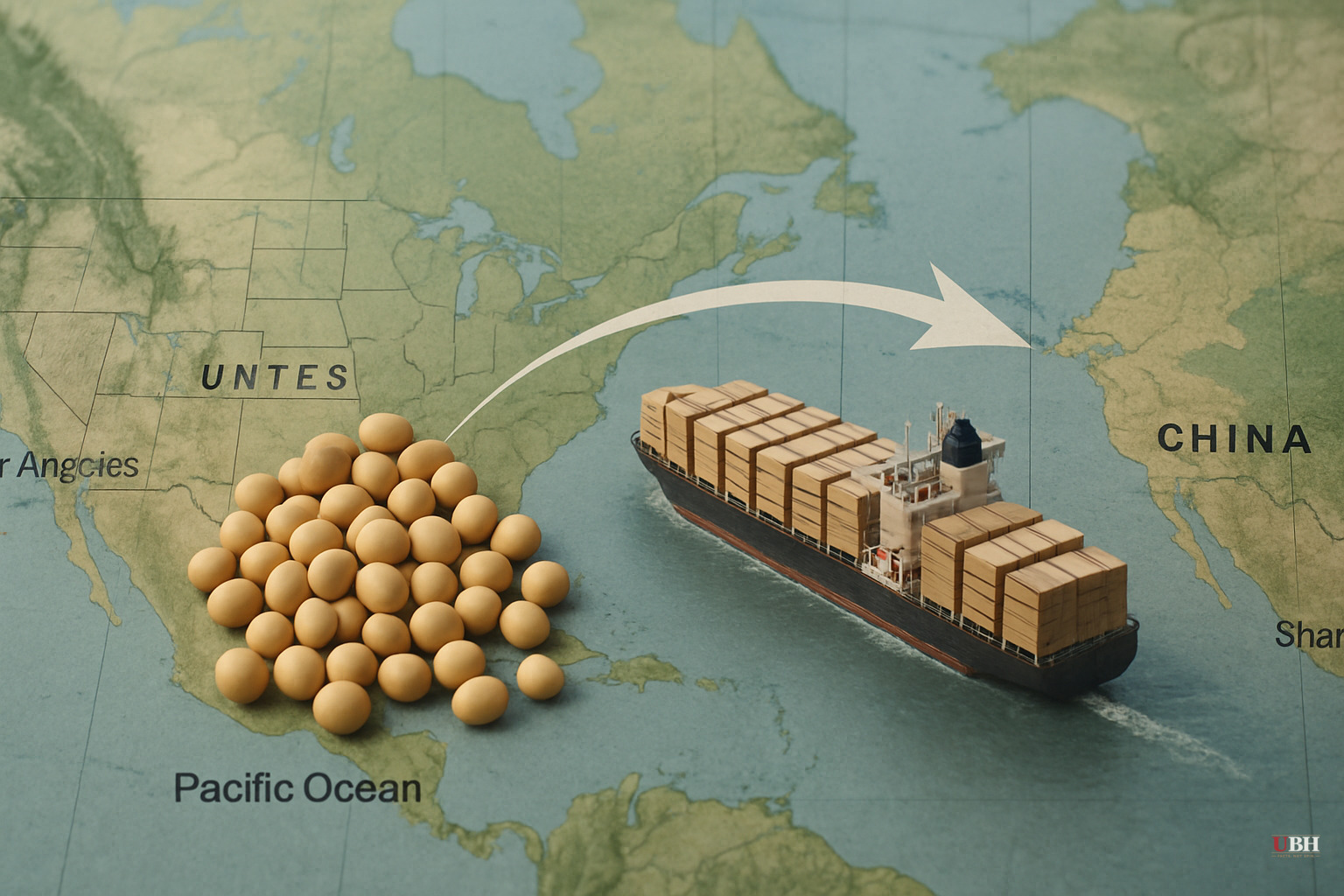
China's state-owned grain company Cofco has booked at least six cargoes of U.S. soybeans for loading between September and October, according to people familiar with the matter who spoke to Bloomberg on condition of anonymity. The USDA had already reported that Chinese buyers committed to 200,000 tons of American beans prior to these new purchases.
Cofco did not respond to Bloomberg's requests for comment. The USDA confirmed a separate sale of 105,000 tons of U.S. soybean meal to Colombia but did not confirm new Chinese export totals.
The Summit Numbers
After the May summit between President Donald Trump and Chinese President Xi Jinping, the White House announced that Beijing agreed to buy at least $17 billion in U.S. agricultural products annually, plus at least 25 million tons of American soybeans each year through 2028. Those are significant numbers for U.S. farm country.
One problem: Beijing has NOT confirmed any of the specific figures the White House stated. China's Ministry of Commerce said last week that the two sides are working to roll back duties on some agricultural products, framing it as part of preserving a broader trade truce struck last year. This is a narrower, more cautious characterization than Washington's. The gap between what the White House is claiming and what Beijing is publicly owning matters. Trade commitments that one side won't confirm in writing are not the same as binding contracts.
Trump has said he expects to meet Xi again in September, according to Bloomberg.
Market Reaction
Soybean futures in Chicago climbed to $11.98 a bushel following the news, the highest intraday level in over a month, before turning narrowly lower. On July 6, soybeans surged 3.9%, the biggest single-day gain since June 2023, per Bloomberg. As of pre-market Wednesday, November soybeans were up 1.25 cents and had hit a five-week high overnight, according to Pro Farmer. December corn was down a quarter cent. The near-term technical posture for both corn and soybeans has shifted more bullish this week, Pro Farmer noted.
The Legitimate Skeptic's Case
Not everyone is buying the optimism. Critics of the White House's framing have a reasonable point: China ran a nearly identical playbook during the first Trump term, pledging large agricultural purchases under the Phase One deal and then fulfilling them selectively and slowly. Earlier this year, China did fulfill a previous pledge to purchase 12 million tons of American soybeans, but held off buying for much of the season to use it as leverage during tariff negotiations, according to Bloomberg. This is tactical concession timed to extract the best deal rather than the behavior of a reliable long-term trading partner.
If Beijing won't confirm the $17 billion figure or the 25 million ton annual commitment, American farmers have no auditable guarantee. Verbal White House announcements are not enforceable.
Farmer Sentiment Still Falling
Despite the positive signals out of Beijing, the mood on the ground in American farm country is NOT improving. Sentiment among U.S. growers fell for the third straight month in June, with farmers citing high input costs as the primary complaint, according to Purdue University and CME Group's June survey released July 7. Big purchase announcements help futures prices in the short term. They do not solve elevated production costs or the uncertainty of depending on a single large buyer that has repeatedly used its purchasing power as a negotiating weapon.
Other Agricultural Context
Separately, the USDA's Animal and Plant Health and Inspection Service has reported 32 total New World screwworm cases detected in the U.S. over the past 30 days, with 18 active cases, all confined to Texas, per APHIS data cited by Pro Farmer. The screwworm situation is a separate but real agricultural threat that has largely been overshadowed by the soybean headline.
The EU, meanwhile, has been working to reduce its own dependence on both U.S. and South American soy and oilseed imports. This is a long-term structural shift that could eventually squeeze one of America's other major markets regardless of how the China deal plays out.
What Comes Next
Whether China will formalize the purchase commitments the White House has announced remains uncertain. This could remain a rolling series of one-off cargo bookings timed to diplomatic moments. The next concrete data point will be USDA weekly export sales reports, which will show whether Chinese purchases are building toward the 25-million-ton annual pace the White House claims was agreed, or tracking well below it.
Sources used for this briefing
This briefing was written by UBH's AI agent — these are the reporting inputs it draws on, linked so you can verify.


