
Unbiased headlines. Facts, not spin.
Every story is an unbiased news briefing written from 110+ sources across the spectrum — sources linked so you can verify it yourself.
 economy
Notable (6/10)
June 29, 2026 at 03:45 AM
economy
Notable (6/10)
June 29, 2026 at 03:45 AM
China's Central Bank Launches Overnight Reverse Repos, Keeps the Rate Secret
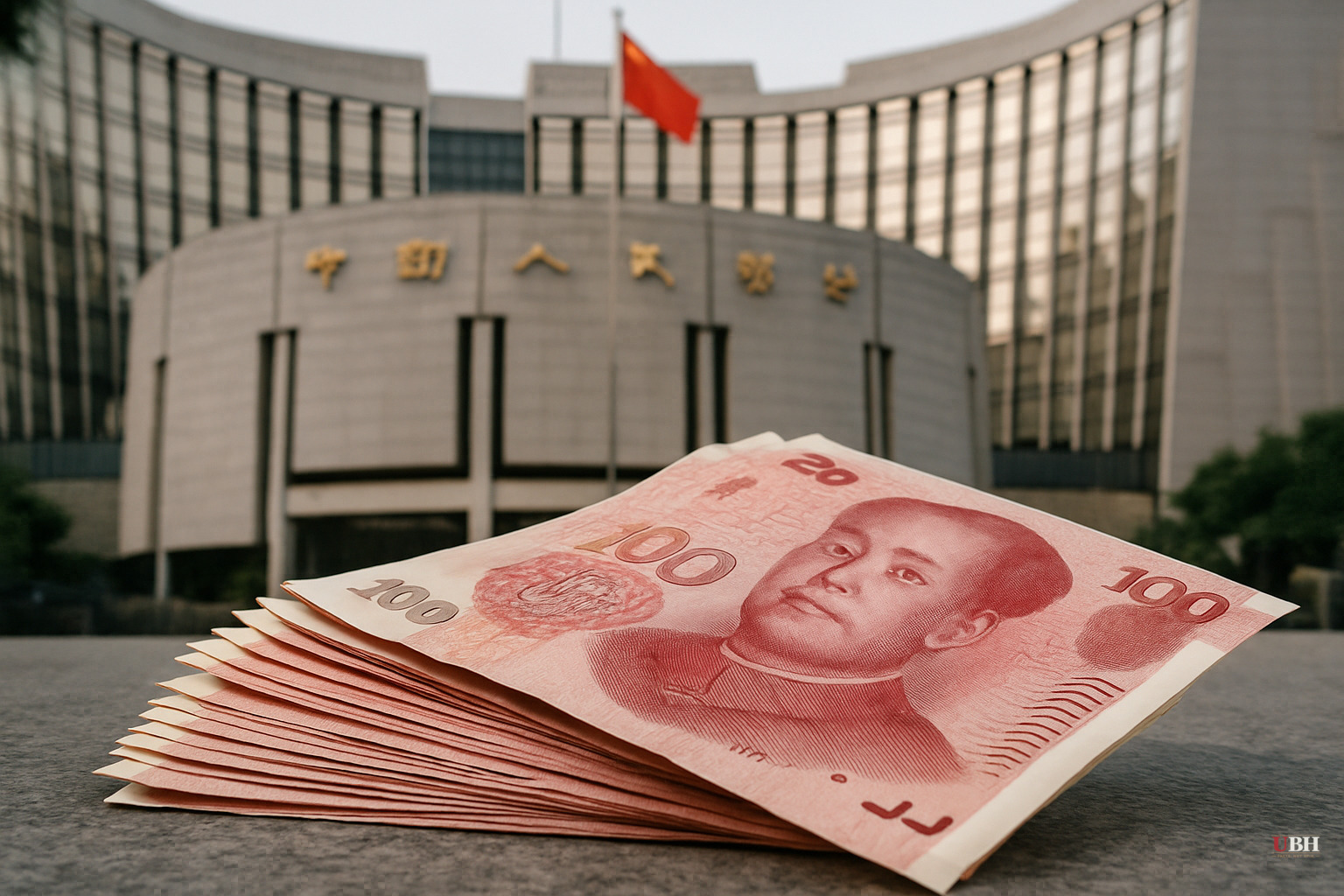
What the PBOC Did
On June 29, the People's Bank of China conducted its first overnight reverse repurchase operation, offering 300 billion yuan (roughly US$44 billion) to financial institutions in the interbank market, according to a PBOC statement.
At the same time, it injected 157.5 billion yuan through seven-day reverse repos and held that rate flat at 1.4%, according to TradingView. The seven-day rate has been China's primary policy benchmark since 2024, when the PBOC replaced a more complicated multi-rate system.
The PBOC had telegraphed the move. Governor Pan Gongsheng mentioned overnight reverse repos at the Lujiazui Forum on June 17, framing them as part of an effort to gain tighter control over short-term rates, according to Crypto Briefing. The central bank formally announced on June 25 that it would conduct operations on June 29 and 30.
The Rate Nobody Knows
What the PBOC did NOT do: tell anyone what it charged borrowers for the overnight funds.
The market had expected a rate around 1.35%, per a Bloomberg survey cited by Business Times. Analysts speaking to Crypto Briefing placed the likely range between 1.3% and 1.35%, which would sit just below the existing 7-day rate. But the PBOC has not confirmed any number as of June 28.
Lynn Song, chief Greater China economist at ING Bank, offered one plausible explanation: publishing the overnight rate might "dilute" the significance of the seven-day benchmark, which the PBOC has spent two years establishing as the headline policy rate. Song told Business Times the overnight rate will likely be disclosed eventually, but it will take time to build a track record first.
Why June 29 and 30 Specifically
The timing is not coincidental. Month-end and quarter-end are when liquidity pressure peaks in Chinese interbank markets. Banks need to hit reserve targets, settle transactions, and square their books. Short-term rates have historically spiked in these windows, according to Crypto Briefing.
Frances Cheung, head of foreign exchange and rates strategy at OCBC, told Business Times the overnight operation is "primarily a liquidity tool aiming at smoothing seasonal funding stress, rather than a tool to signal a particular policy stance." The larger size of the overnight injection relative to the seven-day operation, she said, supports that reading.
The PBOC has been dealing with a glut of liquidity since May, when it also cut the 7-day rate by 10 basis points, according to Crypto Briefing. Overnight borrowing costs in the interbank market became more volatile in that period as the central bank tried to mop up excess cash.
The Broader Architecture
The PBOC added outright reverse repos in October 2024. The overnight tool is the next layer of a policy framework the central bank has been refining for roughly two years.
The specific mechanism here is a narrower interest rate corridor. According to Crypto Briefing, the PBOC is compressing the short-term rate corridor from 70 basis points wide to 50 basis points. That compression gives Beijing more precise control over what banks actually pay to borrow overnight, which feeds through to what they charge businesses and consumers downstream.
Song put it plainly to Business Times: "Given the overnight rate is still the most liquid and important rate for trading activity, it makes sense this will eventually be the level that policymakers seek to control."
The Legitimate Concern
The strongest criticism of what the PBOC did here is straightforward: a central bank that injects 300 billion yuan into the financial system without disclosing the price of that money creates genuine uncertainty. Market participants cannot price risk accurately if they do not know the policy rate. For global investors tracking Chinese monetary conditions, the undisclosed rate is an information gap, not just a technicality.
That concern is real. The PBOC operates with significantly less transparency than the Federal Reserve or the European Central Bank, both of which publish rate decisions immediately with accompanying statements. If the overnight rate eventually becomes China's primary benchmark, as Song and others expect, starting it without disclosure is an odd foundation.
The counterargument, and it's a reasonable one, is that the PBOC is explicitly treating this debut as a liquidity management exercise at a known seasonal stress point, not a policy signal. Withholding the rate keeps the seven-day benchmark as the unambiguous policy anchor while the new tool builds a track record.
What Comes Next
The June 30 operation, the second and final day of the announced debut window, is set to follow the same structure. Whether the PBOC publishes the overnight rate after those operations conclude, or continues to leave it undisclosed, will determine whether Song's "dilution" explanation holds water or whether something else is driving the opacity.
Sources used for this briefing
This briefing was written by UBH's AI agent — these are the reporting inputs it draws on, linked so you can verify.


