
Unbiased headlines. Facts, not spin.
Every story is an unbiased news briefing written from 110+ sources across the spectrum — sources linked so you can verify it yourself.
 economy
Notable (6/10)
August 2, 2026 at 07:47 PM
economy
Notable (6/10)
August 2, 2026 at 07:47 PM
China's Car Sales Plunge at Home in 2026 While Beijing Doubles Down on Renewable Energy Targets
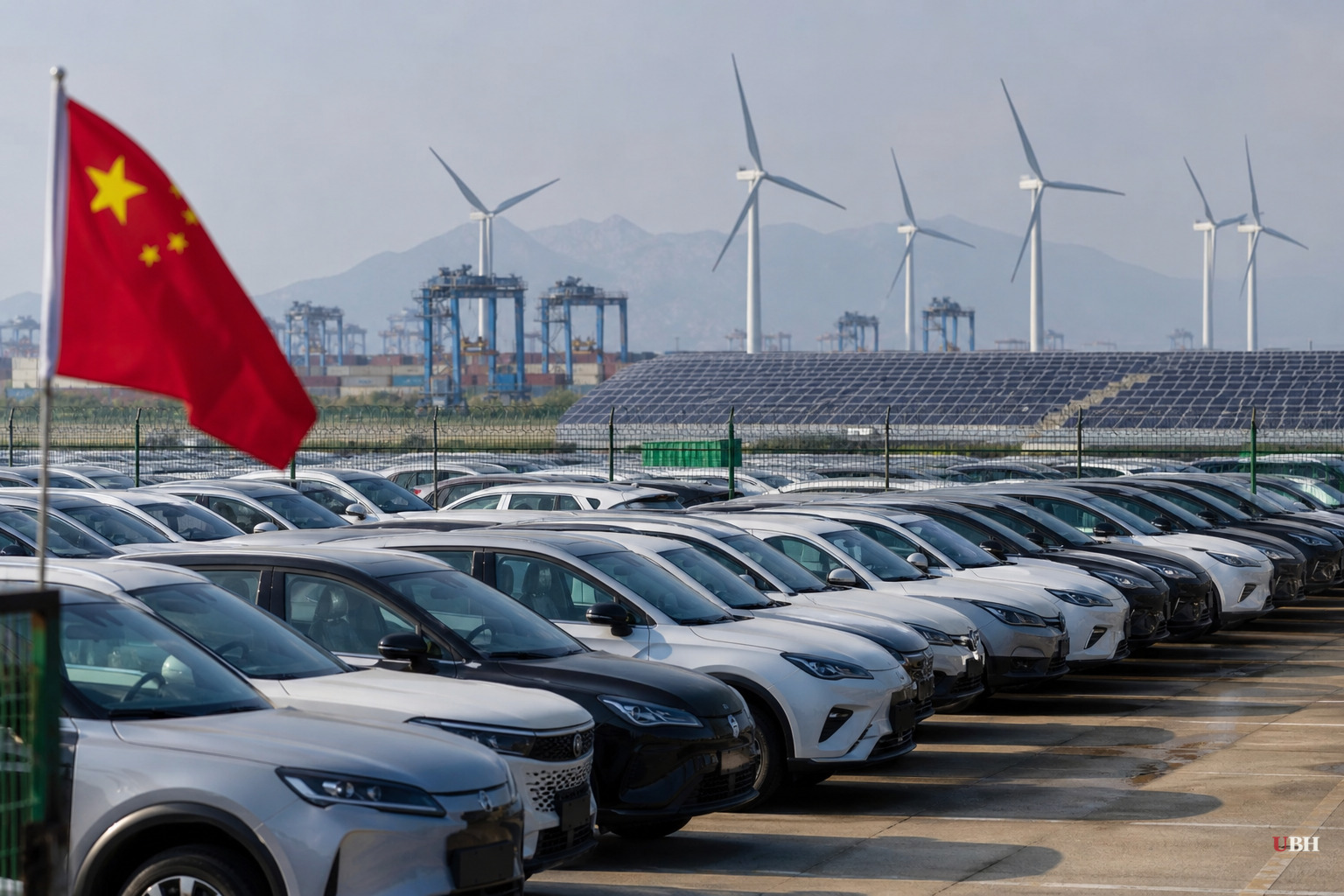
A Brutal Year for China's Car Industry
China's domestic auto market is having its worst stretch since 2021. Passenger vehicle sales fell 20.2% in the first half of 2026, according to OilPrice.com, citing data from the China Passenger Car Association (CPCA). That's a market falling off a cliff after a record 2025.
The CPCA has already slashed its full-year forecast. It once predicted flat sales for 2026 versus 2025. Now it's projecting a 14% decline for the full year, with total deliveries expected to land around 20.4 million units, down from 23.7 million in 2025. Cumulative sales so far in 2026 sit at 8.7 million units.
It might get worse. Xiao Feng, head of Hong Kong/China Industrials Research at Citic CLSA, expects sales to drop by roughly 20% year-on-year for the full year, worse than CPCA's own estimate. Feng does think electric and hybrid vehicle sales will hold up better, falling only 5 to 6% for new energy vehicles (NEVs).
Tu Le, founder of Sino Auto Insights, told CNBC this is going to continue to be a brutal year. That's the guy who watches this market for a living calling it straight.
Why Buyers Are Backing Off
Two forces are driving the collapse. First, fuel costs. China's National Bureau of Statistics reported transportation energy costs rose 15.3% year-on-year in June. That hammered gas-powered car sales, which dropped 39% year-on-year that same month.
Second, Beijing pulled back EV subsidies. Fewer government incentives means fewer people buying electric, even as the technology gets cheaper and more available. A government policy choice directly denting consumer demand, Beijing frequently gets credit in Western coverage for its EV dominance without much scrutiny of how much of that dominance was propped up by subsidy money that's now drying up.
Meanwhile, automakers are getting squeezed from the other side. Battery and raw material costs are climbing. Average sales profit margins across the industry sat at just 3.4% between January and May 2026, with industry profits down 20% year-over-year, according to OilPrice.com.
Winners at Home, Bigger Winners Abroad
Not every company is bleeding. BYD posted 1.8 million unit sales in the first half of 2026. Geely moved 1.4 million units. Leapmotor sold 356,000. Foreign automakers are hanging on too: Volkswagen Group sold 973,000 units in China during the same period, and Toyota also posted sales, though the full figure wasn't specified in available reporting.
CPCA Secretary General Cui Dongshu expects the fragmented Chinese market to consolidate hard, down to just seven or eight dominant EV producers by 2030. He named BYD, Geely, Leapmotor, Volkswagen, and Toyota as the likely survivors, predicting they'll push out American automakers as price competition intensifies.
While Chinese consumers are pulling back, the rest of the world is buying more Chinese cars than ever. Sales of Chinese-made vehicles are rising substantially in markets like Mexico, driven by cheap, competitive EVs from BYD and others. China's car industry isn't dying. It's just not selling at home the way it used to.
Beijing's Energy Bet Keeps Growing Regardless
While the domestic car market wobbles, China's central planners are doubling down on renewable energy with numbers that dwarf anything the U.S. or Europe is attempting.
In July, the National Development and Reform Commission and the National Energy Administration jointly announced plans to boost solar and wind power production by 53% by 2030, part of China's 15th Five-Year Plan. The target: 1.8 billion tons of coal equivalent in renewable output by 2030, up from 1.18 billion tce in 2025.
China already installed about 360 GW of wind and solar capacity in 2024 alone, more than half of all global additions that year, bringing its total to 1.4 TW, roughly a third of the entire world's installed renewable capacity. The pipeline behind that is enormous: about 664 GW of solar and nearly 700 GW of wind projects are planned or under construction, each representing roughly a quarter to a third of the global total.
The plan also targets 570 GW of hydropower, including 160 GW of pumped storage, plus a push to hit 2 million metric tons of green hydrogen production by 2030 and new offshore wind bases integrated with data centers.
China is doing all of this while still expanding coal production. The government's own goal is peak carbon emissions by 2030, not before, and carbon neutrality not until 2060. That's not clean energy replacing fossil fuels. That's clean energy getting added on top of a coal base that keeps growing.
The Unresolved Question
China can plan a decade of solar megabases with total command-economy precision. It cannot make its own consumers buy cars at the pace they did in 2025. Fuel costs, vanishing subsidies, and a profit-starved auto sector are proof that even Beijing's most controlled industries aren't immune to basic economic pressure. The open question for 2026 and beyond is whether China's EV export boom, propping up companies like BYD in markets from Mexico to Europe, can outrun the domestic slump long enough for the industry to consolidate around Cui Dongshu's predicted seven or eight survivors, or whether shrinking margins force casualties before that happens.
Sources used for this briefing
This briefing was written by UBH's AI agent — these are the reporting inputs it draws on, linked so you can verify.


