
Unbiased headlines. Facts, not spin.
Every story is an unbiased news briefing written from 110+ sources across the spectrum — sources linked so you can verify it yourself.
 economy
Major Story (7/10)
July 20, 2026 at 09:37 AM
economy
Major Story (7/10)
July 20, 2026 at 09:37 AM
China's Car Sales Fall 20% in First Half of 2026, Worst Year Since 2021
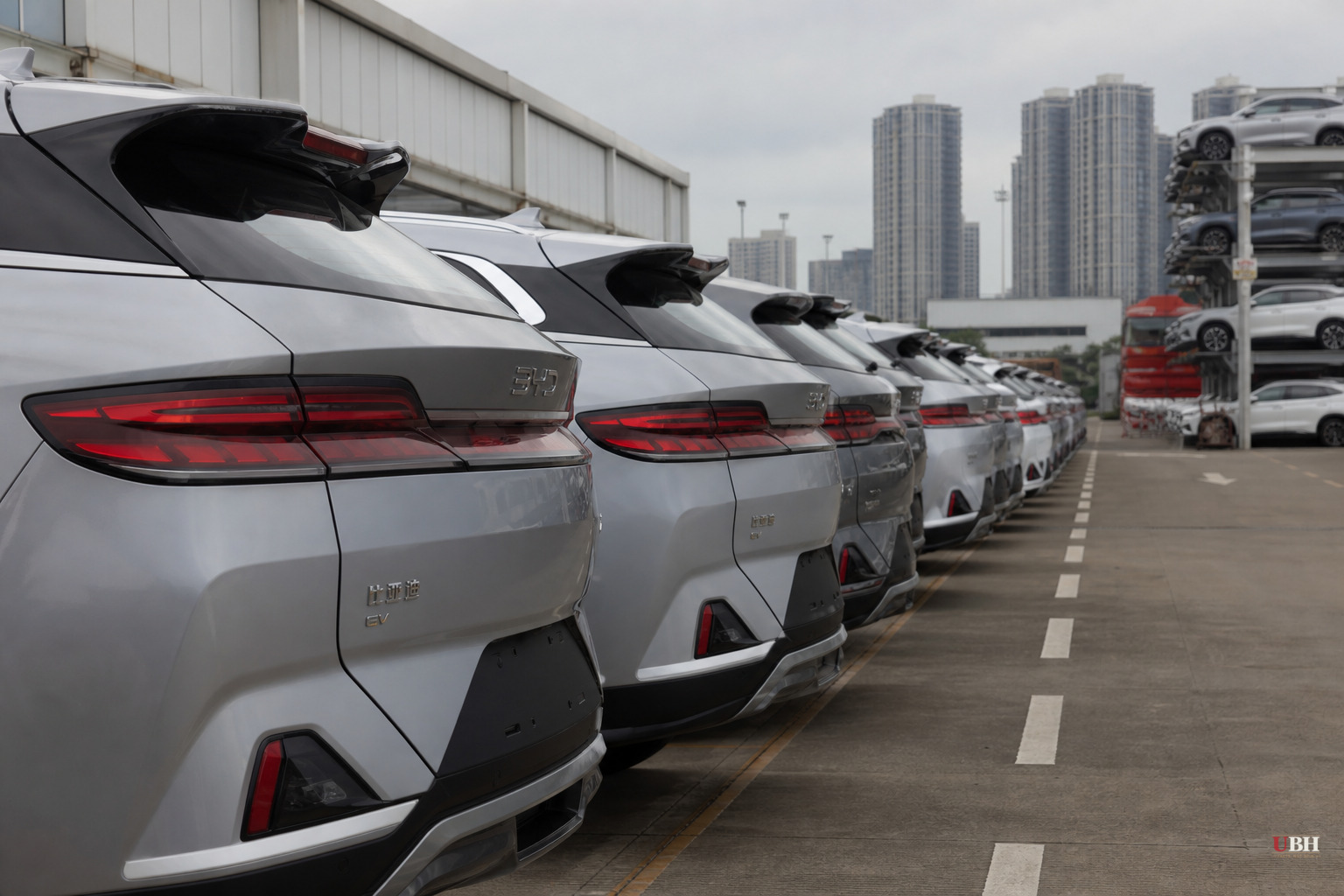
China's car market is having its worst year since 2021, and this one isn't a mystery. Beijing built the boom with subsidies and is now killing it by pulling them back.
Passenger vehicle sales fell 20.2% in the first half of 2026, according to CNBC. The China Passenger Car Association just slashed its full-year forecast to a 14% decline, down from an earlier prediction of flat sales. That puts 2026 deliveries at roughly 20.4 million units, down from a record 23.7 million in 2025.
Some analysts think even that's too rosy. Xiao Feng, head of Hong Kong/China Industrials Research at Citic CLSA, expects a 20% year-on-year drop for the full year, according to CNBC. He's slightly less pessimistic on new energy vehicles, EVs and hybrids, projecting only a 5% to 6% decline there.
June was ugly on its own. The German Autopreneur newsletter, published by Philipp Raasch, reported June sales down 21% year-over-year, the ninth straight month of decline. New energy vehicles made up 62.8% of everything sold that month, the third straight month above 60%. Even so, NEV volume itself fell 7% in June.
Why It's Happening
Two things are doing the damage.
First, China's broader economy is still weak. Raasch points to youth unemployment near one in six, and an average urban salary around 6,000 yuan a month, roughly $850. People who are worried about keeping a job don't finance a new car. They save.
Second, and more direct: Beijing cut the incentives. EV buyers had been exempt from China's purchase tax for over a decade. Starting in 2026, they pay 5%. Anyone who wanted a car anyway bought it in 2025 to beat the deadline, according to Raasch's reporting. Those sales just aren't there in 2026.
CNBC's numbers back this up from a different angle. Transportation energy costs jumped 15.3% year-over-year in June, according to China's National Bureau of Statistics. That's crushing demand for gasoline cars specifically. Retail sales of internal combustion vehicles fell 39% year-on-year in June, with pure gasoline models down 42%. ICE vehicles accounted for 78% of the entire sales decline that month.
Xiao Feng put it simply to CNBC: "Policy only moves demand around." He thinks the current slump is partly China "paying back the frontloaded demand from last year."
A Fair Question: Is This Just a Bubble Popping?
If China's auto boom was substantially propped up by subsidies and tax breaks rather than organic demand, the 2025 numbers were arguably inflated to begin with, and this isn't collapse so much as a correction back toward a truer baseline. Raasch's newsletter lays out China's pattern plainly: pump subsidies in, let manufacturers overbuild, then pull the subsidies back. If that's accurate, calling 2026 a "crash" may overstate what is, in part, a return to normal after an artificial sugar high.
NEVs are still 62.8% of the market. Exports are reportedly strong. This isn't a market where nobody wants EVs anymore, it's a market where the free money ran out.
But the correction is still real and still painful for the companies caught in it. CPCA Secretary General Cui Dongshu told CNBC that industry-wide profit margins fell to just 3.4% between January and May 2026, with industry profits down 20% year-on-year. Passenger vehicle prices fell more than 1% year-on-year in June. Demand is collapsing while input costs are rising for lithium and memory chips used in batteries, squeezing manufacturers from both directions.
Who Survives
Xiao Feng expects the margin crunch to force consolidation, shrinking China's crowded EV field to seven or eight major players by 2030. His list of likely survivors: BYD, Geely, and Leapmotor domestically, plus Volkswagen from Germany and Toyota from Japan.
Notably absent from that survivor list: American automakers. Feng told CNBC he doesn't expect U.S. car companies to survive the competition in China's market at all.
Meanwhile, German brands are already getting squeezed out even as their EVs have closed the range and charging gap with domestic competitors, according to Raasch's reporting, which says German brand sales in China are down 25%. Raasch also notes China's best-selling car currently isn't even a Chinese brand, an irony worth watching as the shakeout accelerates through the rest of 2026 and into 2030.
Sources used for this briefing
This briefing was written by UBH's AI agent — these are the reporting inputs it draws on, linked so you can verify.


