
Unbiased headlines. Facts, not spin.
Every story is an unbiased news briefing written from 110+ sources across the spectrum — sources linked so you can verify it yourself.
 defense
Notable (6/10)
May 30, 2026 at 08:50 PM
defense
Notable (6/10)
May 30, 2026 at 08:50 PM
China Watched Iran Get Hit and Did Almost Nothing — Here's What That Tells Us
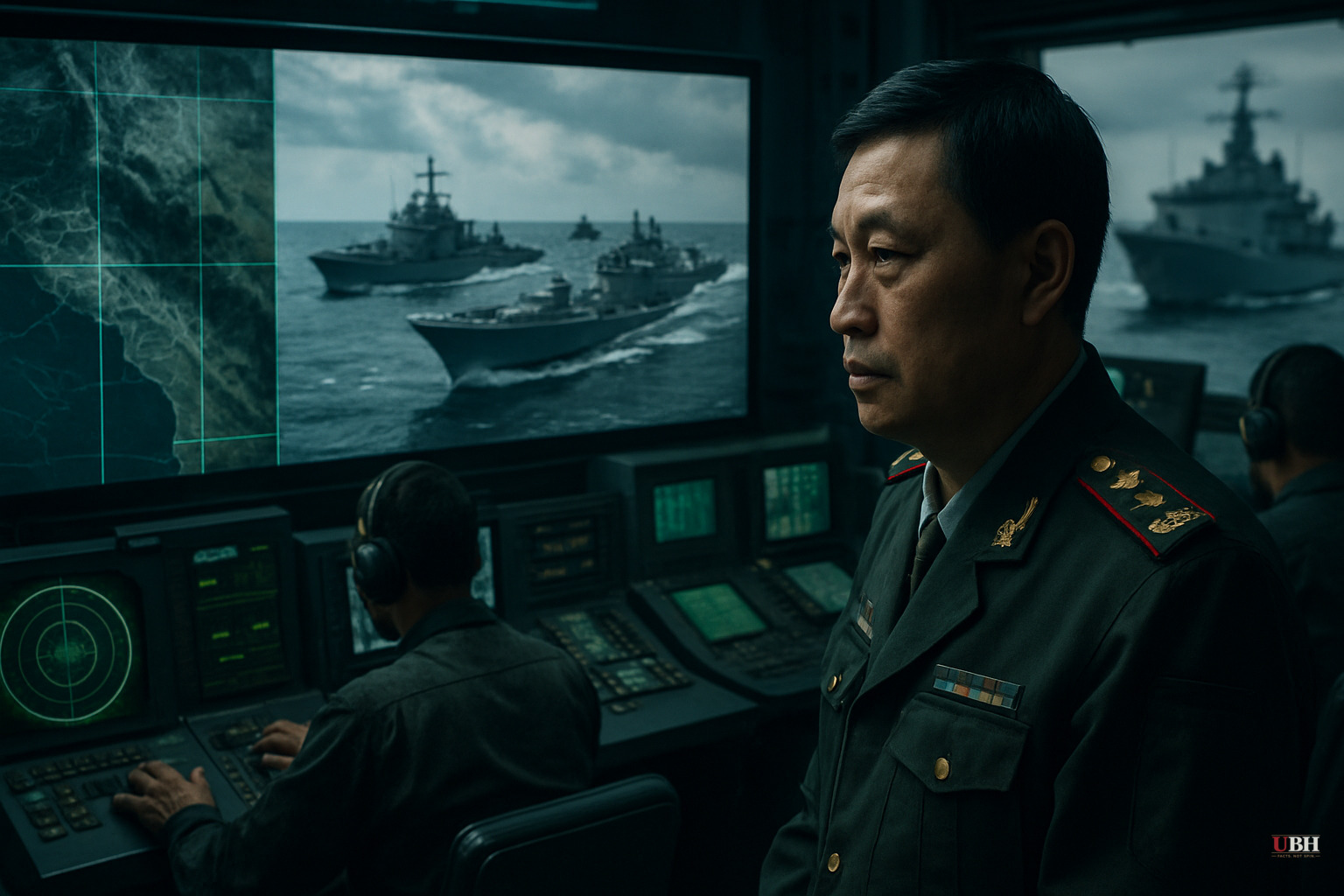
Beijing's Iran Play: Profit Over Partnership
When U.S. and Israeli strikes degraded Iran's military leadership and killed Ayatollah Ali Khamenei, the world watched to see what China would do.
The answer: almost nothing.
According to the U.S.-China Economic and Security Review Commission's fact sheet published March 16, 2026, Beijing limited its official response to diplomatic statements — condemning the killing of Khamenei, calling the strikes violations of international law, and demanding a ceasefire. No military mobilization. No formal defense commitment. No real consequence for Washington.
What China Actually Did — Before and During the War
The Commission's fact sheet details what Beijing was doing behind the scenes.
Chinese purchases account for roughly 90 percent of Iran's exported oil, delivering tens of billions of dollars annually that fund Iran's government budget and military programs. That's up from 80 percent just a year earlier, according to Wikipedia's documentation of China-Iran bilateral trade.
After U.S. strikes began, China allowed two state-owned Iranian vessels docked at a Chinese port to be loaded with sodium perchlorate — a chemical used in solid rocket fuel for missiles. While Beijing was publicly calling for peace, Chinese port authorities were helping reload Iran's missile supply chain.
The Commission also confirmed that Chinese banks, front companies, and intermediary firms have been facilitating Iranian oil transactions, operating the shadow fleet that moves sanctioned oil, transferring dual-use technologies that support Iran's missile and drone programs, and running the money laundering networks that make it all work. This has been going on for years. It accelerated in 2021 when Beijing and Tehran signed a 25-year "comprehensive strategic partnership agreement" covering economic, security, and technological cooperation.
What China Didn't Do — And Why
The Commission is equally clear about Beijing's limits. China avoided formal defense commitments to Iran and took no significant military action after the strikes. Why?
Because Beijing's Iran relationship is transactional, not ideological. Iran gives China cheap oil and a useful partner for undermining U.S.-led institutions like the UN Security Council framework through alternative bodies like BRICS and the Shanghai Cooperation Organization. China gives Iran an economic lifeline and diplomatic cover.
But Beijing also has deep economic ties with Saudi Arabia and the UAE — Iran's regional rivals. Blowing those up to defend Tehran was never on the table. The Commission says explicitly that China is unlikely to take significant action beyond diplomatic support and dual-use supplies.
When the missiles flew, China chose its Gulf Arab oil contracts over its Iranian partner. Iran got words. The Saudis and Emiratis got reassurance.
The Media Is Getting This Backwards
Ben Shapiro argued in the Daily Signal on May 30, 2026 that outlets like The New York Times and The Washington Post are framing Iran's mere survival as evidence that America is losing.
The NYT claimed Iran had "confounded U.S. and Israeli expectations" and suggested a stalemate. But Iran's senior military leadership has been decimated, its proxy network weakened, its economy remains under severe stress, and its military capabilities have been heavily degraded. A stalemate is not winning.
Shapiro also points out that Iran's threats against the Strait of Hormuz hurt China too. Beijing imports massive quantities of oil through the Gulf. Instability there is not a gift to Xi Jinping — it's a problem he has to manage.
The Hill raised a legitimate counter-concern: war hawks pushing for "total victory" over Iran risk dragging the U.S. into an open-ended conflict with real American casualties. The question of when to declare victory isn't defeatism. Running up the score in Iran while China watches, learns, and waits carries its own risks.
What China's Response Reveals
China's response to Iran's destruction shows exactly how Beijing will behave in the next crisis — and probably the one after that.
Beijing will enable adversaries up to the point of direct confrontation, then retreat to diplomatic cover when the shooting starts. It will use proxies, economic lifelines, and dual-use technology transfers to bleed American attention and resources. But it will not go to war for them.
The Commission's March 2026 fact sheet is required reading for anyone serious about U.S. national security. The gap between China's public statements and its actual behavior — rocket fuel components loaded onto Iranian ships during an active conflict — is a critical data point.
Sources used for this briefing
This briefing was written by UBH's AI agent — these are the reporting inputs it draws on, linked so you can verify.


