
Unbiased headlines. Facts, not spin.
Every story is an unbiased news briefing written from 110+ sources across the spectrum — sources linked so you can verify it yourself.
 economy
Major Story (7/10)
July 18, 2026 at 01:08 AM
economy
Major Story (7/10)
July 18, 2026 at 01:08 AM
China Raises Gasoline and Diesel Prices as Middle East War Sends Oil Up 12% in a Week
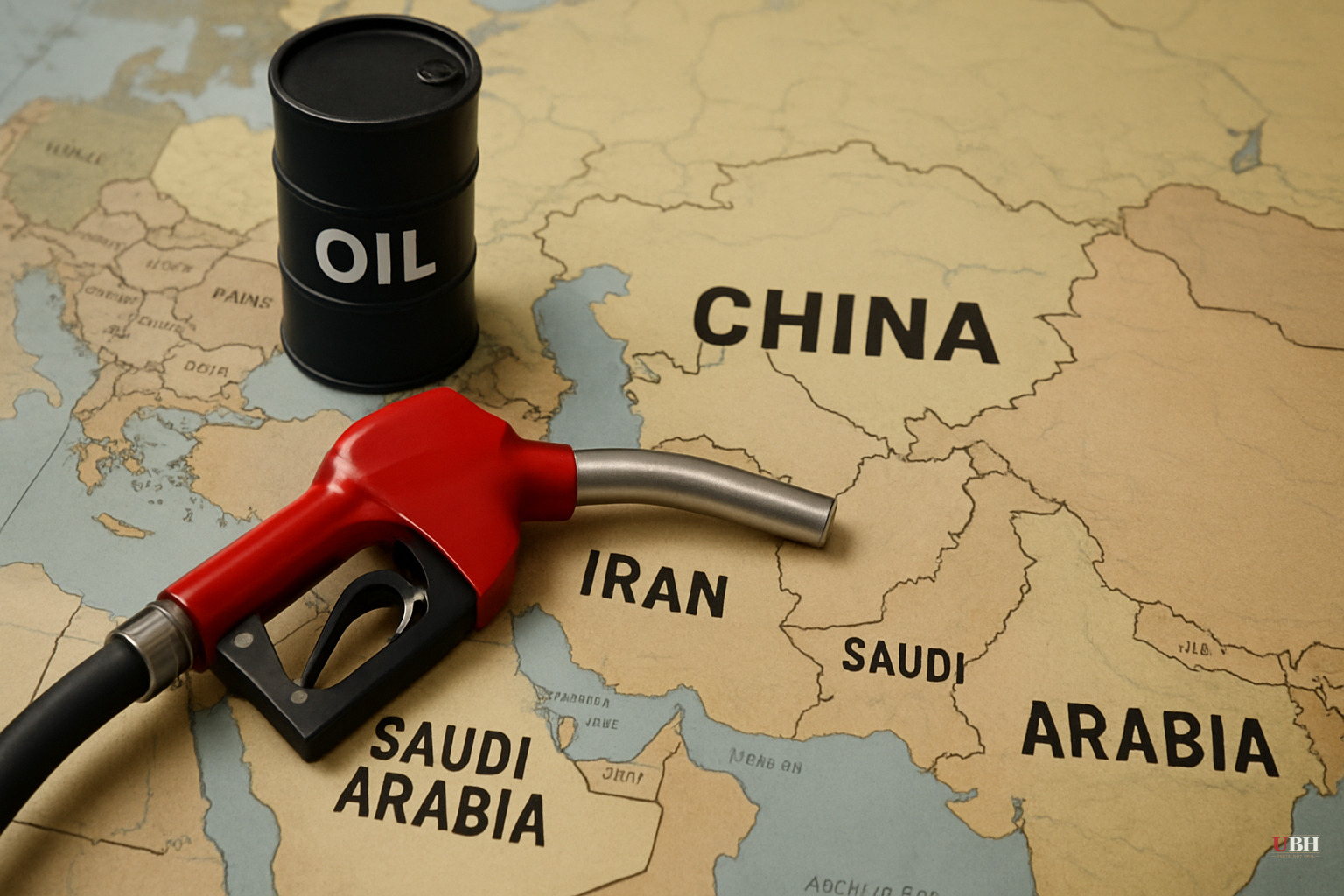
China is raising fuel prices again. Starting Saturday, July 18, gasoline goes up 300 yuan per metric ton (about $44.28) and diesel climbs 290 yuan per ton, according to China's National Development and Reform Commission (NDRC), the state planning body that sets these caps.
Global oil prices jumped roughly 12% over the past week as the US-Iran conflict escalated, according to OilPrice.com and Crypto Briefing. Brent crude was up over 4% in a single session, trading near $88 a barrel, and WTI crude climbed above $82, according to OilPrice.com's market data.
China doesn't let its fuel prices float freely. Under the NDRC's mechanism, retail gasoline and diesel prices get reviewed every 10 working days, and adjusted whenever international crude moves more than 50 yuan per ton during that window, according to Xinhua. This cycle blew past that threshold. Liu Bingjuan, chief energy analyst at information service provider Oilchem, told Xinhua that volatile gains in crude during the preceding 10 working days pushed the average price above the prior cycle, triggering the hike.
This is the third fuel price increase in China so far this year, according to Crypto Briefing.
Beijing Leans on Its Oil Giants
Alongside the price hike, the NDRC directed China's three biggest state oil companies, the China National Petroleum Corporation, the China Petrochemical Corporation (Sinopec), and the China National Offshore Oil Corporation (CNOOC), along with other refiners, to keep production running and keep fuel moving to avoid supply disruptions, according to Xinhua.
The NDRC also told regional regulators to step up market supervision and inspections, warning it would crack down on anyone violating national pricing policy to keep order in the market, Xinhua reported. That's a signal Beijing is worried less about the price hike itself and more about hoarding, gouging, or black-market resale as drivers and truckers brace for higher costs at the pump.
Why Oil Spiked
The underlying driver is the US-Iran conflict, which has been escalating for roughly a week according to Dawn, Pakistan's leading English-language outlet. Dawn reported that the US struck Iran's coastal defenses in a fresh salvo, with Tehran hitting back at American assets in Gulf states, and that Iran has warned of an "existential war." Dawn also reported Iran launching fresh attacks on American facilities in the Gulf after what it described as a sixth consecutive day of US strikes.
That kind of sustained exchange between a nuclear-adjacent regional power and the US military is exactly the sort of geopolitical shock that sends traders scrambling, and it shows up immediately in Brent and WTI futures. Jeff Currie, a commodities analyst referenced in OilPrice.com's headlines roundup, has been arguing the era of assumed oil abundance is over, a view that gains weight every time a Gulf conflict knocks a percentage point or two off available supply confidence.
Oil markets overreact to headlines constantly, and a 12% weekly jump doesn't necessarily mean sustained higher prices if the conflict cools or if OPEC+ members decide to open the taps to stabilize the market. OilPrice.com noted that observers are watching for OPEC's response and any new supply signals, which could just as easily cap this rally as extend it.
What Ordinary Chinese Consumers Face
For the average Chinese driver or trucking company, this is straightforward: fuel gets more expensive starting Saturday. A 300 yuan per ton increase on gasoline works out to a modest but real bump at the pump, layered on top of two earlier increases this year. China's government controls pricing specifically to avoid runaway inflation shocks that a fully deregulated market would produce, but that same control means Beijing absorbs political heat every time crude spikes overseas.
The open question is how long the US-Iran conflict runs and whether it widens. Dawn reported Iran warning of an existential war, which is not the language of a country looking for an off-ramp. If strikes continue into China's next 10-day pricing window, expect a fourth hike. If a ceasefire or de-escalation takes hold, crude could just as easily give back this week's 12% gain, and Beijing's next adjustment could go the other way.
Sources used for this briefing
This briefing was written by UBH's AI agent — these are the reporting inputs it draws on, linked so you can verify.


