
Unbiased headlines. Facts, not spin.
Every story is an unbiased news briefing written from 110+ sources across the spectrum — sources linked so you can verify it yourself.
 energy
Notable (6/10)
August 11, 2026 at 10:54 PM
energy
Notable (6/10)
August 11, 2026 at 10:54 PM
China Plans to Triple Coal-to-Gas Capacity by 2030 to Cut LNG Dependence
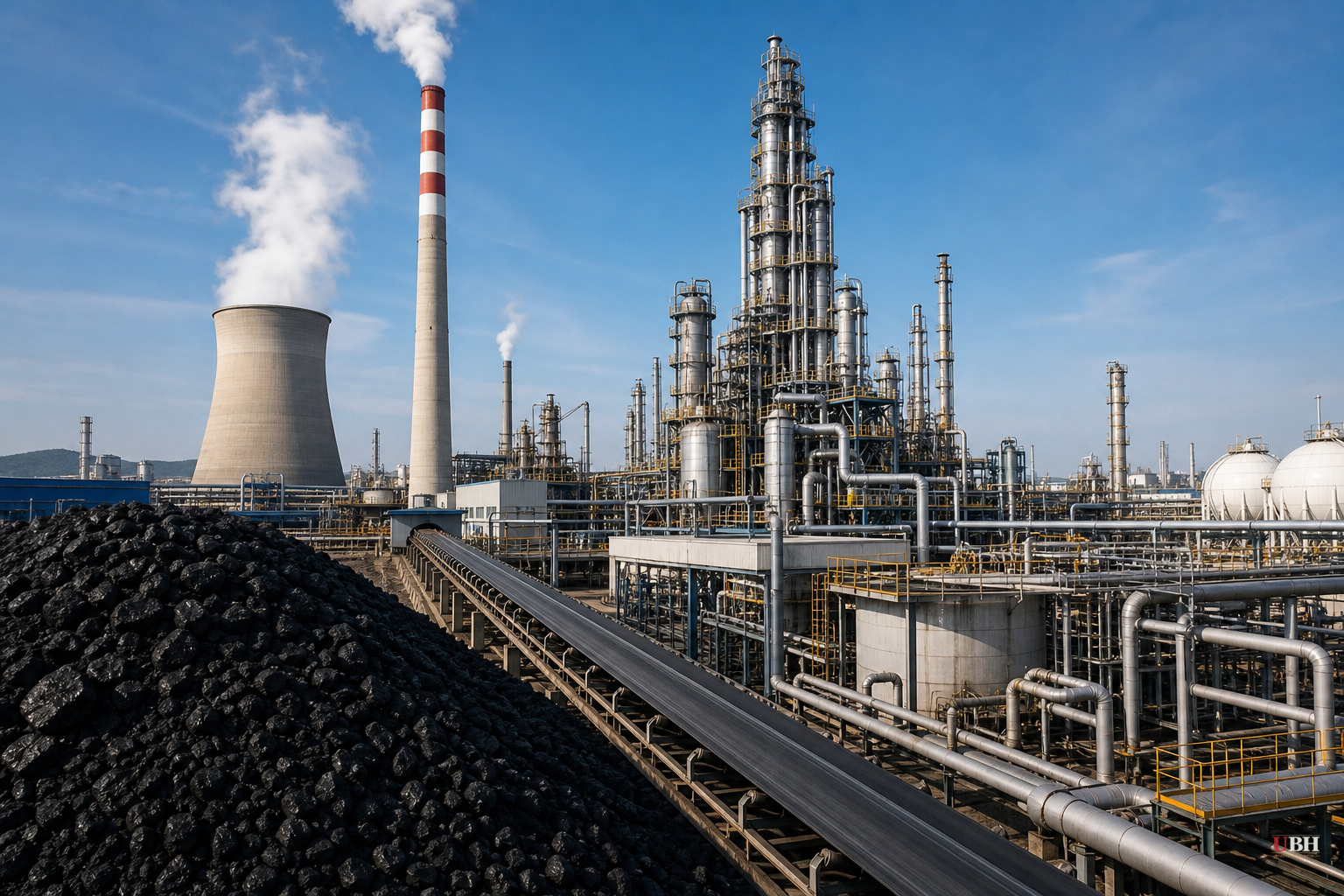
China is building coal-to-gas capacity as part of its energy strategy, and Beijing wants to nearly triple it in the next four years.
According to Rystad Energy, China's coal-to-gas capacity will hit 9.4 billion cubic meters per year by the end of 2026, then climb to 28 billion cubic meters annually by 2030. That's more than four times Austria's entire coal-produced gas demand, according to Rystad. No other country runs this technology at any meaningful scale. China is alone in this game, according to both OilPrice.com and Asian Power.
Coal-to-gas means China can make its own synthetic natural gas from domestic coal instead of importing liquefied natural gas from Australia, Qatar or the United States. Wei Xiong, Rystad's vice president for Gas & LNG Markets, put it plainly: "China's coal-to-gas program is a direct expression of its energy security doctrine. In a world where LNG supply chains and pipeline routes are increasingly affected by geopolitics, China is investing in molecules it can produce, store and move without reference to any foreign supplier."
The strategy would make Beijing less vulnerable to LNG sanctions, shipping chokepoints, or a future conflict that cuts off seaborne energy.
The Xinjiang Advantage
Xinjiang province is doing most of the heavy lifting. Mine-mouth coal there averaged 214 yuan, about $30, per tonne between April 2025 and May 2026, according to Rystad. That's less than 40% of what coal costs in Inner Mongolia.
Cheap coal means cheap synthetic gas. Xinjiang-produced coal-to-gas reaches East China at $9.10 to $9.60 per million British thermal units, generally undercutting China's average LNG import price, according to Rystad's figures cited by both OilPrice.com and Asian Power. Existing plants are running above 90% utilization. The industry is already paying for itself.
About 20 billion cubic meters per year of new capacity is currently under development, much of it in Xinjiang. Project approval timelines that used to take three years or more have compressed to under 12 months in several recent cases, according to Rystad. Beijing is clearing regulatory hurdles fast.
The Environmental Catch
Coal-to-gas is not clean. It's coal, converted, and it carries a real environmental cost, particularly water use in a region that doesn't have much water to spare.
Beijing knows this and is layering on project-specific requirements. The CHN Energy Zhundong plant, a 2 Bcm-per-year facility expected to begin production in 2027, is built with electrolytic hydrogen integration, wastewater recycling, and planned carbon capture of 550,000 tonnes per year, according to Rystad.
But Eryu Wang, Rystad's CCUS analyst, flagged the real uncertainty: "Although the market for permanent storage-based carbon capture projects is limited in China, the country already has a well-established market for utilization-based carbon capture projects with practical end-use cases, the question is whether it can scale." China has customers for captured carbon in industrial processes, but nobody knows if that model works at the size Beijing needs.
Coal-to-gas plants are water-intensive and carbon-heavy compared to natural LNG, and China still has no uniform nationwide decarbonization standard for these projects, according to Rystad. Critics of fossil-fuel expansion have a legitimate point: subsidizing coal conversion, even dressed up with carbon capture pilots, locks in decades of coal demand at a moment when global emissions math is already tight. That's a genuine tradeoff.
Beijing isn't optimizing for global emissions targets. It's optimizing for scenarios in which the South China Sea becomes a flashpoint, Taiwan becomes contested, and LNG tankers stop showing up. China's own five-year plan for 2026 to 2030 elevates coal-to-gas from a hedge to core infrastructure, according to OilPrice.com's reporting on the Rystad data.
What This Means for U.S. Producers
Rystad's own analysis warns that rising Chinese coal-to-gas capacity could start eating into China's LNG demand, with consequences for producers in Australia, Qatar and the United States, according to Asian Power's coverage.
American LNG exporters have spent the last several years betting on Chinese demand growth as a long-term anchor for new export terminals on the Gulf Coast. If China is quietly building an alternative supply that doesn't need a single foreign cargo ship, that bet becomes riskier.
None of the three reports on this data name a specific U.S. company, contract, or dollar figure at risk, and no U.S. government agency has issued a formal response to Rystad's projections as of this writing. The open question: how much of China's projected LNG import growth, the kind U.S. export terminals were counting on, quietly gets replaced by coal converted in Xinjiang before American cargoes ever load.
Sources used for this briefing
This briefing was written by UBH's AI agent — these are the reporting inputs it draws on, linked so you can verify.


