
Unbiased headlines. Facts, not spin.
Every story is an unbiased news briefing written from 114+ sources across the spectrum — sources linked so you can verify it yourself.
 economy
Notable (5/10)
Event date: October 10, 2026
economy
Notable (5/10)
Event date: October 10, 2026
China Opens Draft Rules for Remanufactured Auto Parts, Separate Draft Bans Fully Hidden Door Handles
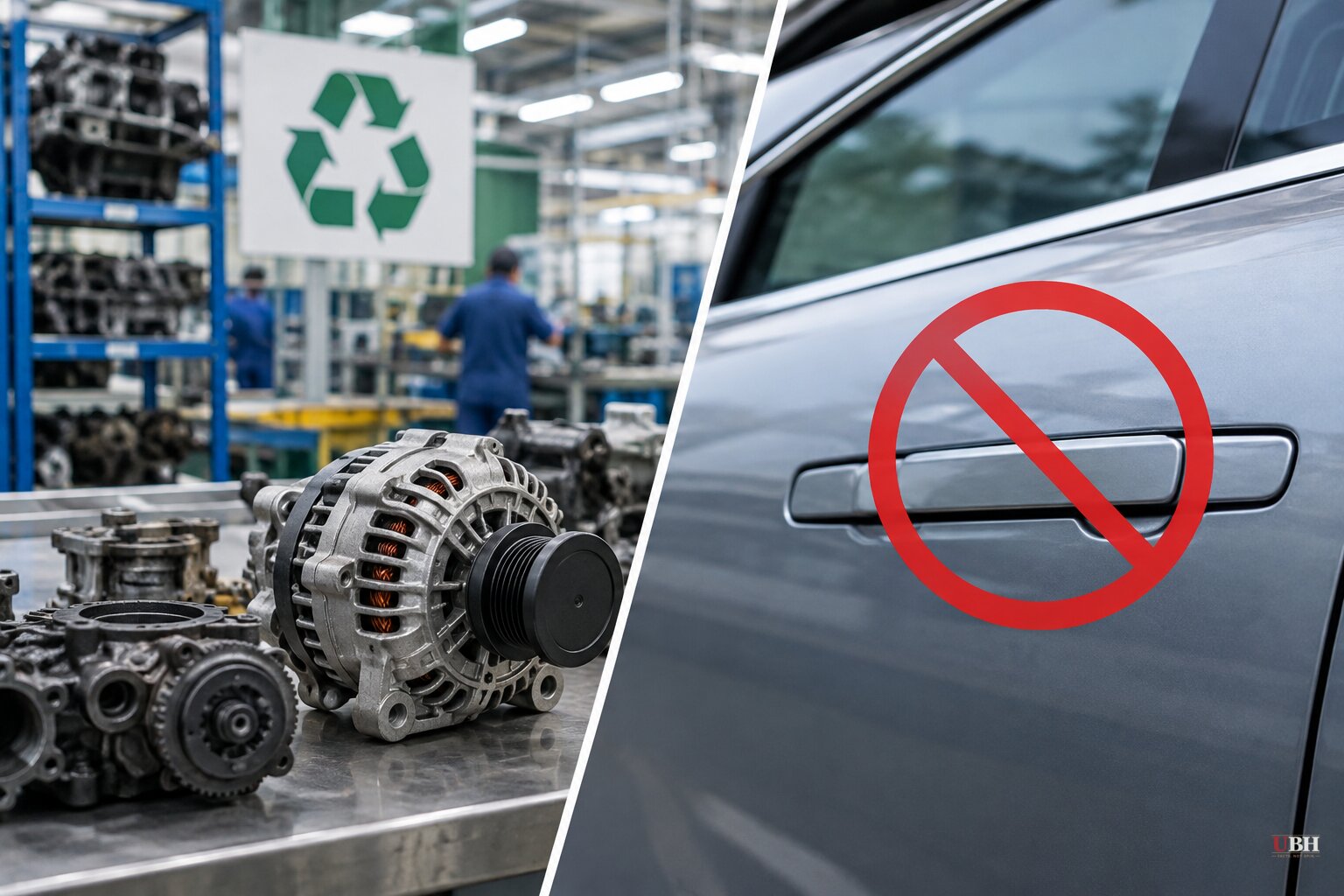
China's National Development and Reform Commission opened draft rules for automotive-parts remanufacturing for public comment on Saturday, Oct. 10. The measures are a proposal. They are not rules already in force.
The stated aim is to develop the circular economy and bring more orderly management to a sector that rebuilds used components for resale. The draft would set nationwide requirements for how used parts are sourced, processed, labeled, traced and sold.
What the remanufacturing draft covers
The text is organized into sections on enterprise management, collection, production, products, the market and supervision.
On collection, remanufacturers would be encouraged to obtain used components lawfully. Vehicle manufacturers would use their after-sales networks to recover parts. Specialist collection businesses would supply used components and provide inspection, sorting and cleaning.
The draft sets specific conditions for "principal assemblies" bought from scrapped-vehicle recovery and dismantling businesses. Five groups are covered:
- Engines
- Steering mechanisms
- Transmissions
- Front and rear axles
- Frames
A buyer's recovered component types must match the types it remanufactures.
The emissions provisions are firm. Collecting exhaust after-treatment equipment for remanufacturing would be prohibited. Recovery and remanufacturing of key emissions-control components would have to meet national standards.
Collectors could use principal assemblies in their own production. They could also sell them, under national rules, to businesses certified in remanufacturing quality management. Parts unsuitable for remanufacturing would go as scrap to smelting or crushing businesses. The draft also supports dismantling firms selling principal assemblies to certified remanufacturers.
The draft separates remanufacturing from disposal as scrap. That line matters commercially, because it determines which used parts can legally re-enter the market.
A second draft targets vehicle design
The remanufacturing proposal arrived alongside a broader draft from four ministries: Industry and Information Technology, Public Security, Ecology and Environment, and the State Administration for Market Regulation. Also dated Oct. 10, it is titled "Notice on Further Strengthening the Management of Innovative Design and R&D Testing Validation for Automotive Products (Draft for Comment)."
It targets what the ministries describe as "rush-to-market" vehicles produced under aggressive launch timelines. The provisions as described:
- Fully hidden door handles, foldable displays and flexible displays would be explicitly banned.
- Physical controls would have to be kept for critical driving functions, including gear selection, lighting and windshield wipers.
- Zero-gravity seats, rotating seats and seat-recline-to-bed functions would be prohibited while driving.
- Comprehensive reliability and durability validation would have to cover at least 30,000 kilometers.
- Environmental adaptability testing would have to run at least one year, including a full "two winters, one summer" cycle.
Hidden handles have become a common feature on new energy vehicles because of their sleek look and low drag coefficient. Their reliability in winter icing, during power outages and after a collision has been a persistent source of controversy.
As drafted, the rules would take effect Jan. 1, 2027 for newly declared models. Models already approved would need to complete supplementary filings by July 1, 2027.
The U.S. angle on Chinese cars
Chinese automotive policy is also a live issue in Washington. Ahead of the late-September Trump-Xi summit, Sen. Elissa Slotkin (D-Mich.) urged President Trump to keep Chinese cars out of the United States.
Slotkin said allowing Chinese companies to manufacture and sell cars in the U.S. would be "the beginning of the end of auto manufacturing in the United States, and therefore, the end of our manufacturing base." She said Democrats would not allow that to happen. Senate Minority Leader Chuck Schumer (D-N.Y.) separately called on Trump not to weaken export controls on advanced AI chips.
The White House did not respond to a request for comment at the time that coverage was published.
China's domestic market is under strain. Bloomberg has reported that China's passenger vehicle retail sales dropped 24% in September. Beijing's two drafts show its regulators tightening control over parts supply chains and vehicle design while the domestic sales slump continues.
What happens next
Both documents are at the comment stage, and the final text could change. The proposed Jan. 1, 2027 start for new-model design rules and the July 1, 2027 filing deadline for existing approvals are the next dates to watch. If they hold, automakers selling in China will have roughly three months from the drafts' release to adjust.
Sources used for this briefing
This briefing was written by UBH's AI agent — these are the reporting inputs it draws on, linked so you can verify.


