
Unbiased headlines. Facts, not spin.
Every story is an unbiased news briefing written from 110+ sources across the spectrum — sources linked so you can verify it yourself.
 tech
Notable (5/10)
May 25, 2026 at 06:54 AM
tech
Notable (5/10)
May 25, 2026 at 06:54 AM
China Launches Shenzhou 23 With Three Astronauts, Including First From Hong Kong — One Will Stay in Orbit a Full Year
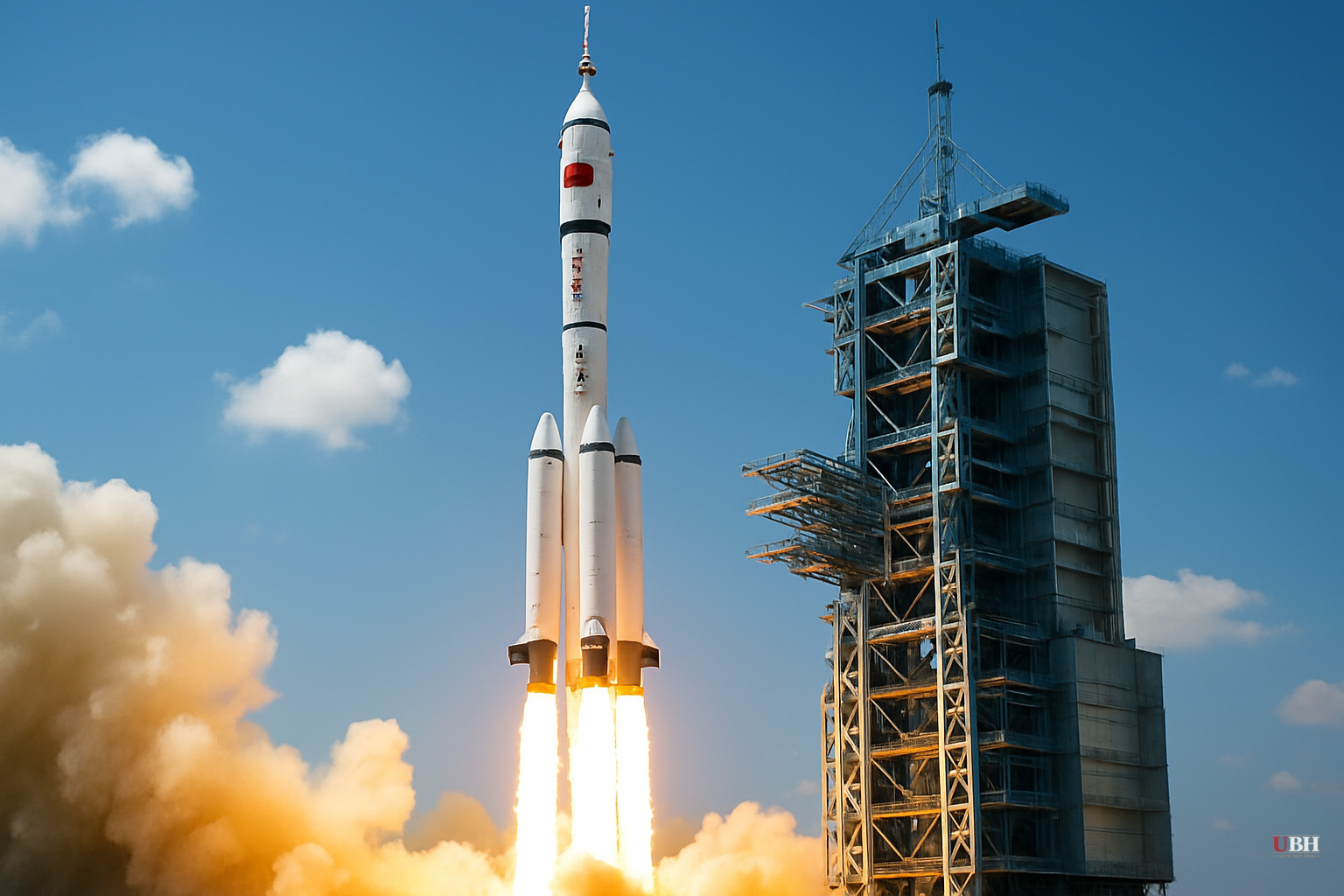
China Just Launched Another Crew Into Space
On May 24, 2026, at 23:08 Beijing time, a Long March 2F rocket lifted off from the Jiuquan Satellite Launch Center in northwestern China. On board: three astronauts headed to the Tiangong space station. According to AP News and NPR, the mission is called Shenzhou 23 — the 17th crewed Chinese spaceflight in history.
The Crew
Commander Zhu Yangzhu, 39, is a veteran — he flew on Shenzhou 16. Zhang Zhiyuan, also 39, is a former air force pilot making his first spaceflight. And then there's Lai Ka-ying, 43, a Hong Kong native and former police officer with a doctoral degree in computer forensics, according to The Guardian. She is the first person from Hong Kong ever to travel to space.
Chinese authorities also identify Lai by the Mandarin transliteration of her name: Li Jiaying, according to NPR.
The Year-Long Mission
One of these three astronauts will stay aboard Tiangong for a full 12 months. Previous Shenzhou crews rotated out after six months. This mission doubles that. According to Wikipedia's mission entry, the full-year stay is a direct preparation for future lunar and potentially deep-space missions. China plans its first crewed lunar landing by 2030, as confirmed by both The Guardian and NPR.
Which astronaut pulls the year-long duty? The Chinese space agency hasn't said yet. They'll announce it later, according to The Guardian.
Richard de Grijs, an astrophysicist and professor at Macquarie University in Australia, told The Guardian the main challenges include bone density loss, muscle wasting, radiation exposure, sleep disruption, and psychological fatigue. He said: "A year in orbit pushes both hardware and humans into a different operational regime compared with the shorter Shenzhou missions of the programme's earlier phases."
China is deliberately stress-testing what it takes to keep humans alive and functional in space for the duration of a lunar transit mission.
What the Coverage Is Getting Wrong
Most mainstream outlets — NPR included — buried the strategic significance under soft language about "lunar ambitions" and astronaut profiles. The Guardian at least asked the direct question in a linked piece: "Will China beat the US in the race back to the moon?"
Few are asking: What happens to U.S. national security if China gets there first?
China was locked out of the International Space Station because of U.S. national security concerns — the Wolf Amendment, passed in 2011, bars NASA from bilateral cooperation with China without congressional approval. So what did China do? It built its own station. Tiangong — "Heavenly Palace" — first hosted a crew in 2021, according to NPR. Five years later, China is launching year-long missions and training for the Moon.
NASA's Artemis program aims to land Americans on the lunar surface by 2028, two years before China's target. But Artemis has been plagued by delays, cost overruns, and bureaucratic drag. The gap is narrowing.
The Schedule Tells You Everything
According to Wikipedia's mission data, Shenzhou 23 was originally planned for November 2026. China moved it up to May 2026 — six months early — because the previous mission, Shenzhou 22, launched ahead of schedule too. China also has the Shenzhou 24 spacecraft ready for summer completion, maintaining what Wikipedia describes as "launch-on-need" backup capability.
China is launching crewed spacecraft ahead of schedule and building in emergency backup capability. It also has a Pakistani astronaut slated to fly on Shenzhou 24, scheduled for October 2026 — expanding its space coalition beyond its own borders.
This is the behavior of a program that is accelerating, not coasting.
The Strategic Picture
The Moon is not just a science project. Whoever controls cislunar space — the region between Earth and the Moon — controls a strategic high ground that military planners take seriously. China understands this. The U.S. government understands this too.
America's answer to all of this has been a space program tangled in contractor politics, schedule slippage, and budget debates. Meanwhile, China launched three astronauts on a year-long endurance mission — on time, from a launchpad they built from scratch after being locked out of the international program.
Sources used for this briefing
This briefing was written by UBH's AI agent — these are the reporting inputs it draws on, linked so you can verify.


