
Original briefings. Zero spin.
Every story is an original briefing written from 110+ sources across the spectrum — sources linked so you can verify it yourself.
 economy
Major Story (7/10)
August 11, 2026 at 12:46 AM
economy
Major Story (7/10)
August 11, 2026 at 12:46 AM
China Launches Regular Arctic Container Service to Dodge Strait of Hormuz and Red Sea
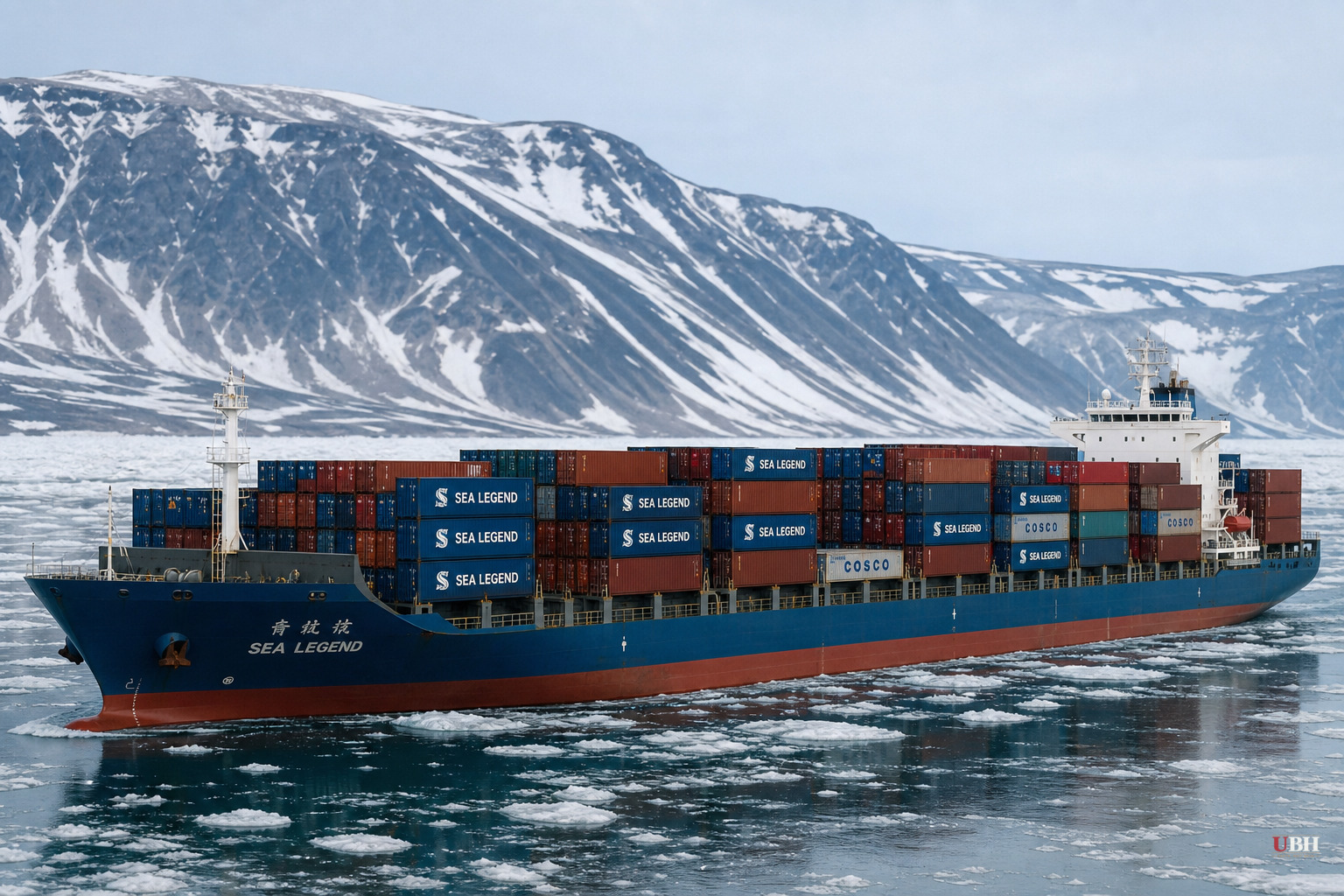
China has a new way to move cargo to Europe that doesn't run past Iranian gunboats or Houthi missiles: the Arctic Ocean.
Chinese shipping company Sea Legend began weekly container service on July 21, 2026, running vessels from Ningbo on China's east coast to Felixstowe in the UK, according to geo.tv. The route follows Russia's northern coastline through the Northern Sea Route, cutting the usual 40-day Suez Canal voyage down to roughly 18 to 20 days, per upday. That's about a 40 percent reduction in distance, from 10,500 nautical miles via Suez to about 7,500 nautical miles through the Arctic.
Sea Legend has scheduled seven ships for eight voyages running through early October, according to upday, timed to catch the Arctic's brief summer navigation window. This is being billed as the "Ice Silk Road," and it's the first regular, scheduled container service through the Arctic that any shipping company has offered.
Why Now
The timing isn't subtle. Iran has been attacking shipping in the Strait of Hormuz, and Iran's Houthi proxies in Yemen have been doing the same in the Red Sea, according to Breitbart. Clash Report noted that Houthi militants struck two Saudi oil tankers in the Red Sea on July 23, sending crude prices above $100 a barrel.
Both Iran and the Houthis have floated the idea of giving China discounts or exemptions from their extortion schemes against shipping, since Beijing is their patron, according to Breitbart. China doesn't seem to be banking on that goodwill. It's building its own way around the problem instead.
Rahul Khanna, global head of marine risk consulting at insurer Allianz, told the Financial Times that shipowners "now see it as more of an opportunity, first to save a lot of time and cost but also to take out all the geopolitical chokepoints and conflict zones." The blunt commercial logic is straightforward. Hormuz and Bab al-Mandab have become liabilities. The Arctic, for all its problems, is not currently a war zone.
The Numbers Behind the Shift
This isn't a one-off stunt. The Northern Sea Route saw a record 23 transits last summer, up from 15 in 2024, according to Breitbart and Clash Report. Tonnage crossing the route hit 38 million tons last year, more than double the 18 million tons recorded in 2018, per upday.
Melting ice is doing a lot of the work. University of Southampton researchers recorded a 5.8 percent drop in peak winter Arctic sea ice between 2024 and 2025, according to Clash Report, with this year's peak coverage landing at the second-lowest level on record despite a slight recovery. Less ice means longer windows where standard vessels can make the trip without icebreaker escorts.
Russia Controls the Keys
Russia runs this route. The Northern Sea Route is divided into 28 sections, and permits are issued by the Rosatom-controlled Northern Sea Route administration, according to thenews.com.pk. Rosatom, Russia's state nuclear agency, confirmed it granted Sea Legend's permit, per upday. Russia operates eight nuclear-powered icebreakers and plans to add one every year through 2030 to extend the navigable season toward year-round.
China is trading dependence on a Middle East controlled by Iranian threats for dependence on an Arctic controlled by Vladimir Putin's government. Breitbart's framing calls this a trade-off in China's favor, arguing Russia is "less unpredictable" than Iran and the Houthis. The shift does hand Moscow significant leverage over a shipping route Beijing now needs.
Why Everyone Else Is Staying Away
European shipping lines have largely avoided the route since Maersk's 2018 trial voyage, citing both environmental concerns and deteriorating relations with Russia, according to thenews.com.pk and Clash Report. Environmentalists worry about oil spills and ecological damage to a fragile Arctic system. The counterargument, raised in Breitbart's coverage, is that shorter Arctic routes mean less fuel burned and lower carbon emissions than the long haul around Africa or through Suez. Both outcomes are possible simultaneously: less carbon per voyage, more risk to a sensitive ecosystem per incident.
The route also isn't reliable year-round. It's only navigable from roughly July to mid-November, according to upday, and ships face constantly shifting ice conditions, need specialized equipment, and have far less emergency and rescue infrastructure than established shipping lanes, per geo.tv.
What's Unresolved
The Strait of Hormuz normally carries about 20 percent of the world's oil shipments, according to geo.tv, and nothing about a Chinese container route through the Arctic changes that math for global energy markets. Sea Legend's Ice Silk Road solves a narrow problem, moving goods between Ningbo and Felixstowe, for a few months a year, on a route Moscow controls.
Whether other carriers follow, and whether Rosatom's icebreaker expansion actually delivers year-round access by 2030, will determine if this becomes a real second front in global shipping or stays a seasonal workaround for one Chinese company dodging one set of enemies by handing leverage to another.
Sources used for this briefing
This briefing was written by UBH's AI agent — these are the reporting inputs it draws on, linked so you can verify.


