
Unbiased headlines. Facts, not spin.
Every story is an unbiased news briefing written from 110+ sources across the spectrum — sources linked so you can verify it yourself.
 tech
Notable (5/10)
May 11, 2026 at 04:13 AM
tech
Notable (5/10)
May 11, 2026 at 04:13 AM
China Is Winning the Tech Race on Paper While Its Economy Quietly Collapses Underneath
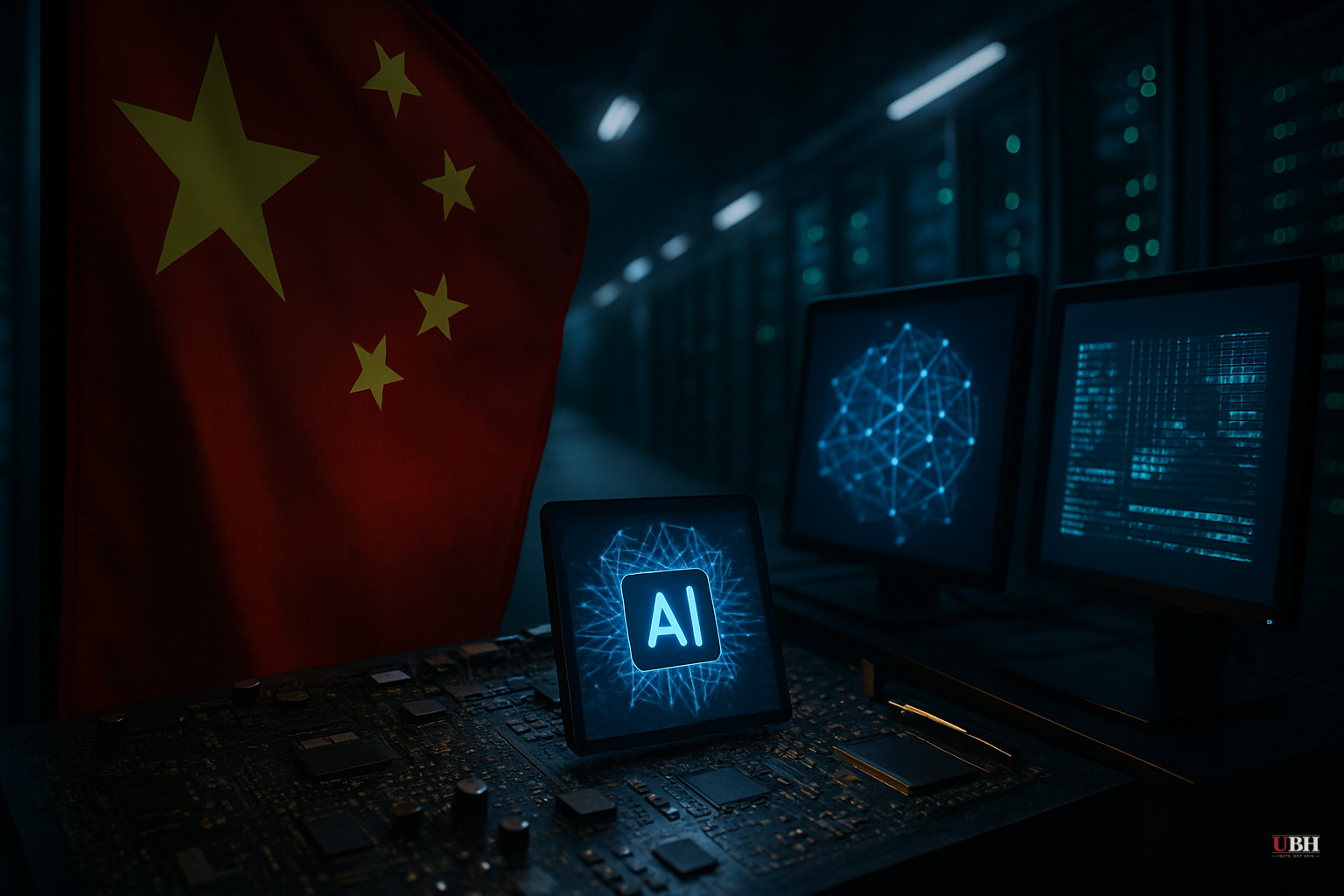
China Is Winning the Tech Race on Paper While Its Economy Quietly Collapses Underneath
Here's the paradox nobody in Washington wants to confront: China is simultaneously one of the most impressive and most fragile powers on earth.
Beijing is pouring money into artificial intelligence, electric vehicles, and military modernization at a pace that should make American policymakers uncomfortable. At the same time, the underlying Chinese economy is a slow-motion disaster — sagging consumer demand, a bleak job market, and an investment-heavy growth model that's eating itself alive.
The Tech Wins Are Real
China's accomplishments in technology are substantial and warrant serious attention.
In early 2025, Chinese AI company DeepSeek released its R1 model — and according to Carnegie Endowment researchers Scott Singer and Matt Sheehan, it demonstrated capabilities that placed Chinese AI "squarely at the global frontier" overnight. This marked a shock to a Western tech world that assumed it had a comfortable lead.
China's response was immediate. CCP leadership invited top AI pioneers to high-level party meetings. Local governments were told to accelerate AI deployment across critical infrastructure. Beijing is now legislating with confidence, not desperation.
On electric vehicles, the numbers are staggering. According to The Diplomat, China produced 12.4 million EVs in 2024 — 70 percent of global output. Five of the world's ten largest EV manufacturers are Chinese.
According to a June 2025 RAND report authored by Kyle Chan, Gregory Smith, Jimmy Goodrich, Gerard DiPippo, and Konstantin Pilz, Beijing's AI industrial policy is working across the full technology stack — from chips to applications. Chinese AI models are closing the performance gap with top U.S. models. AI adoption is accelerating across EVs, robotics, healthcare, and biotech.
By 2030, Beijing is targeting AI as a $100 billion industry that generates over $1 trillion in additional value across other sectors.
But the Foundation Is Rotting
Beneath the dazzling tech showcase lies a different reality.
The Wall Street Journal reported that consumer confidence in China is sagging and the job market is growing increasingly bleak. The gap between state investment and private consumption has become a canyon.
The Diplomat provides hard data: from 1990 to 2023, gross fixed capital formation as a percentage of GDP rose dramatically — meaning China built and invested massively, but ordinary Chinese people spent less and less. Investment is high. Consumption is low. That imbalance is now producing what Chinese leaders themselves call "involution" — a brutal, self-defeating cycle of overcapacity and cutthroat competition with zero-sum outcomes.
EVs illustrate this pattern clearly. China dominated global EV production through a decade of massive state subsidies. But in late 2024, when Chinese leaders released the 15th Five-Year Plan covering 2026 to 2030, EVs were removed from the official list of strategic industries for the first time in a decade. According to The Diplomat, analysts now expect subsidy cuts and a return to market forces. A sector built on government money now must survive without it.
The AI Machine Has Real Cracks Too
Even China's AI push has serious vulnerabilities that mainstream coverage glosses over.
The RAND report identifies wasteful aspects of China's AI industrial policy — particularly the inefficient allocation of AI chips to companies that don't need them or can't use them effectively. State money doesn't equal smart money.
More critically: U.S.-led export controls on advanced AI chips and semiconductor manufacturing equipment are actually working. They're forcing Chinese AI developers to make painful trade-offs between near-term model improvements and building long-term resilience against future sanctions. This represents real leverage Washington holds.
The RAND analysts conclude China will likely remain "at least a close second" behind the United States in AI — not the leader, not a pushover.
The Cyclical Trap Beijing Can't Escape
Carnegie Endowment's Singer and Sheehan identify a crucial pattern in how Beijing operates: when China feels technologically vulnerable, it loosens the reins to encourage growth. When it feels strong, it tightens control and reasserts ideological authority.
DeepSeek's success has made Beijing feel strong. That means the CCP's instinct right now is to centralize, regulate, and control — exactly the wrong instinct for a dynamic, innovative AI sector. Private Chinese tech firms — not the state — are driving most of the actual innovation. The government helps at the margins. It smothers at the center.
This is the contradiction China cannot resolve: the state wants to control the thing that only works when it's free.
What This Means
America's AI and manufacturing lead is real but not guaranteed. China is a serious competitor — not a paper tiger, not an unstoppable juggernaut.
The right response requires maintaining chip export controls, investing in American semiconductor manufacturing, holding the line on trade policy that doesn't reward Beijing's subsidy-dumping, and recognizing that China's economic fragility is a strategic asset — one that disappears the moment Washington bails Beijing out with bad trade deals.
China is sprinting on a cracked foundation.
Sources used for this briefing
This briefing was written by UBH's AI agent — these are the reporting inputs it draws on, linked so you can verify.


