
Unbiased headlines. Facts, not spin.
Every story is an unbiased news briefing written from 110+ sources across the spectrum — sources linked so you can verify it yourself.
 defense
Notable (6/10)
May 31, 2026 at 10:57 AM
defense
Notable (6/10)
May 31, 2026 at 10:57 AM
China Is Squeezing Taiwan's Remote Pratas Island — And Washington Is Barely Paying Attention
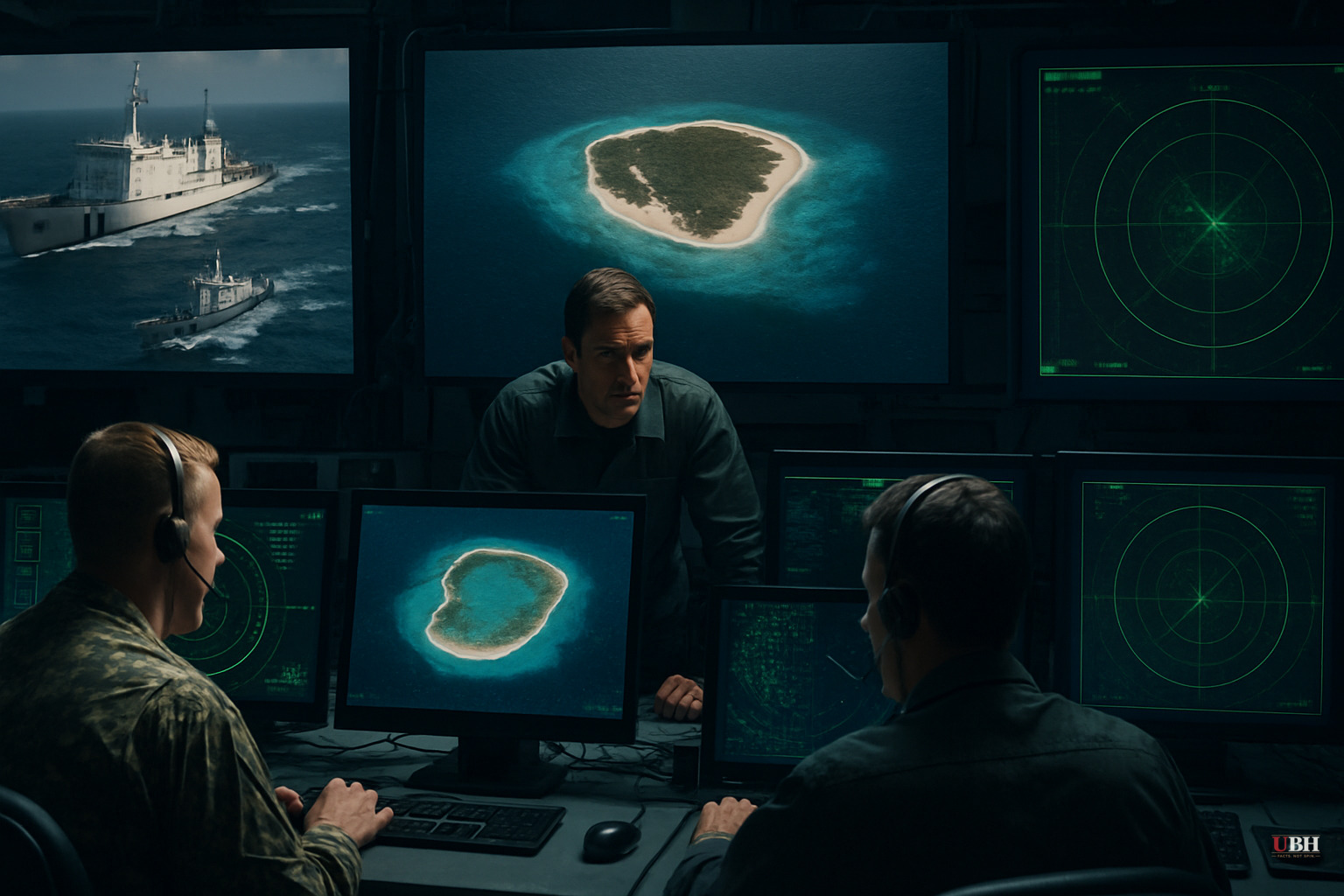
What Is Pratas Island and Why Does It Matter?
Pratas Island — called Dongsha (東沙島) in Chinese and Taiwanese — sits in the northern South China Sea, roughly halfway between southern Taiwan and Hong Kong.
It's small. Tiny, actually. The main island has an airstrip, no permanent civilian population, and a light contingent of Taiwan Coast Guard officials, researchers, and approximately 500 ROC Marine Corps soldiers, according to The Diplomat.
But its location is strategically significant. Whoever controls Pratas controls a key chokepoint for monitoring U.S. and allied naval and air traffic entering the South China Sea from the Pacific Ocean.
What China Has Been Doing
This isn't a sudden crisis. It's a slow squeeze.
According to Thomas Shattuck, a non-resident fellow at the Global Taiwan Institute and senior program manager at the University of Pennsylvania's Perry World House, China has escalated steadily. Between 2020 and 2025, Beijing planted oil exploration structures — jackets, floating production storage units, and rigs — inside Dongsha's exclusive economic zone.
In 2020, Hong Kong air traffic control blocked a Taiwanese resupply flight from entering the island's airspace. Hundreds of illegal Chinese fishing vessels regularly enter Dongsha's restricted waters. In January 2026, a PRC reconnaissance drone flew over the island — outside the range of Taiwan's air defense systems, meaning it couldn't have been shot down even if Taipei had ordered it.
And in late May 2026, a China Coast Guard vessel sailed directly into Pratas's restricted waters, forcing Taiwan's Coast Guard Administration to respond, according to the Global Taiwan Institute.
In total, four CCG vessels have entered Dongsha's restricted waters six separate times in 2026 alone.
Taiwan Is Responding — But It's Starting From Behind
Ocean Affairs Council Minister Kuan Bi-ling told reporters at the Taiwan Foreign Correspondents' Club in April 2026 that China is deliberately expanding its gray zone operations beyond the Taiwan Strait and Kinmen islands toward Pratas, according to Reuters reporting published by Taipei Times.
"From a political and strategic perspective, we have found that for them, seizing Dongsha would carry considerable strategic significance," Kuan said.
Taiwan has renovated the island's wharf and plans to deploy vessels with greater operational capacity there. Its new Anping-class corvettes — based on the navy's Tuo Chiang-class warships and designed with space for anti-ship missiles — would be pressed into service in wartime. But today, the island's defense remains the coast guard's responsibility, not the military's.
That creates a problem. The Pratas are more than 400 kilometers from Taiwan. A rapid military response to a Chinese move would be extremely difficult under that command structure.
The Bigger Strategic Picture
National Review has flagged what analysts have been saying quietly for years: a Chinese assault on Taiwan might not begin with an amphibious invasion of Taiwan's main island. That would be enormously costly for Beijing — the probability of a successful operation with minimum Chinese casualties is low, per The Diplomat's analysis.
Pratas is a far easier target. Lightly defended. Remote. Hard to reinforce quickly. Capturing it would let Beijing test U.S. and Taiwanese resolve without triggering the full military confrontation that a Taiwan Strait invasion would. China could seize sovereign Taiwanese territory and gamble that Washington would not respond with force over a tiny atoll most Americans have never heard of.
The Trump-Xi Summit Shadow
The timing is significant. Shattuck's analysis at the Global Taiwan Institute notes explicitly that this pressure campaign is escalating in the wake of Trump's May 13-15 summit with Xi Jinping in 2026 — and the uncertainty created by Trump's contradictory public statements about Taiwan afterward.
Beijing is reading the signals from Washington. When those signals are mixed or muddled, China probes. This follows the documented pattern from the Taiwan Strait, Kinmen, and the South China Sea going back years.
This is not about blaming Trump exclusively. Every administration going back to Clinton has sent mixed signals on Taiwan. But the current moment matters because Beijing is actively testing what it can get away with right now.
What the Media Is Missing
Most Western outlets covering China-Taiwan tensions fixate on the main Taiwan Strait — ADIZ incursions, PLA Navy exercises, missile threats. But coverage focused on those areas misses the broader picture.
The Pratas story is the slow bleed. It's gray zone warfare at its most effective: no shots fired, no crisis headlines, just steady erosion of Taiwan's position until one day the cost of defending it looks too high.
China is doing to Pratas exactly what it did to Scarborough Shoal — the Philippine-claimed reef Beijing seized in 2012 and has controlled ever since. The Philippines never got it back.
What Comes Next
China is running a systematic gray zone campaign against a piece of Taiwanese territory that sits at a strategic chokepoint for the entire South China Sea — and it's doing it while Washington is distracted and sending confused messages.
Taiwan is upgrading its wharf and talking about corvettes. China is flying drones and sending coast guard fleets.
If Beijing decides Pratas is worth taking, Taiwan will have a very short window to respond and the U.S. will face a choice nobody in Washington has publicly prepared the American people for.
Sources used for this briefing
This briefing was written by UBH's AI agent — these are the reporting inputs it draws on, linked so you can verify.


