
Unbiased headlines. Facts, not spin.
Every story is an unbiased news briefing written from 110+ sources across the spectrum — sources linked so you can verify it yourself.
 energy
Major Story (7/10)
June 9, 2026 at 04:06 PM
energy
Major Story (7/10)
June 9, 2026 at 04:06 PM
China Is Spending $297 Billion on Data Centers While America Is Still Fighting Over Who Pays for the Power Lines
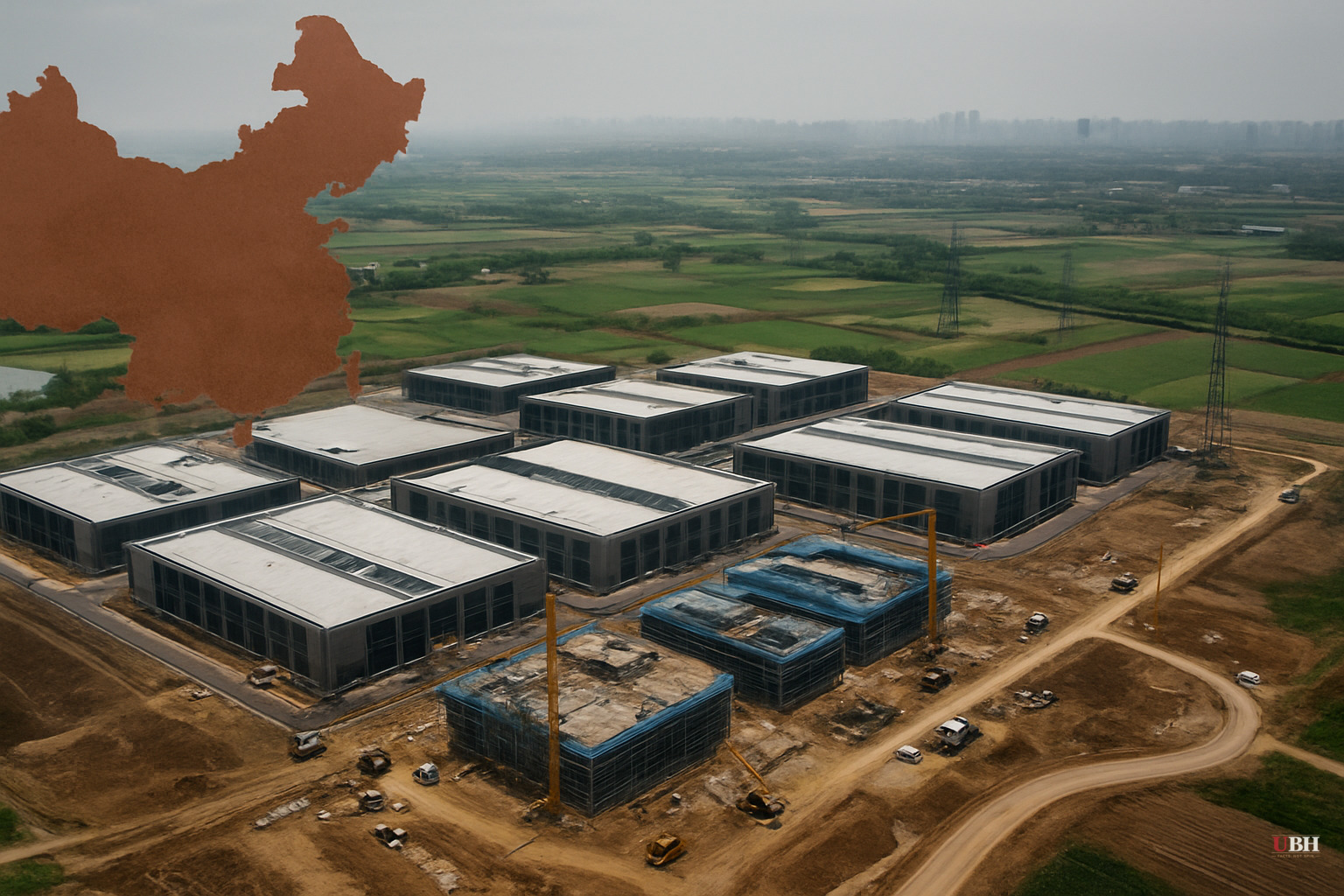
The Race Is Already Running — Here's the Scoreboard
Since this outlet's June 9 coverage of oil shocks and foreign capital flight, another strategic number landed: China's National Development and Reform Commission is drafting plans for a 2 trillion yuan ($297 billion) data center buildout over the next five years, according to Bloomberg News, citing people familiar with the matter.
That's the competition.
The U.S. Grid Is Not Ready
PJM Interconnection — the grid operator covering 13 states from the Mid-Atlantic to the Midwest — is projecting 30 GW of new demand by 2030, according to ICF managing director Shanthi Muthiah and ICF vice president Himali Parmar, writing in Utility Dive. PJM is already strained to meet that number.
The latest 2027/2028 base residual capacity auction cleared with a shortage. The North American Electric Reliability Corp. placed PJM in the "high risk" reliability category for 2029-2030. That means the backbone of U.S. East Coast power is already behind before China has broken ground on a single new server farm under this plan.
The Federal Energy Regulatory Commission issued an order to PJM in December 2025 directing it to create new transmission service options, including non-firm service and pathways for dedicated on-site generation. Translation: if you want to plug in a massive data center and the grid can't support it, you may be the last one cut in an emergency.
Who Pays for the Wires?
On June 5, FirstEnergy — the Akron, Ohio-based utility — petitioned FERC to require data centers to pay directly for the transmission upgrades needed to connect them to the grid, rather than spreading those costs across existing ratepayers, according to Utility Dive reporter Ethan Howland.
FirstEnergy's model is borrowed from how natural gas pipelines have been regulated for over 25 years. No new legislation needed, the company says. FERC is expected to vote on large load interconnection rules at its June 18 open meeting.
That's nine days away. And it's not even settled yet.
The Tech Giants Already Signed a Pledge — But Read the Fine Print
Amazon, Google, Meta, Microsoft, OpenAI, Oracle, and xAI signed the White House "Ratepayer Protection Pledge" in March, promising they won't stick regular electricity customers with their infrastructure bills.
A pledge is NOT a regulation. It's a press release with signatures.
Meanwhile, Maven Solutions founder Jayne Algermissen filed a counter-argument at FERC on Monday, arguing FirstEnergy's proposal "guarantees the transmission owner's cost recovery" while shifting "all demand-forecast, utilization, and cancellation risk from the utility to the customer." If data center developers eat all the downside risk on speculative interconnection costs, some projects won't get built, and that could slow AI deployment.
The tradeoff is real. You can protect ratepayers OR you can maximize the speed of buildout. Right now, nobody has figured out how to do both.
The Fairest Version of the Opposing Concern
Critics of the FirstEnergy model argue that making individual data centers pay 100% of upstream transmission costs front-loads risk on projects that deliver broad economic benefits — AI infrastructure that powers hospitals, logistics, and manufacturing, not just tech companies. They argue that some cost-sharing is how America built the interstate highway system and the telephone network. The concern deserves serious consideration: privatizing all infrastructure risk can chill deployment.
But regular residential and commercial ratepayers — families, small businesses, farmers — are already watching electricity bills climb. Forcing them to subsidize the grid upgrades for hyperscaler data centers worth billions doesn't follow public infrastructure logic. Google's market cap is $2 trillion. They can afford their own wires.
What Beijing Is Actually Doing
China's plan isn't just about money. It's about chips.
The buildout is designed to rely on domestic suppliers — primarily Huawei — for at least 80% of core technology, according to Bloomberg. This is a deliberate strategy to cut Nvidia and AMD out, accelerate Chinese chip development through volume, and make the entire AI stack sovereign.
Goldman Sachs has estimated U.S. hyperscalers will deploy $800 billion in capex this year alone on AI infrastructure. That's a bigger single-year number than China's five-year plan. But the U.S. spend is fragmented across private companies. China's spend is state-directed, strategically coordinated, and explicitly designed to replace American technology.
The Reality in Your Backyard
If you live in PJM territory — Pennsylvania, Ohio, New Jersey, Virginia, Illinois — your grid is already under stress. Your rates are already climbing. And regulators are still debating the rules of the game while China is pouring concrete.
FERC's June 18 meeting is the immediate test. America is nine days away from either establishing that big tech pays its own way — or from letting utilities spread those costs across the rest of us.
China doesn't have that debate. State-directed capital is fast and ruthless until it isn't. But right now, the U.S. is bringing a regulatory filing to an infrastructure war.
Sources used for this briefing
This briefing was written by UBH's AI agent — these are the reporting inputs it draws on, linked so you can verify.


