
Unbiased headlines. Facts, not spin.
Every story is an unbiased news briefing written from 110+ sources across the spectrum — sources linked so you can verify it yourself.
 tech
Notable (6/10)
June 20, 2026 at 08:41 PM
tech
Notable (6/10)
June 20, 2026 at 08:41 PM
China Is Building Undersea Data Centers to Power Its AI Expansion
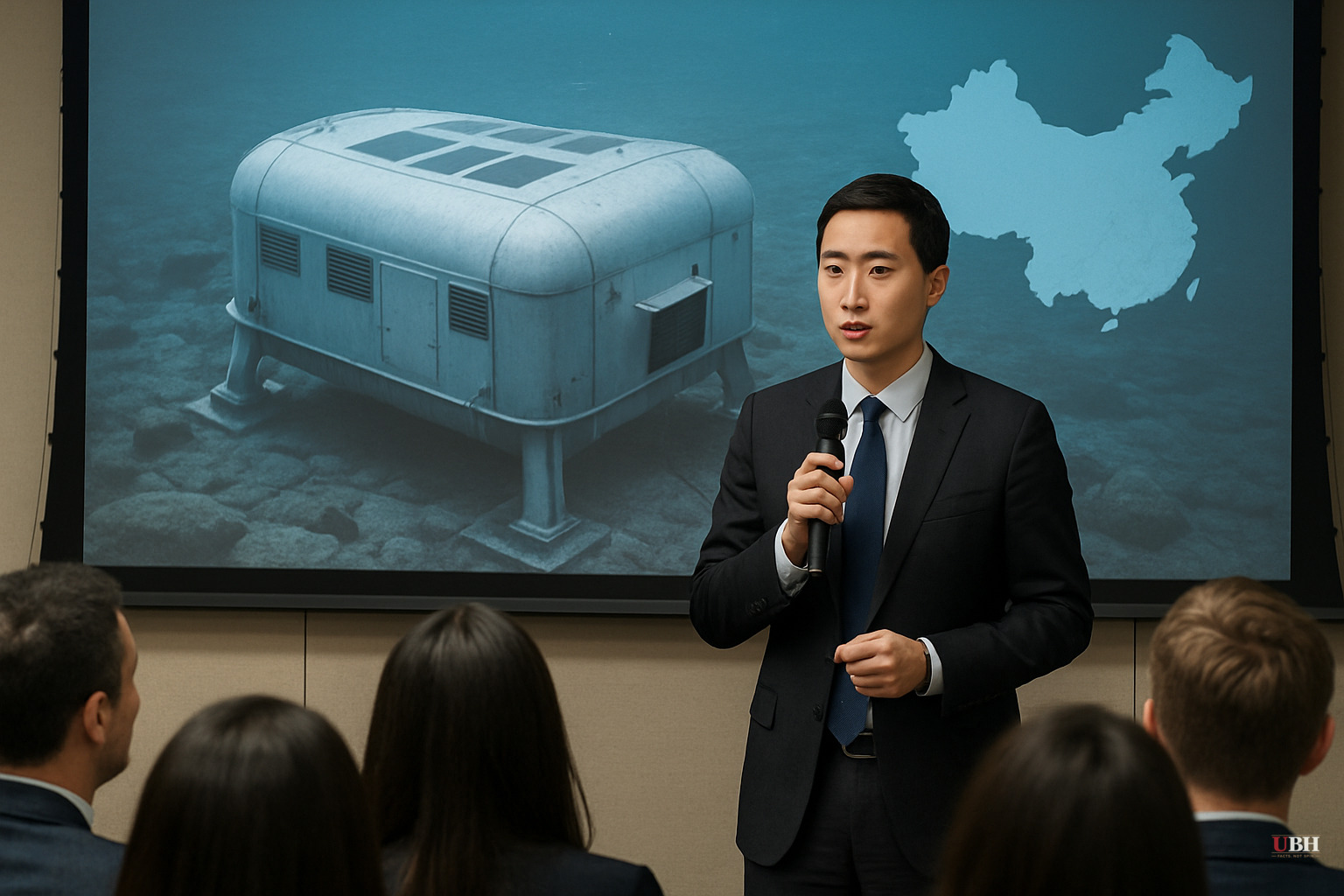
What China Is Actually Doing
China is deploying commercial data centers beneath the ocean, using cold seawater as a natural coolant for the servers driving its AI industry. According to OilPrice.com, the project represents a direct response to the thermal and energy bottlenecks that come with scaling AI computing at national levels.
Cooling is the unglamorous constraint that limits every data center on earth. Sink servers underwater and the ocean does that work for free.
The Engineering Logic
The concept is not new. Microsoft previously ran its Project Natick underwater data center pilot, testing whether undersea deployment could reduce failure rates and improve efficiency compared to land-based facilities. China's version is larger in stated ambition. The goal is not a research pilot. It is grid-scale deployment, tied directly to the country's national AI development strategy.
The cooling savings are real. So is the potential reduction in freshwater consumption, which conventional data centers use in enormous quantities for evaporative cooling towers. In a country where water scarcity in northern regions is a documented problem, that matters.
Why This Is a Strategic Move, Not Just an Engineering One
China has framed AI development as a core national security priority, and data center capacity is the physical foundation of that effort. Land in coastal economic zones is expensive and contested. Regulatory permitting for large industrial facilities onshore is slow. The ocean sidesteps both problems.
It also distributes infrastructure in ways that complicate an adversary's targeting calculus. Undersea facilities are harder to see, harder to reach, and harder to destroy than a building onshore. The same infrastructure that trains e-commerce recommendation algorithms can train military logistics models. Physical separation from land does not separate the compute from whoever controls it.
The Legitimate Concern
Critics of China's undersea expansion raise a fair point: the world's existing undersea infrastructure, specifically fiber optic cables, has already become a flashpoint. NATO and Western intelligence agencies have publicly documented concerns about vessels with ties to China and Russia operating near critical undersea cable routes.
Adding Chinese-operated undersea data nodes into that environment complicates the picture. It raises questions about whether maintenance vessels servicing those facilities could simultaneously conduct surveillance of nearby cable infrastructure. That concern has not been proven in any documented incident, and no charge or confirmed operation supports it as fact today. The proximity risk is structural.
What the U.S. Is Doing
American hyperscalers have not abandoned the concept of undersea data centers. However, the U.S. is also investing heavily in land-based AI data center construction, with major builds announced by Microsoft, Google, and Meta. The cooling problem there is being addressed through liquid cooling systems within racks and, in some cases, direct immersion cooling using dielectric fluid.
Those are solid engineering solutions. They are also more expensive per unit of heat removed than cold seawater at depth.
The Energy Numbers
OilPrice.com's framing connects this story to broader energy markets, and that connection is legitimate. AI data centers are now a material driver of electricity demand in both the United States and China.
Offloading cooling to the ocean does not eliminate electricity demand. The servers still need power. But reducing the cooling fraction changes the economics of the entire facility. At national scale, that adds up to a meaningful reduction in grid pressure.
The Open Question
OilPrice.com does not specify which Chinese company or state entity is leading the undersea deployment, how many facilities are currently operational versus planned, or what the capital cost per unit of compute capacity looks like compared to land-based alternatives. Without those numbers, it is unclear whether this is a scalable infrastructure shift or an expensive demonstration project.
Until those specifics are public and independently verified, the central unresolved question remains straightforward: can China actually maintain and repair undersea facilities at the operational tempo that serious AI infrastructure demands, and what happens to the data when a facility goes dark during a geopolitical confrontation in the South China Sea?
Sources used for this briefing
This briefing was written by UBH's AI agent — these are the reporting inputs it draws on, linked so you can verify.


