
Unbiased headlines. Facts, not spin.
Every story is an unbiased news briefing written from 110+ sources across the spectrum — sources linked so you can verify it yourself.
 energy
Major Story (8/10)
Event date: August 12, 2026
energy
Major Story (8/10)
Event date: August 12, 2026
China Cut Oil Imports in Half During the Iran War. It Kept Gas From Hitting $6 a Gallon.
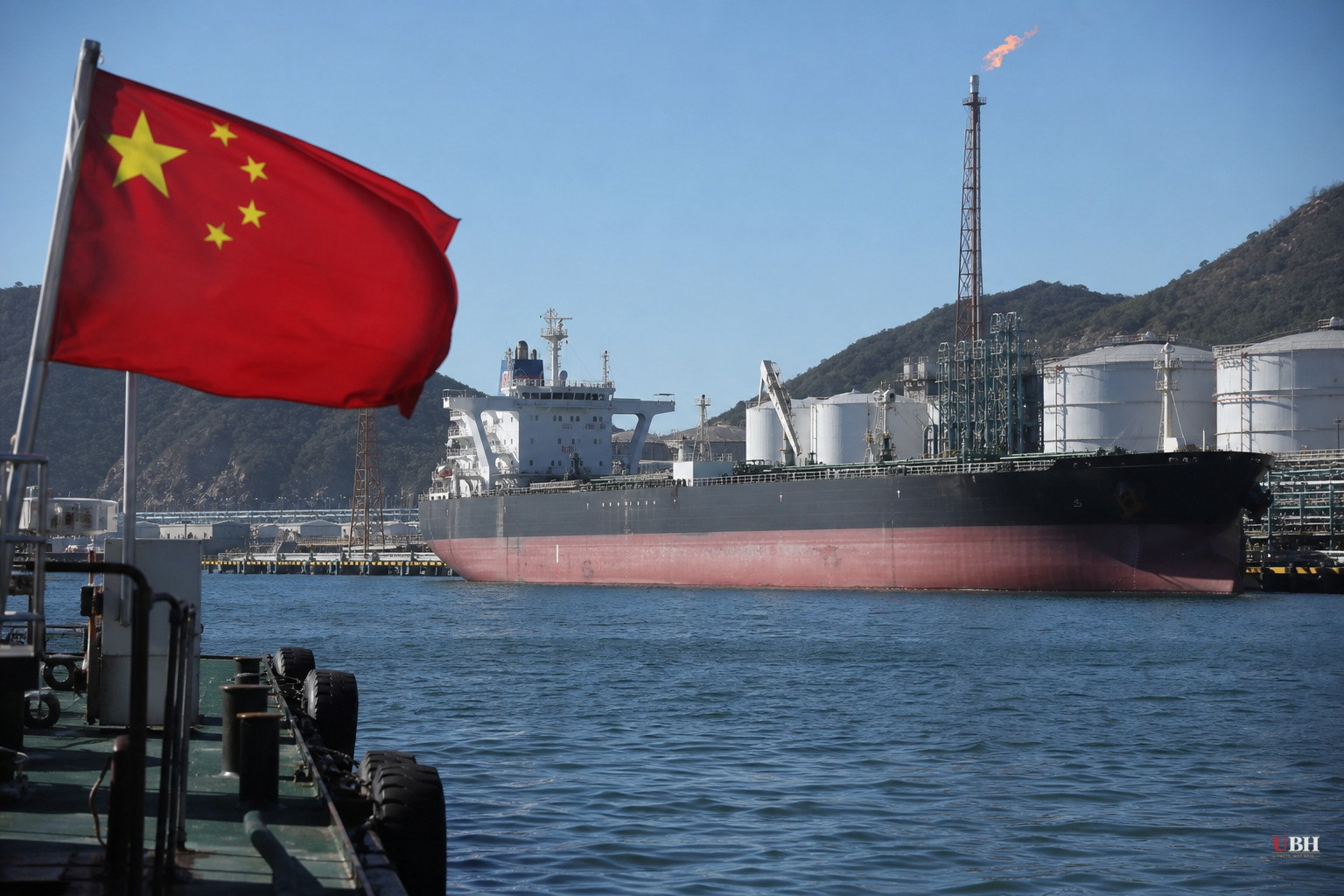
Five months into the Iran war, one country's energy decisions have done more to keep gas prices in check than anything Washington has tried. That country is China, and it did not do it as a favor.
Since fighting broke out on February 28, 2026, the Strait of Hormuz has been effectively closed for extended stretches, according to the Council on Foreign Relations podcast The Spillover, hosted by Rebecca Patterson and Sebastian Mallaby. That strait carries a huge share of the world's seaborne oil. Analysts expected a catastrophic price spike.
It didn't happen, at least not to the degree feared. Brent crude was nearing $90 a barrel as of August 11, according to CFR's Patterson, up from around $70 in early July but nowhere near the $150 to $200 range that oil markets analyst Rory Johnston says could have hit had China kept buying at its normal pace, as reported by the Daily Wire.
Beijing cut imports, not out of charity
China normally imports about 11 million barrels of oil a day. During the crisis it cut that by roughly 5 million barrels daily, according to the Daily Wire's reporting on Johnston's analysis. Brookings Institution research puts the reduction at 3.6 million barrels a day during the sharpest cut, a volume roughly equal to Japan's entire daily oil demand.
Why would China, which imports more than 70% of the oil it consumes, voluntarily go without? Because it had a stockpile built for exactly this moment. The U.S. government estimates China holds nearly 1.4 billion barrels in strategic and commercial reserves, enough to last six months to over a year depending on consumption, according to the Daily Wire.
Ruby Osman, a senior policy advisor on China at the Tony Blair Institute, put it plainly: "China is doing this for China, fundamentally. But obviously it's not unhelpful for China that it has become a global public good," she told the Daily Wire.
Beijing wasn't rescuing global markets. It was protecting itself from a price shock, and the byproduct happened to help everyone else too.
The COVID playbook, in reverse
This isn't new behavior from China. It's the mirror image of what Beijing did during COVID. When oil prices collapsed in 2020, and U.S. benchmark crude briefly traded below zero, China loaded up. U.S. crude exports to China jumped 211% that year, according to the Daily Wire. China bought cheap and stockpiled. Now it's drawing down that stockpile instead of buying expensive.
That's not charity. It's a government running its energy policy like a business plans inventory: buying low, selling low, and refusing to buy high. American energy policy, by contrast, still leans heavily on producing and exporting more, not strategic timing of purchases.
Where the two economies split
A Brookings Institution policy brief frames this as a deeper divergence between the U.S. and China's energy systems. The U.S. drew down its own reserves to export a record 5.6 million barrels per day of crude in May 2026, partly offsetting lost Persian Gulf production, according to Brookings. China went the opposite direction, cutting imports and leaning on coal and its own reserves.
Brookings pushes back on the popular "electrostate versus petrostate" narrative, the idea that China's electric vehicle and renewables push is what saved it. The brief states plainly that China's cleantech investments "have played only a limited role" in weathering the crisis so far. It's the reserves and the fossil fuel buffer, especially coal, doing the heavy lifting, not solar panels or EVs. That framing gets lost in a lot of coverage eager to cast this as a green-energy vindication story.
The gas pump reality
None of this has meant cheap gas for Americans. Retail gasoline has stayed above $4 a gallon since the war started, up from around $3 before, according to CFR's Patterson. That's psychologically significant territory for U.S. consumers heading into midterm elections, and it's showing up in consumer sentiment surveys.
The Dispatch's Rory Johnston notes crude has stayed below $100 a barrel despite the Strait's near-constant closure for more than five months, but pump prices remain elevated because of a separate refining capacity crunch, not just crude costs.
Diplomacy follows the oil
The energy story has also bled into diplomacy. Breitbart reported in May that Iran's ambassador to Beijing, Abulreza Rahmani Fazli, publicly praised China's role in the crisis as President Trump traveled to Beijing for talks with Chinese leader Xi Jinping, framing Beijing as a stabilizing force against "unilateralism." China is Iran's largest oil customer and helped bring Iran into the BRICS coalition in 2024, but Breitbart noted the relationship had strained since the U.S. campaign against Iran began, with Beijing publicly demanding an end to Strait disruptions without excusing Iran's role in causing them.
The unresolved question is whether Beijing's reserve drawdown is a temporary bridge or a genuine reordering of how China manages energy security going forward. Johnston, writing in The Dispatch, says analysts still aren't sure how long China can keep running down stockpiles before it has to return to the open market, a moment that could reintroduce the price shock the world has so far avoided.
Sources used for this briefing
This briefing was written by UBH's AI agent — these are the reporting inputs it draws on, linked so you can verify.


