
Unbiased headlines. Facts, not spin.
Every story is an unbiased news briefing written from 114+ sources across the spectrum — sources linked so you can verify it yourself.
 finance
Major Story (7/10)
October 13, 2026 at 08:13 AM
finance
Major Story (7/10)
October 13, 2026 at 08:13 AM
China Clears Visa to Prepare a Domestic Card Clearing Business, Six Years After It Applied
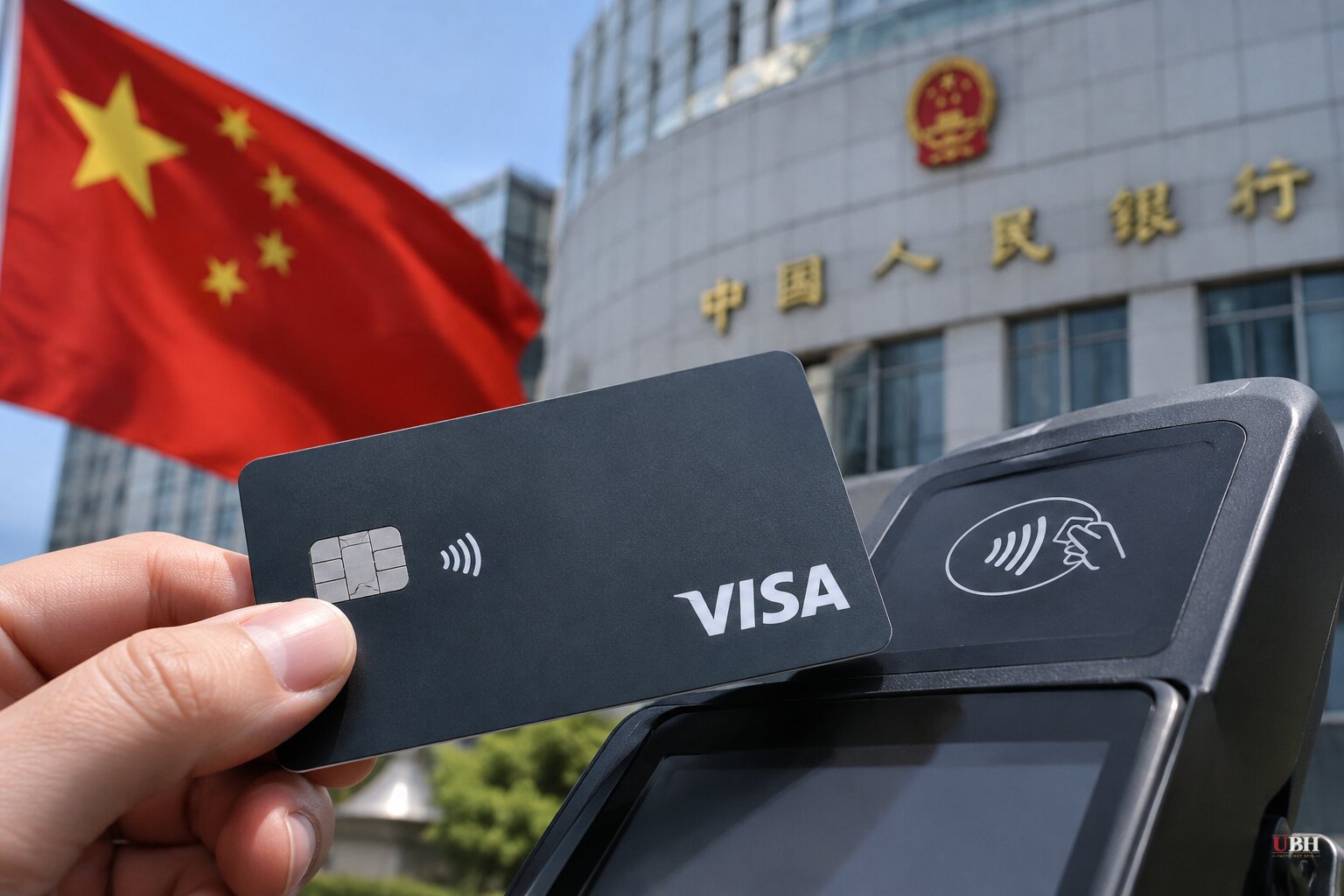
The People's Bank of China gave Visa approval on Tuesday, Oct. 13, to prepare a locally registered bank card clearing organization. The central bank called it a major step in the country's financial opening up.
This is not yet permission to process a single domestic transaction. The PBOC said Visa has one year to finish its advance arrangements. After that, it may submit an application to begin operations.
What Visa gets
A local clearing entity would let Visa settle domestic yuan transactions directly on its own network. Until now, that business has been dominated by state-owned UnionPay.
Visa's current role is narrower. It works with Chinese banks on dual-branded cards. UnionPay processes the domestic transactions on those cards, and Visa handles payments abroad. In January, Visa said mainland-issued cards could be linked to Apple Pay for use overseas.
Visa CEO Ryan McInerney said, "We look forward to taking the necessary steps in the process, pursuant to the PBOC's regulations, to begin operating domestically in China." Visa called the approval "an important milestone toward the company serving China's domestic payments market."
The structure also differs from its rivals. Visa's local entity would be permitted to operate as a wholly foreign-owned enterprise. American Express and Mastercard went through joint ventures.
A long wait
Visa said it applied to the PBOC in May 2020 to operate a bank card clearing institution. That is more than six years ago.
American Express was first. It got the PBOC's nod in 2018 and its processing license in June 2020. Mastercard's China joint venture received approval to begin clearing preparations in February 2020 and said it started processing payments in 2024.
Mainland China has kept a tight grip on its financial sector. It favors domestic players and restricts cross-border capital flows.
The diplomatic backdrop
The approval lands ahead of the APEC Leaders' Meeting in Shenzhen next month, where Donald Trump and Xi Jinping are expected to meet for the third time this year.
McInerney was part of Trump's business delegation to Beijing in May. He became chair of the U.S.-China Business Council in June and led a trip to Beijing in early September. Trump told Fox News after the May trip that he raised Visa's request for market access with Chinese officials.
After the September talks, China said it would approve applications from all foreign financial institutions to operate in the country. China's Ministry of Commerce said that during trade negotiations ahead of Xi's state visit to the United States, both sides reached "a consensus in principle" on financial services. That included approving applications from American financial institutions to set up local branches.
George Chen, partner and chair of the digital practice at The Asia Group, said the timing is notable. "Beijing chose to approve Visa's license just ahead of the APEC Leaders' Meeting in Shenzhen next month," he said. In his view, the move suggests Beijing wants to show tangible progress for American businesses before Trump's next visit to China.
McInerney, for his part, thanked the leaders of both countries for "pursuing a constructive and strategically stable relationship between the world's largest economies."
The market Visa is entering
The prize may be smaller than the headline suggests. Mobile payments dominate daily consumer spending in China, and they run mainly through Tencent's WeChat and Alibaba-affiliate Ant's Alipay. Bank card clearing is the lane Visa is being allowed to prepare for.
Visa has not said how much it expects to spend on the buildout or what share of the domestic market it is targeting.
The next concrete marker is a deadline. Visa has until roughly October 2027 to finish its preparations. Only then can it ask the PBOC for permission to start operating, and the central bank has not said how long it will take to decide.
Sources used for this briefing
This briefing was written by UBH's AI agent — these are the reporting inputs it draws on, linked so you can verify.


