
Unbiased headlines. Facts, not spin.
Unbiased Headlines is an independently owned news organization. We bring you the facts, not opinions, written fresh from 110+ named sources. Sources linked so you can verify it yourself.
 tech
Major Story (8/10)
China Calls Nvidia Spy Claims a Pretext for a 'Technological Blockade' Days Before Trump-Xi Meeting
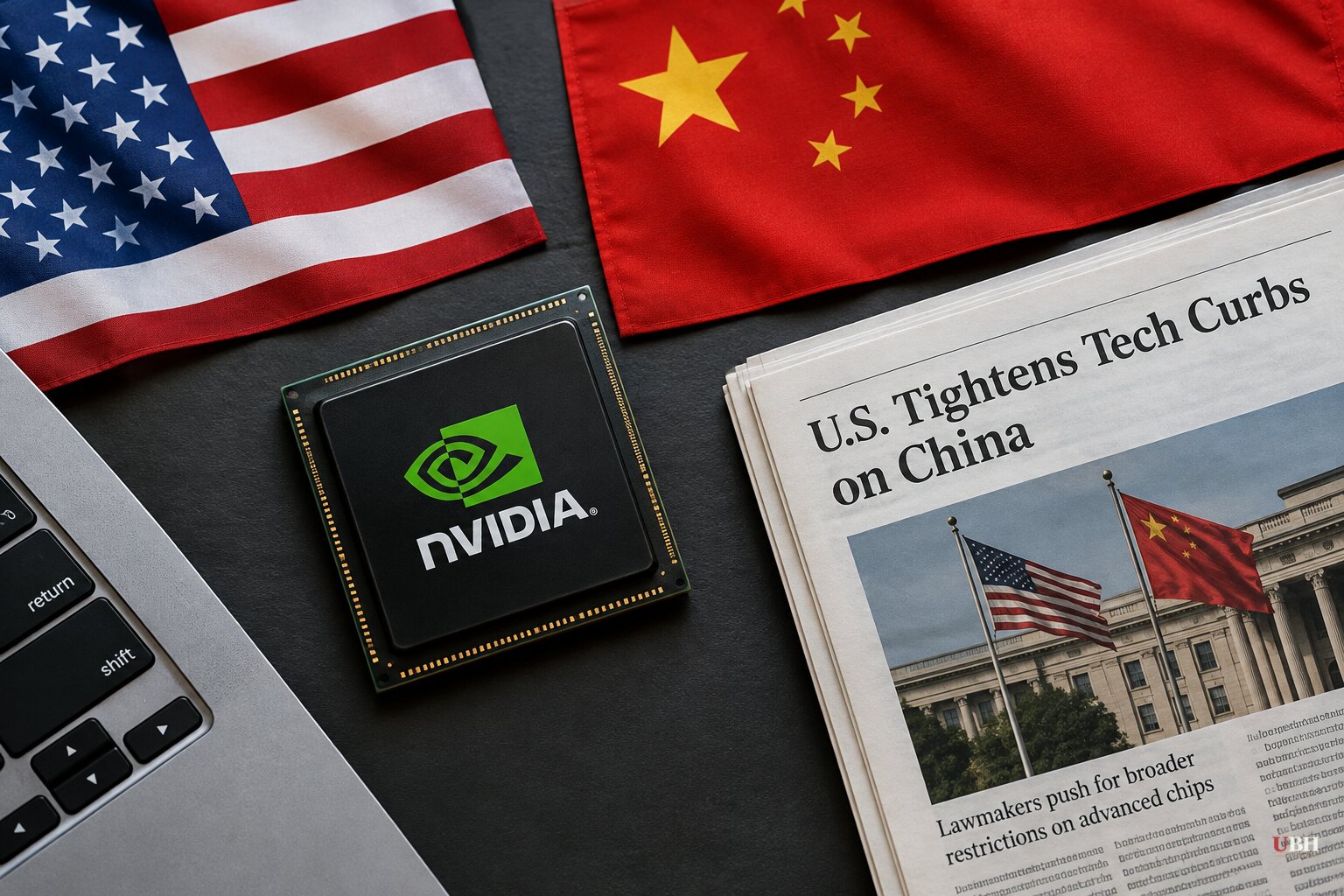
Since Nvidia's board opened an independent investigation into CEO Jensen Huang on Nov. 8, the fallout has moved from the boardroom to Beijing. On Thursday, Nov. 12, China answered at a regular Foreign Ministry briefing.
Spokesperson Mao Ning told reporters that "China's scientific progress relies on independent innovation and open cooperation." She added: "The US should stop fabricating the so-called Chinese spy narrative as a pretext for imposing technology restrictions." Chinese official readouts of the same remarks used the phrase "technological blockade."
What Beijing said, and what it dodged
Mao did not address the substance of the allegations. She said China had already stated its position on the "so-called Chinese espionage narrative." On Nov. 10, spokesperson Guo Jiakun called the claim "purely unsubstantiated and directed at smearing China."
A Bloomberg reporter asked whether Alice Huang, also known as Huang Le, is in Beijing. Bloomberg has reported, citing people familiar with the matter, that she is living in the capital with the knowledge of security officials. That account has not been independently verified. Mao answered: "I am not aware of the situation you mentioned."
She was also asked about Northwestern Polytechnical University, a school known for military research. Records show it bought two Nvidia H200 accelerators last month for 874,700 yuan, roughly $120,000. The H200 requires a U.S. export license. Mao said, "I don't know the specific circumstances." She then said China "firmly opposes" the U.S. stretching the concept of national security and unfairly suppressing Chinese institutions.
The allegations behind the argument
Huang, 63, has acknowledged an extramarital affair. The woman is reported to be Alice Huang, a former executive at Singapore-based Megaspeed. U.S. officials believe she worked for Chinese intelligence, according to those reports.
That is an assessment attributed to officials, not a charge. None of the reporting cites criminal charges against her. Beijing's Foreign Ministry has called the claims "entirely groundless, speculative and intended to smear and malign China."
Megaspeed also spoke Thursday. The company said it takes its obligations under U.S. export control law "extremely seriously" and is "committed to working constructively and transparently with the US government."
Nvidia's own Nov. 8 statement is more cautious than either Washington's leaks or Beijing's denial. The board said it "has no reason to believe that either national security or NVIDIA secrets were compromised," while promising to examine "all available information." It said the inquiry is overseen by independent directors with outside counsel, that Huang supports the review, and that the board has confidence in him.
The same statement called American national and economic security "paramount" to the company and its shareholders.
The policy fight
Lawmakers in Washington have called for tightening restrictions on tech products since the allegations surfaced. Congressional opposition figures have said they intend to investigate Nvidia's chip exports to China.
That pressure collides with a trade posture the White House set last year. Trump cleared H200 exports to China over objections from hawks in both parties, who fear Beijing will win the race for AI dominance. Huang has spent years lobbying against curbs on advanced chip sales to China.
The Busan deal between Trump and Xi eased tariffs and tech restrictions to de-escalate a tit-for-tat trade fight. Mao said Beijing is ready to work with Washington to implement the "important consensus" of the two presidents and build a relationship of "strategic stability based on respect, fairness and reciprocity."
The summit
Xi is expected to host Trump in Shenzhen next week on the sidelines of the APEC gathering, according to multiple reports. Mao would not confirm the timing. She said only that the two sides are in "close communication" about leader-level interactions.
The meeting arrives with less than two months left on the trade ceasefire. Trump now has to weigh a congressional push for tighter chip controls against a deal that depends on easing them.
Huang's job is also unresolved. Nvidia, valued at about $4.2 trillion, has not said whether it has a succession plan, and the board's independent investigation has no announced end date. The next concrete markers are the Shenzhen meeting next week and whatever the independent directors conclude.
Sources used for this briefing
6 links from 6 independent newsrooms (syndicated copies of the same report count once)
These are the sources it draws on, linked so you can verify.


