
Unbiased headlines. Facts, not spin.
Unbiased Headlines is an independently owned news organization. We bring you the facts, not opinions, written fresh from 110+ named sources. Sources linked so you can verify it yourself.
 tech
Major Story (8/10)
Nvidia Board Reportedly Set to Decide Huang's Future as House Chairs Threaten Subpoena
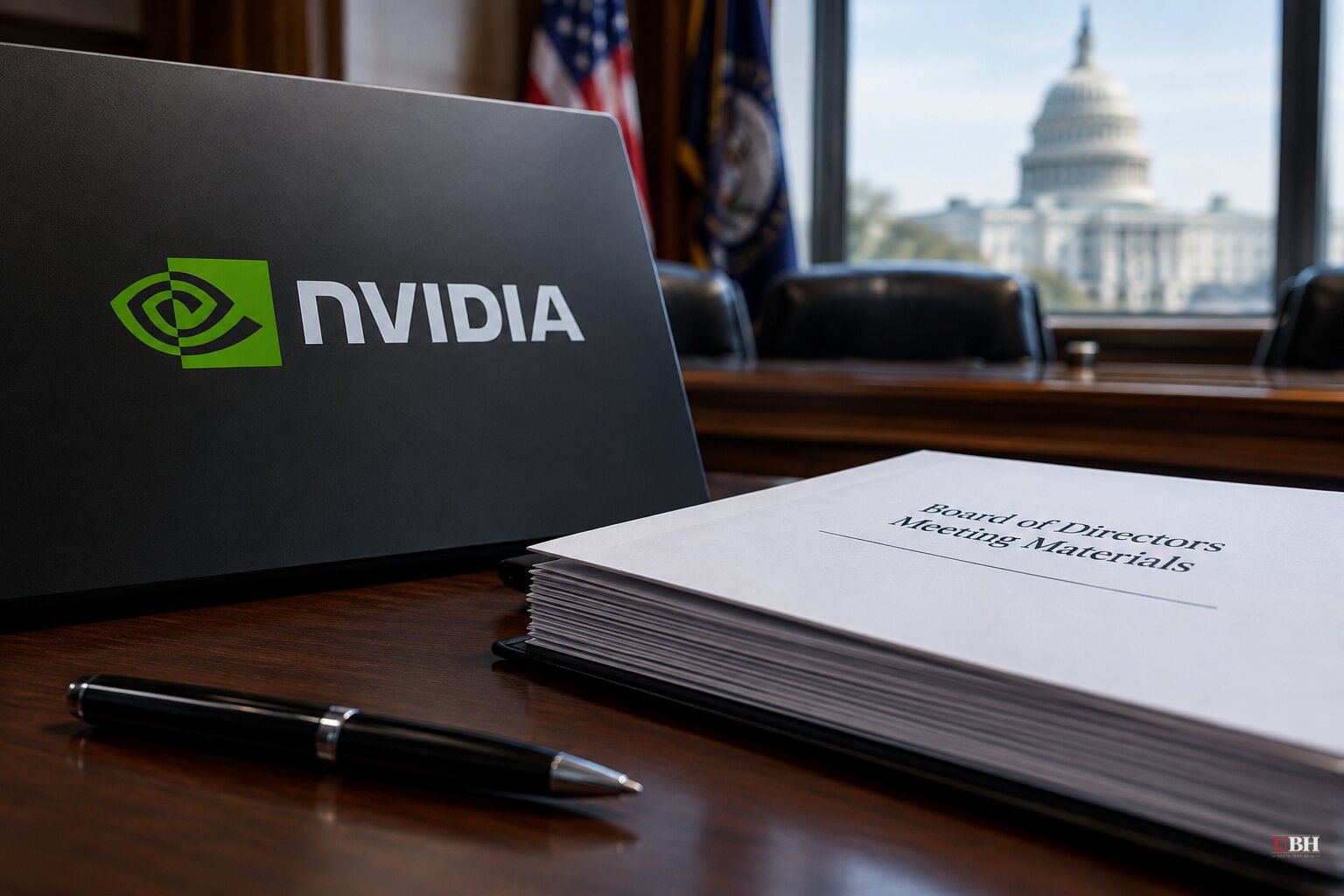
Since Jensen Huang admitted on Sunday, Nov. 8, to an affair with Megaspeed executive Alice Huang, the Nvidia CEO's position has gone from backed by his board to reportedly under review, and Washington has stopped waiting politely.
The Wall Street Journal reported Wednesday night that the board was preparing to meet as soon as Wednesday to decide whether to remove him. CNBC reports that the board met Wednesday to discuss whether to oust him. The Journal's report followed a New York Times story alleging a second relationship, with Kimberly Powell, Nvidia's vice president of healthcare, who reports to Huang.
Nvidia has not publicly commented on either report; The Verge and CNBC's Investing Club both say the company did not immediately respond to requests for comment. The board had thus far backed Huang to remain as chief executive, according to the Financial Times, which said directors could now have him step back while the investigation proceeds and succession planning intensifies, or push for his immediate departure.
The Powell allegation
The Times says five current or former employees told it about the relationship. Two sources told the paper that Huang and Powell were captured on video being affectionate at a San Jose hotel during the GTC conference in March. The Times has not seen the video.
Huang and Powell are both married to other people. Powell has been at Nvidia for more than 18 years. She could not be reached for comment.
The Times notes that Nvidia, like many companies, has rules discouraging relationships between supervisors and subordinates. Business Insider reports that Nvidia's code of conduct lists personal relationships among activities that can create a conflict of interest. Neither Powell nor Nvidia responded to Business Insider's requests for comment. Huang's admission on Sunday concerned the Megaspeed executive; the Powell allegation has not been confirmed by Huang, Powell or the company.
Congress closes in
Three House Republicans, Brian Mast (Foreign Affairs), John Moolenaar (China Select Committee) and Rick Crawford (Intelligence), asked Huang in a Nov. 4 letter to appear before their committees on Nov. 18. On Wednesday, Mast and Moolenaar told reporters they had not yet heard from him and gave him until the end of the day to respond.
Asked whether they would subpoena him, Mast said "yes." Moolenaar said all three committees have subpoena power and "a very serious interest in getting to the bottom of this and having transparency around this." The sources do not say whether Huang answered.
Sen. Kevin Cramer, R-N.D., a Senate Banking member, repeated his call for Huang to resign. "This is a guy that's right now so vulnerable to extortion, blackmail," Cramer told CNBC. "I just don't think, as a national security matter, we can run the risk."
The criticism is not one-sided. Rep. Suhas Subramanyam, D-Va., a House Oversight member, said Huang "should resign from Nvidia." Democrats are poised to take both chambers in January, so the scrutiny is unlikely to fade.
Official statements
U.S. intelligence officials believe Alice Huang was recruited by China's Ministry of State Security. She is not related to Jensen Huang. Those are the officials' assessments, and the sources report no charges against either person.
President Trump said Monday that the FBI is looking into the matter. He also called Huang "a high-quality person." The two have been close, and Huang traveled with Trump on Air Force One to China in May.
The board has hired former U.S. attorney Joon H. Kim and his firm, Wachtell, Lipton, Rosen & Katz, to examine the matter. The Verge notes that the Journal's report suggests the board may not wait for that review to finish.
Markets and succession
Nvidia shares fell more than 7% in after-hours trading Wednesday, and by about 8.6% by the Financial Times' count, after the Powell and board reports landed. CNBC reported shares down 6.3% in premarket trading Thursday. Several Wall Street analysts told CNBC that removing Huang could send the stock down 20%, and the stock is already down more than 20% over the last month. Bernstein cut its price target from $400 to $200, and Stacy Rasgon said the alleged affair with a direct report makes it "much tougher for the board to leave him in position."
The harder problem is who runs it. The board has no chair, which the Financial Times calls a testament to Huang's singular role, and Nvidia's annual reports and governance filings have included no specific reference to succession planning. Richard Reyle of Questar Capital Partners said the lack of a succession plan makes the stock "uninvestable." Rasgon said it is unclear who could be the "visionary" to lead Nvidia as a new CEO.
Jim Cramer, speaking on CNBC, named Ian Buck, the vice president who created the CUDA software program, as one internal talent who could step into a leadership vacuum. Cramer said he believes the company can still succeed over the long term without Huang.
Open questions
Will the board act before Wachtell reports? Has Huang responded to the House chairs, and will they issue a subpoena before the Nov. 18 date? Nvidia has not answered either the Powell allegation or the reports of an imminent board decision.
Sources used for this briefing
9 links from 9 independent newsrooms (syndicated copies of the same report count once)
These are the sources it draws on, linked so you can verify.


