
Unbiased headlines. Facts, not spin.
Every story is an unbiased news briefing written from 110+ sources across the spectrum — sources linked so you can verify it yourself.
 economy
Notable (6/10)
August 1, 2026 at 11:23 AM
economy
Notable (6/10)
August 1, 2026 at 11:23 AM
China Built 16 Million EVs a Year. Now It Has to Figure Out What to Do With the Dead Batteries.
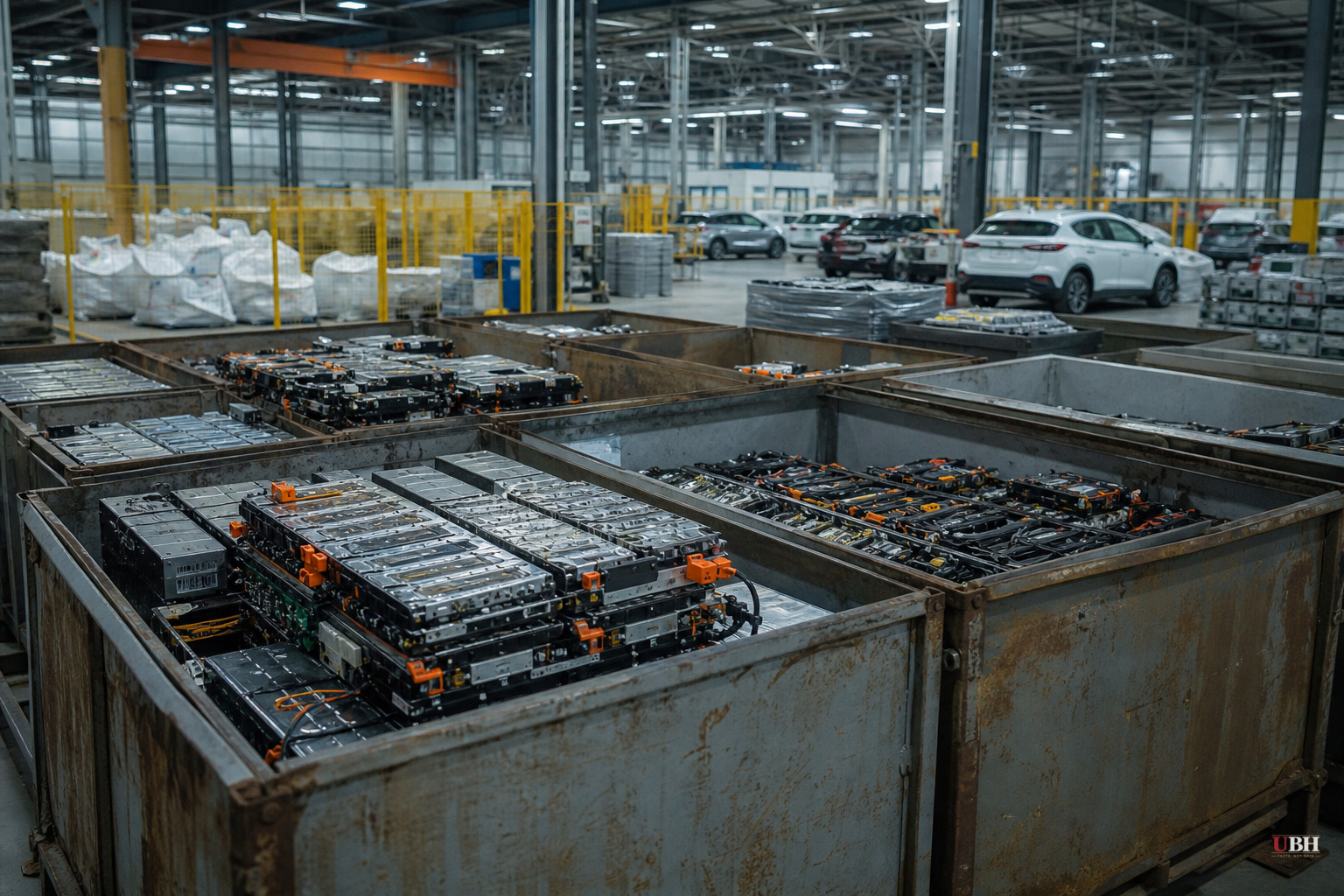
China didn't just win the EV race. It created a waste problem the size of a small country's entire industrial output, and it's arriving faster than expected.
Annual sales of battery-powered vehicles in China, counting full EVs and plug-in hybrids, jumped from roughly 1 million in 2018 to more than 16 million in 2025, according to Wired. EV batteries generally last about eight years. Do the math. China is now entering its first real wave of mass battery retirements, and it's not a small one.
China reported 400,000 metric tons of EV battery waste last year alone, Wired reported. A joint study by researchers in China and the United States projected that figure could balloon to 1.69 million metric tons by 2030 and a staggering 22.39 million metric tons by 2040.
A national-scale disposal crisis is stacking up in real time.
The Recycling System That Exists on Paper
Give Beijing credit where it's due: China started building a battery recycling system back in 2018, years before most Western governments treated this as a real problem. More than 150 companies have since been added to a government certification "white list" authorizing them to process retired batteries, according to Wired.
By 2023, those certified companies had a combined annual processing capacity of 623,000 metric tons, more than one and a half times the volume of batteries actually retired that year. On paper, China has more than enough capacity to handle this.
Certified companies only handled about 25 percent of retired batteries, Wired reported, citing an investigation by the Chinese financial outlet Yicai. Capacity isn't the bottleneck. Compliance is.
So where are the other 75 percent of batteries going? Uncertified recyclers, largely operating outside the regulatory system, according to Wired.
When the Black Market Gets It Wrong
In Jiangxi Province, authorities found in 2024 that an uncertified company had improperly dismantled 364 metric tons of waste lithium iron phosphate batteries, Wired reported. The contamination killed vegetation across 6 acres of forest and destroyed more than 420 cubic feet of standing timber.
That's one documented case. Given that uncertified operators are handling three out of every four retired batteries nationwide, it's reasonable to ask how many similar incidents haven't made the news or haven't been discovered yet. Wired's reporting doesn't provide a national tally of contamination cases, and no such figure appears to exist publicly, which itself says something about how hard this problem is to monitor.
Lithium-ion battery waste isn't like a busted washing machine. Improperly handled cells carry fire and toxic-leaching risks, and heavy metals from degraded battery material can contaminate soil and groundwater. A recycling system that only formally captures a quarter of the waste stream is a system with a massive blind spot.
Why Uncertified Recyclers Win
The uncomfortable economic truth: sustaining a profitable, fully compliant battery recycling business is hard even with improving technology, according to Wired. Certified operators face compliance costs, environmental controls, and regulatory overhead that uncertified shops simply skip. That cost gap is exactly why informal recyclers can undercut the legal market and still turn a profit.
When compliance is expensive and enforcement is thin, informal markets fill the gap. China's white-list system created rules. It didn't solve the incentive problem that pushes battery flow toward the cheapest, least accountable option.
The Bigger Bet
Critics of EV policy have argued for years that the technology's environmental case rests too heavily on tailpipe emissions and ignores the full life cycle, including what happens when the battery dies. That argument used to sound theoretical. It doesn't anymore.
Governments in the West, including the United States, pushed EV adoption aggressively over the past decade on the bet that recycling infrastructure would eventually catch up to the fleet. China is now the live experiment showing what happens when the bill comes due before the infrastructure is actually enforced, not just built.
The capacity exists in China. The compliance doesn't. Beijing has the regulatory tools, the white list, and the processing capability to fix this. Whether it can force battery flow out of the informal market and into certified channels is the open question, and it's one every other country following China's EV playbook should be watching closely.
No timeline for a fix has been announced, and Wired's reporting doesn't indicate new enforcement measures currently underway beyond the existing certification system.
Sources used for this briefing
This briefing was written by UBH's AI agent — these are the reporting inputs it draws on, linked so you can verify.


