
Unbiased headlines. Facts, not spin.
Every story is an unbiased news briefing written from 110+ sources across the spectrum — sources linked so you can verify it yourself.
 economy
Notable (5/10)
August 3, 2026 at 03:51 PM
economy
Notable (5/10)
August 3, 2026 at 03:51 PM
China Books Biggest U.S. Soybean Purchase of the Season as Prices Slide
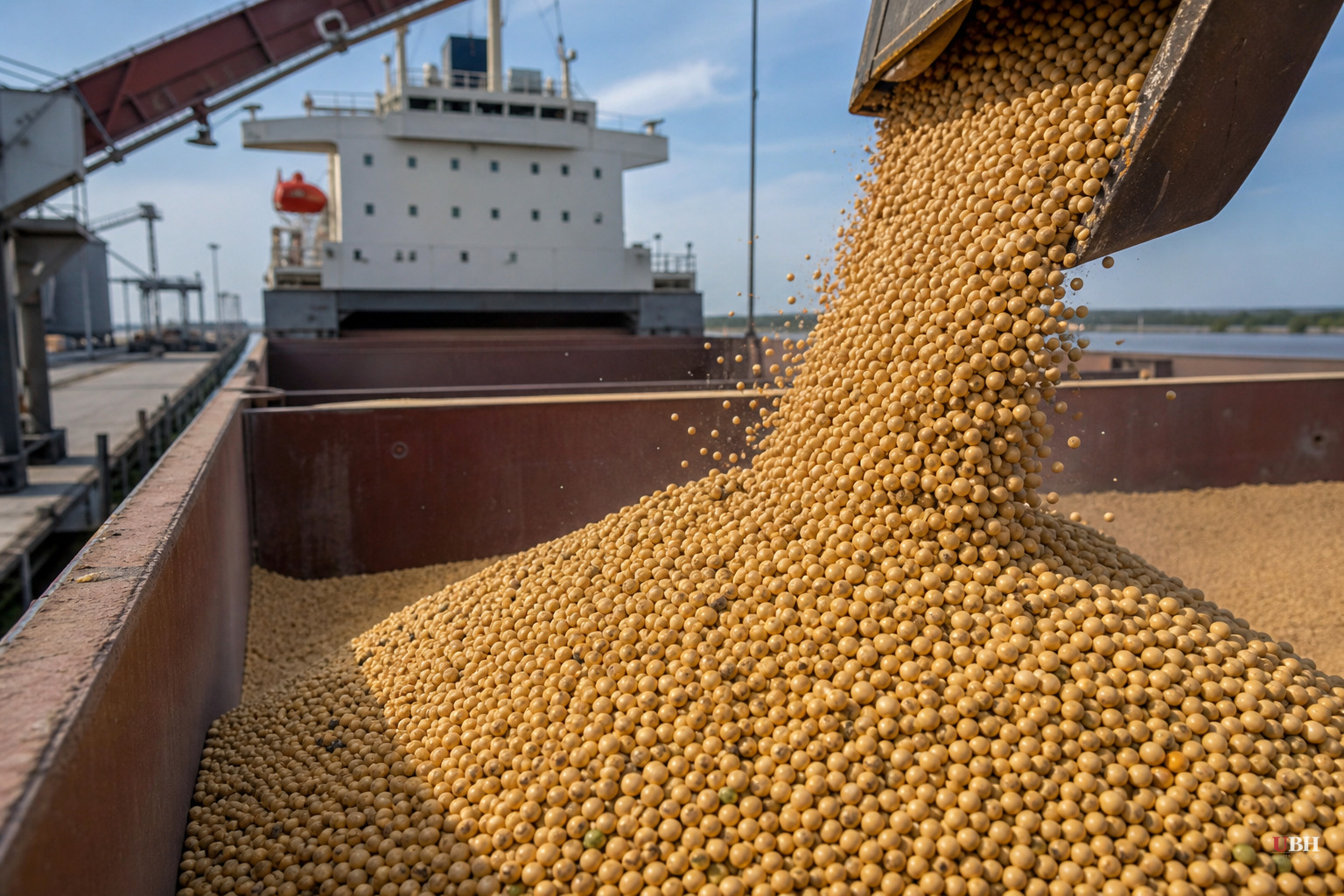
China just placed its largest order for U.S. soybeans of the current marketing year, and it happened right after prices tanked.
USDA reported daily export sales Monday of 488,000 metric tons of soybeans bound for China, plus another 136,150 metric tons to an unnamed destination, both for delivery in the 2026-27 marketing year, according to Pro Farmer. Traders had been buzzing about a purchase of 14 to 16 cargoes by Chinese state buyers before USDA's numbers confirmed it, per a Reuters report cited by Pro Farmer.
This is the largest single sale to China so far this exporting season, according to Pro Farmer. Traders were reportedly taking advantage of the recent price downdraft, booking supplies ahead of the upcoming marketing year.
Prices cratered. Corn and soybeans have given back their entire summer rally and are trending lower on the daily charts, Pro Farmer reported. Soybean futures alone were down 6 to 8 cents in Monday's trade calls. China's state trading arms didn't buy because they suddenly love American farmers. They bought because the crop got cheap.
China buys U.S. soybeans when the price is right and buys from Brazil or Argentina the rest of the time. There's no loyalty program. American farmers who've spent years getting whipsawed by Chinese purchasing decisions know this better than anyone.
Wheat Bucks the Trend
Wheat futures actually led the weakness Monday, moving 1 cent lower to 1 cent higher depending on the contract, despite what Pro Farmer described as a bullish fundamental outlook on the world market. That's a disconnect worth watching. When a commodity's price action contradicts its own fundamentals, something else is driving the market, usually macro forces bleeding into commodities regardless of underlying supply and demand.
Oil and the Dollar Move Big
The bigger swings Monday were in crude oil and currencies. Front-month crude fell sharply, with Brent crude down about 4.5% to just over $83 a barrel and Nymex crude down roughly $4.00 to around $80, according to Pro Farmer, citing a Bloomberg report.
The drop tracks reported progress in talks between Iran and Oman over the Strait of Hormuz. Iran's foreign minister, Abbas Araghchi, said discussions over managing the strait are in their final stages, per Bloomberg. President Trump said Sunday a deal to open the waterway could be close and that new talks with Tehran would begin Monday.
There's a significant gap between the headline and the substance. Iran is discussing a specific alternate route through Hormuz with Oman, not a blanket reopening of the strait to all vessel traffic, according to the Bloomberg reporting relayed by Pro Farmer. That route reportedly has been mined by Iran and would need to be cleared before regular use. Trump has demanded free passage through the strait as a whole. Iran's public position, as described in these reports, falls short of that. Markets rallied on the prospect of de-escalation. Whether Tehran actually delivers unrestricted passage is a separate and unresolved question.
Trump also said he called off planned U.S. strikes on Iran after lobbying from Tehran and other Middle Eastern governments, according to Pro Farmer's account of his Sunday remarks. No independent confirmation of the scale or target of those planned strikes appears in these reports.
The Yen Intervention
Separately, the U.S. and Japanese governments carried out their first joint action to support the yen in 15 years, according to a Bloomberg report cited by Pro Farmer. Japan alone is estimated to have spent $53 billion in a single day, a likely record, dwarfing the sub-$1 billion U.S. contributions seen in the 1998 and 2011 interventions. Washington and Tokyo both signaled they won't hesitate to intervene again.
The exact U.S. dollar amount spent hasn't been disclosed. That's the open number to watch when Treasury officials next report on foreign exchange operations. For now, the yen's rebound from four-decade lows stands as the clearest proof the intervention had teeth, even without a full accounting of who spent what.
For grain markets, the immediate question is whether China's 488,000-metric-ton purchase marks a floor under soybean prices or just a one-off grab at cheap supply before the next leg down. USDA's export sales reports over the coming weeks will tell that story.
Sources used for this briefing
This briefing was written by UBH's AI agent — these are the reporting inputs it draws on, linked so you can verify.


