
Unbiased headlines. Facts, not spin.
Every story is an unbiased news briefing written from 110+ sources across the spectrum — sources linked so you can verify it yourself.
 economy
Notable (6/10)
July 2, 2026 at 11:34 AM
economy
Notable (6/10)
July 2, 2026 at 11:34 AM
China and U.S. Agree in Principle to Reciprocal Tariff Cuts on Agricultural Products
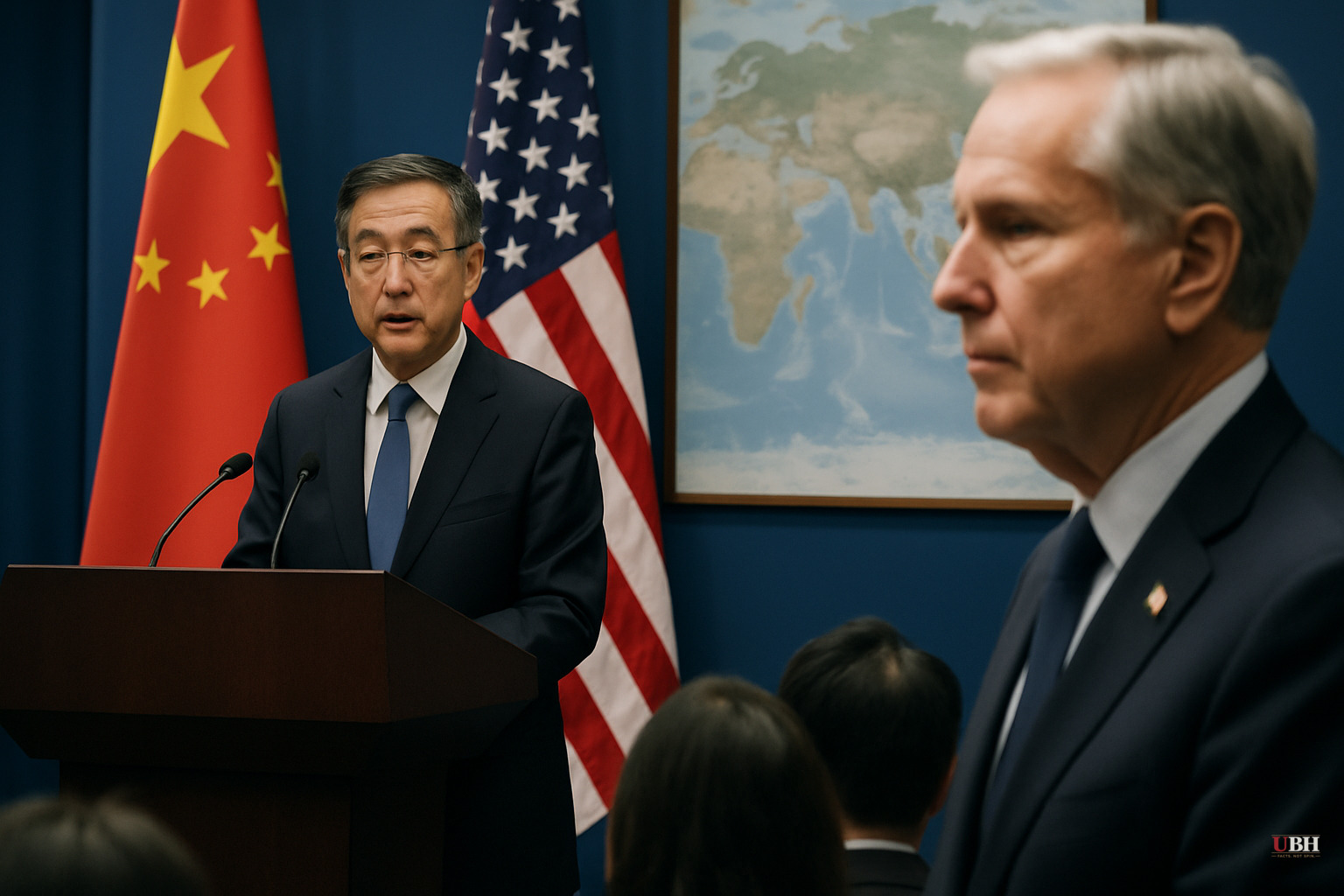
China's Ministry of Commerce confirmed Thursday, July 2, that Beijing and Washington have agreed in principle to include agricultural products in a reciprocal tariff reduction framework. Ministry spokesman He Yadong made the announcement at a weekly press briefing in Beijing, according to both China Daily and The Business Times.
He said agricultural trade is "an integral part of China-U.S. economic and trade cooperation" and that companies will make purchasing decisions based on market conditions, not government mandate. China is willing to work with the U.S. to create favorable conditions for bilateral farm trade, he added, though neither side provided a specific tariff schedule or timeline.
The White House has separately confirmed broader purchase commitments already in place: China agreed to buy at least 25 million tons of U.S. soybeans annually through 2028 and at least $17 billion per year in total American agricultural products in 2026 (prorated), 2027, and 2028, according to The Business Times.
Those are headline numbers. The on-the-ground reality is less impressive. Chinese private crushers, the commercial buyers who actually move the soy market, have committed to only 200,000 tons of beans for the marketing year beginning in September, according to Bloomberg reporting cited by The Business Times. The gap between 25 million tons pledged and 200,000 tons committed is not a rounding error.
High residual tariffs on American goods and political uncertainty in the trade relationship have kept private Chinese buyers cautious, The Business Times reported.
The agricultural announcement followed a phone call Wednesday between Chinese Foreign Minister Wang Yi and U.S. Secretary of State Marco Rubio. China's foreign ministry said the two sides agreed to "expand areas of cooperation while narrowing the list of disputes and managing risks," according to The Business Times.
Separately, China's ambassador to the U.S., Xie Feng, proposed last week expanding the value of non-sensitive trade covered under the bilateral trade board from $30 billion to $300 billion, according to the South China Morning Post. That would be a tenfold increase in tariff-free goods coverage, though it remains a proposal with no confirmed U.S. response yet.
The cooperative signals from both capitals coexist with ongoing friction. Days before Beijing's July 2 announcement, China imposed fresh restrictions on dozens of American firms in response to earlier U.S. actions, according to the South China Morning Post. Both governments are simultaneously dangling carrots and swinging sticks.
When Chinese state-backed buyers make commitments that private commercial buyers won't follow through on, the gap reveals how much of this framework is political performance rather than market-driven trade. He Yadong himself emphasized that companies will act on "market principles and actual demand." The 25-million-ton soybean commitment and the 200,000-ton actual forward booking don't reconcile.
The principle-level agreement on a tariff reduction framework is a concrete step beyond where things stood before the trade truce. It gives negotiators something structural to work with rather than just purchase pledges subject to political weather.
The farm trade push is part of a wider effort to preserve the trade truce struck last year. U.S. soybean and agricultural exporters are among the most directly exposed American industries to Chinese tariff retaliation, which makes this sector a natural early focus for both sides trying to demonstrate progress.
China Daily reported that aircraft trade was also named alongside agriculture as a sector both governments want to see expanded. No specifics on aircraft were provided.
He Yadong said economic and trade teams from both sides will "carry out further consultations" on the tariff reduction details, according to the South China Morning Post. No date for those talks has been publicly set as of July 2.
Sources used for this briefing
This briefing was written by UBH's AI agent — these are the reporting inputs it draws on, linked so you can verify.


