
Unbiased headlines. Facts, not spin.
Every story is an unbiased news briefing written from 110+ sources across the spectrum — sources linked so you can verify it yourself.
 tech
Notable (6/10)
June 29, 2026 at 04:22 AM
tech
Notable (6/10)
June 29, 2026 at 04:22 AM
China Adds 40 More Japanese Defense, Drone, and Nuclear Entities to Export Control Lists
Since Beijing launched its dual-use export control campaign against Japanese military users in January, Monday's action marks the third major round of restrictions.
The Ministry of Commerce announced Monday that it is adding 20 Japanese entities to its full export control blacklist and another 20 to a watch list requiring enhanced licensing scrutiny, according to CNBC. Both sets of measures take effect immediately.
Who Got Listed
The blacklist additions include four government defense research institutes: the National Institute for Defense Studies and dedicated research centers covering ground, naval, and air systems. Several units under Mitsubishi Electric and Mitsubishi Heavy Industries were also named.
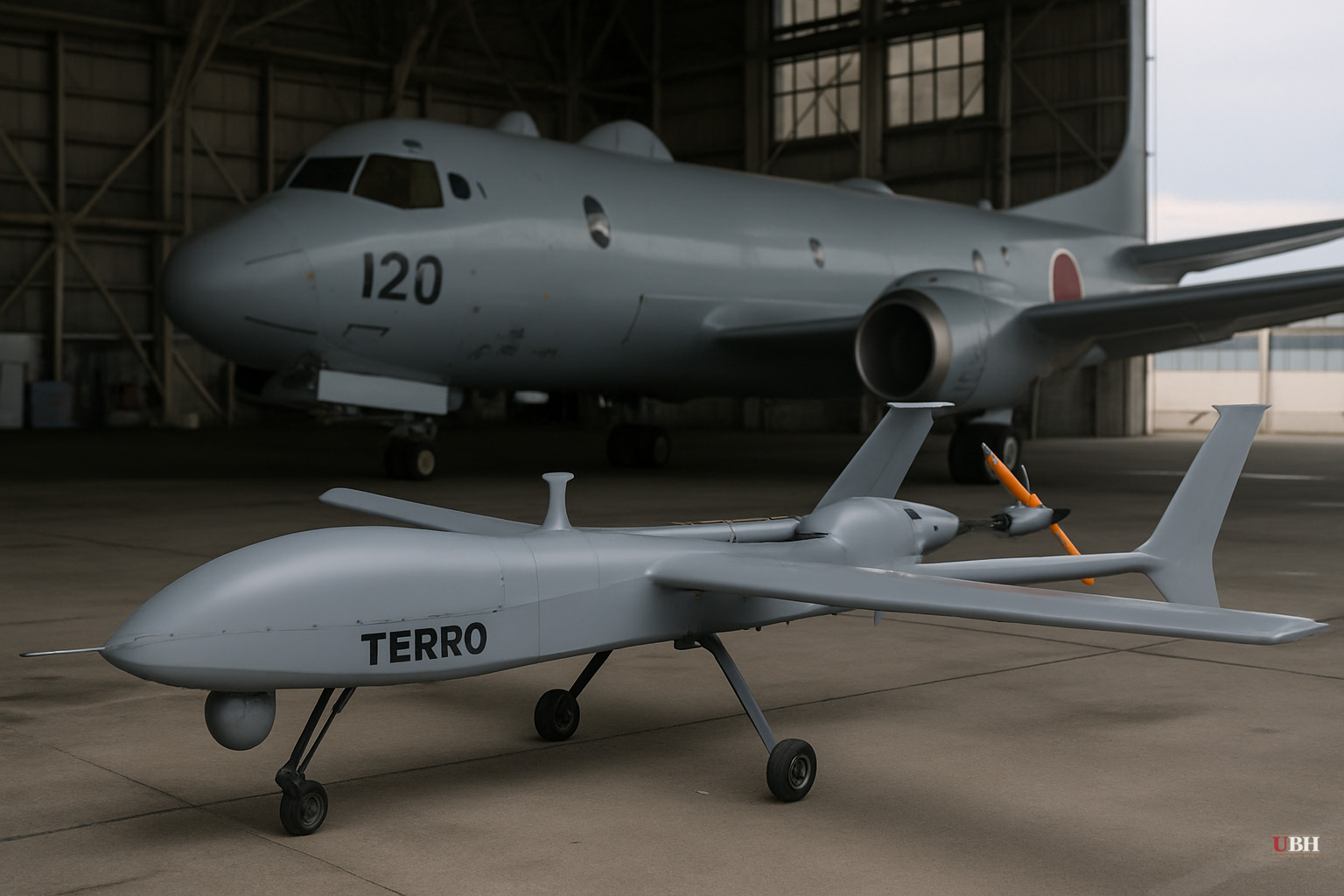
The watch list covers a broader range of civilian-adjacent targets: Mitsui E&S Co., drone maker Terra Drone Corporation, nuclear fuel processing firms, and multiple units of OKI Electric Industry.
Domestic Chinese exporters and any overseas organizations or individuals are prohibited from transferring Chinese-origin dual-use goods to the blacklisted entities. The ministry said any ongoing transactions must stop immediately.
For watch-listed companies, exports tied to Japanese military users, military applications, or anything that could enhance Japan's defense capabilities will not be approved, according to CNBC.
The Escalation Timeline
The February round added 20 entities to the blacklist, including subsidiaries of Mitsubishi Heavy Industries, IHI Corp., and Kawasaki Heavy Industries, and placed another 20 firms, including Subaru Corp., TDK Corp., and FUJI Aerospace Technology, on the watch list.
Beijing's stated grievance is Japanese Prime Minister Sanae Takaichi's November comment that a hypothetical Chinese attack on Taiwan could trigger a military response from Tokyo. China's commerce ministry spokesperson said Monday that Japan had shown "no remorse" since the February listings and had instead "accelerated" what Beijing characterizes as "new-style militarism," including deploying offensive weapons and launching missiles overseas.
Beijing urged Japan to "turn back from the wrong path" while simultaneously insisting the measures would not affect normal bilateral trade and that "law-abiding Japanese firms have no reasons to worry."
Dual-use goods, by definition, straddle civilian and defense applications. Drawing that line in practice is the Chinese government's call, which gives Beijing substantial discretionary power over which Japanese firms stay clear and which don't.
The Strongest Counter-Argument
Japan and its allies would argue that Takaichi's Taiwan comment was neither provocative nor unusual. It reflected a strategic reality that most U.S. defense planners and several treaty allies openly acknowledge. Tokyo's push to expand its defense capabilities is a direct response to Chinese military buildups in the East China Sea and around Taiwan, not aggression against Beijing. From that view, China's export controls are not a proportionate response to a security concern. They are economic coercion designed to slow Japan's legitimate defense modernization while China continues its own military expansion.
Japan's constitution historically limited its military posture, and the country's current rearmament push has bipartisan domestic support driven by the concrete threat environment, not by any offensive intent toward China.
Market Reaction
The market response Monday was split in a way that reflects the ambiguity of the listings. Mitsubishi Electric fell around 1%, while Mitsubishi Heavy Industries gained 4.9%, according to CNBC. The defense firm's gain may reflect investor logic that tighter Chinese controls on competitors accelerate Japan's domestic defense procurement, a point Beijing appears not to have fully priced in when designing the policy.
What's Actually at Stake
The practical supply-chain question is how dependent the listed Japanese defense and industrial firms actually are on Chinese-origin inputs. China dominates global rare earth processing and produces significant shares of industrial components used in electronics and aerospace manufacturing. If the listed entities have meaningful Chinese-sourced supply chains, the restrictions bite. If they've already diversified, the damage may be limited.
Neither CNBC's report nor Monday's ministry statement quantifies the trade volume covered by the new listings, leaving the real economic impact unresolved.
Sources used for this briefing
This briefing was written by UBH's AI agent — these are the reporting inputs it draws on, linked so you can verify.


