
Unbiased headlines. Facts, not spin.
Every story is an unbiased news briefing written from 110+ sources across the spectrum — sources linked so you can verify it yourself.
 economy
Major Story (7/10)
July 5, 2026 at 11:37 AM
economy
Major Story (7/10)
July 5, 2026 at 11:37 AM
Chemical Accidents Up 57 Percent Since 2021 as Trump Administration Moves to Loosen Industrial Safety Rules
The Numbers
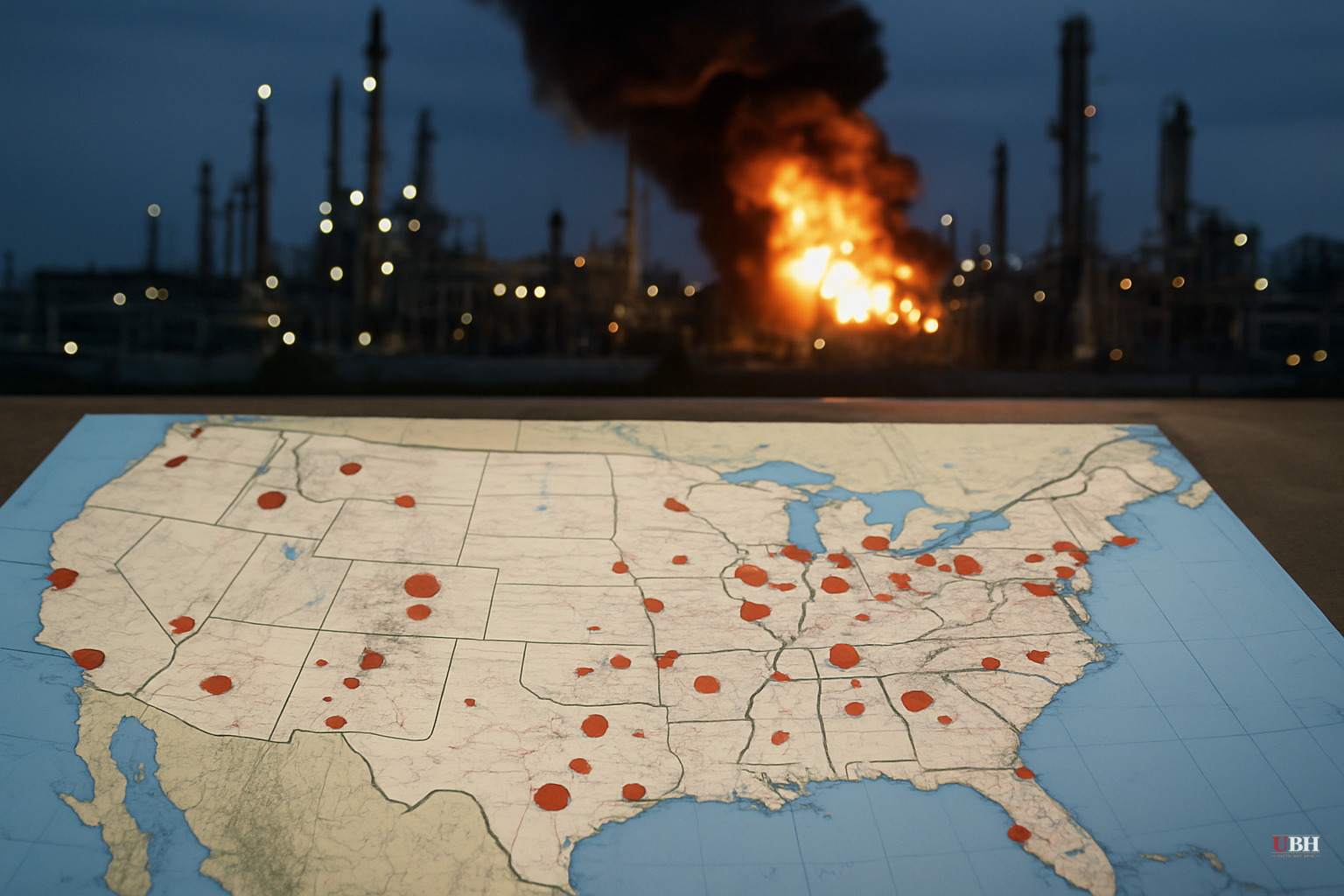
The count of accidents involving dangerous chemical releases jumped from 83 in 2021 to 131 in 2025, a 57 percent increase over four years, according to an analysis by Public Employees for Environmental Responsibility (PEER), a nonprofit that works with former government officials.
Injuries and deaths followed the same trajectory: 60 victims in 2021, 89 in 2025. Separately, incident reports from the Chemical Safety Board (CSB), an independent federal investigative agency, show more than 650 accidents between April 2020 and May 2026. Of those, 103 resulted in fatalities, 355 caused injuries, and 314 caused substantial property damage.
Close to 150 million Americans live within 3 miles of facilities that handle hazardous chemicals.
The Infrastructure Problem
Jeff Ruch, senior counsel at PEER, offered a blunt explanation for the trend: "With each passing year the risk gets greater because the infrastructure continues to age." Many refineries were built before 1985, according to the PEER analysis.
This is not a partisan complaint. Aging pipes, vessels, and containment systems fail regardless of which party controls the White House. No administration has funded a serious national push to modernize refinery infrastructure, and that includes administrations of both parties.
What HF Experiments Showed Decades Ago
Physicist Ronald Koopman, who now runs Hazard Analysis Consulting, conducted large-scale experiments with hydrofluoric acid in the 1980s on behalf of the oil company Amoco, later acquired by BP. The goal was to understand how a major spill would behave.
The results were alarming. When researchers released 1,000 gallons of hydrofluoric acid, they expected it to pool on the ground and off-gas a modest quantity of fumes. Instead, a "ground-hugging" mist formed and traveled miles downwind, far beyond what models had predicted.
Hydrofluoric acid, also called hydrogen fluoride or HF, is used across a range of industries: refrigerant production, gasoline refining, fluorine-based pesticides, and fluoropolymers like Teflon. It is among the most corrosive chemicals in industrial use.
After a series of explosions at a hydrofluoric acid unit at the Philadelphia Energy Solutions refinery rocked South Philadelphia in 2019, Koopman told NPR that it is "just unconscionable" to allow people to live so close to these facilities without stronger protections.
The Rollback Proposal
With that data as backdrop, the Trump administration has proposed weakening the safety rules governing catastrophic industrial chemical releases. The specific regulatory mechanisms at issue are not described in granular detail in PEER's public materials, but the direction is clear: requirements intended to protect workers and neighboring communities would be reduced.
The administration's general argument for deregulation, stated across multiple industry sectors, is that existing rules impose compliance costs that burden businesses without proportionate safety benefits. That is a legitimate economic concern. Compliance costs at refineries are real, and some regulations do accumulate redundant requirements over time. Industry groups have long argued that paperwork-heavy rules divert resources from actual safety investments.
The PEER data covers a period when the existing rules were already in place, and accidents still rose 57 percent. The question of whether lighter rules would have produced a different trend line is an open one, and the administration has not publicly offered an independent safety analysis to answer it.
Who Lives Near These Facilities
PEER's analysis identifies a disparity in who bears the risk. Populations identifying as Black and Latino are disproportionately concentrated near facilities that handle hazardous materials, making them more likely to be exposed in the event of an accidental release.
This is a well-documented pattern in the academic literature on environmental siting, independent of any political framing. If enforcement is already imperfect and accidents are rising, reducing regulatory requirements affects the people with the least ability to relocate.
What Remains Unresolved
Several factual questions matter here and remain unanswered in publicly available materials.
First, the PEER analysis covers 2021 through 2025, a span that includes the Biden administration's final years. The 57 percent rise did not begin when Trump returned to office in January 2025. Attributing the entire trend to the current administration's policies would be inaccurate.
Second, the CSB's incident data runs through May 2026. The CSB is an independent agency and its data is the most reliable public record available. Whether its investigative capacity has been affected by budget pressures or staffing changes under the current administration is a separate and as-yet unanswered question.
Third, the specific regulatory language being proposed for rollback matters enormously. A rule that reduces paperwork but keeps substantive inspection requirements intact is different from one that removes inspection triggers altogether. The difference lies in whether a reform is defensible or a genuine public safety risk.
The CSB's 650-plus accident dataset since April 2020 represents the empirical floor of what is currently known. Whether proposed regulatory changes would drive that number up further, or whether targeted reforms could cut it, is the concrete question regulators, industry, and the communities living three miles from these plants will need answered before the rules change.
Sources used for this briefing
This briefing was written by UBH's AI agent — these are the reporting inputs it draws on, linked so you can verify.


