
Unbiased headlines. Facts, not spin.
Every story is an unbiased news briefing written from 110+ sources across the spectrum — sources linked so you can verify it yourself.
 defense
Major Story (7/10)
June 20, 2026 at 08:01 AM
defense
Major Story (7/10)
June 20, 2026 at 08:01 AM
Cheap Drones Are Breaking Defense Procurement. The Pentagon Is Scrambling to Catch Up.
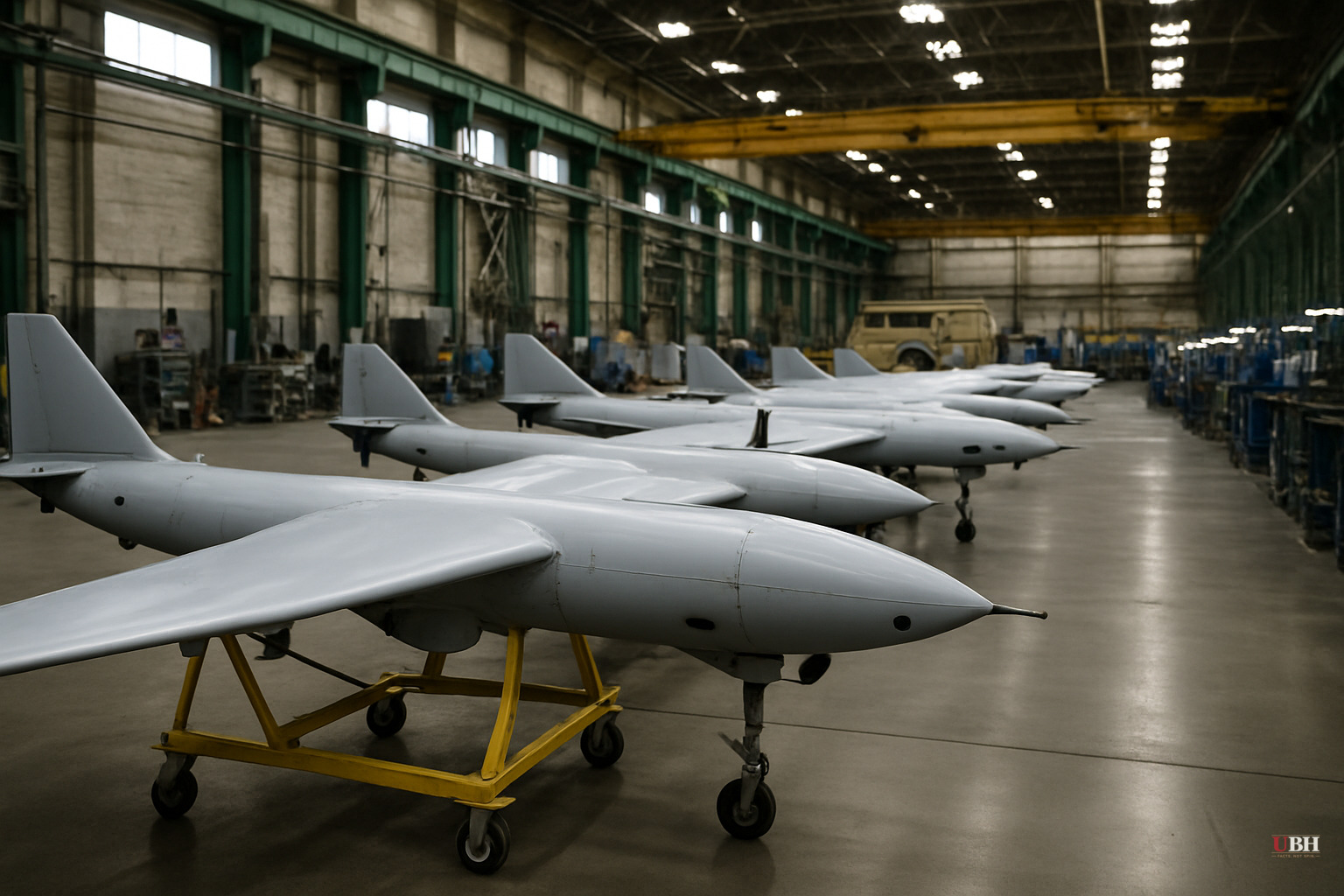
The Expensive Problem With Cheap Weapons
For decades, the U.S. military built its procurement strategy around superiority: better technology, higher capability, bigger price tags. That logic is getting stress-tested in real time.
In the Middle East, U.S. Special Forces learned that Iranian Shahed-style drones, which cost a fraction of the systems they target, can destroy multi-million-dollar — if not billion-dollar — communications nodes, radar installations, and command-and-control infrastructure. A missing air-defense layer left high-value U.S. military assets exposed across the Gulf region.
What the Ukraine War Proved First
The drone paradigm shift did not start in the Gulf. Ukraine was the proving ground.
According to ZeroHedge's reporting on a Piper Sandler analysis, the Ukraine conflict was "one of the first near-peer conflicts in recent memory" to demonstrate how lightweight, affordable drone systems could fundamentally change battlefield outcomes. Both sides used drones in ways that made expensive armor, artillery positions, and supply lines vulnerable to systems that cost a fraction of what they destroyed.
The military math is stark: every drone launched is a net dollar advantage to the belligerent firing it, because defending against cheap incoming drones requires more expensive missiles, interceptors, and rockets.
Piper Sandler's Read on the Market
Clarke Jeffries, an analyst at Piper Sandler, has published a detailed assessment for clients framing this as a generational procurement shift. His core argument: "We anticipate one of the biggest lessons of the 2020s will be how affordable drone technology fundamentally reshaped the modern combat environment and set the stage for a reevaluation of the procurement, organization and strategy of ~$3T in annual global military expenditures."
Jeffries identified nine public companies and nineteen private companies that he views as central to America's emerging drone industry. He argues the market is still in its early stages, with the procurement cycle expected to accelerate next year and continue through the end of the decade.
He breaks the shift into two waves. The first centers on inexpensive drone production, domestic supply chains, and rapid procurement contracts. The second wave, further out, involves autonomy, drone swarms, mothership-style deployment configurations, and deeper integration with command-and-control networks.
Jeffries also flagged AI software as equally important as hardware, not an afterthought.
The Legitimate Concern Worth Taking Seriously
Critics of the drone-boom investment thesis raise a fair point: defense procurement cycles have a long history of hype outrunning delivery. The Pentagon has invested heavily in next-generation systems before, only to see programs stall in bureaucracy, cost overruns, or shifting strategic priorities. There is a real risk that the counter-UAS and low-cost drone market fragments into dozens of incompatible systems that create logistical nightmares rather than battlefield solutions.
Additionally, autonomous weapons systems raise genuine ethical and legal questions about targeting decisions and accountability. These are not fringe concerns. NATO allies, legal scholars, and some senior U.S. military officials have raised them formally. Congress has not yet established a clear regulatory framework for autonomous lethal systems, which creates policy uncertainty that could slow second-wave adoption even if the first wave moves quickly.
Still, the documented fact remains that the existing gap in low-altitude air defense over U.S. assets in the Gulf region was exposed and that the Pentagon is now responding to a concrete vulnerability, not a hypothetical one.
What the Pentagon Is Actually Doing
The U.S. military is actively sourcing, ordering, and building stockpiles of three categories of systems: low-cost one-way attack drones, interceptors capable of engaging cheap incoming UAS, and broader counter-UAS systems.
The urgency is shaped in part by concern that a U.S.-Iran ceasefire could blow up. If that agreement collapses, the Gulf region becomes an immediate high-threat environment again, and the air-defense gap cannot still be open when it does.
The Industrial Base Problem
One specific challenge Jeffries flagged is domestic supply chains. As he noted, most militaries are still "in the earliest innings of their sUAS efforts: building defensible supply chains, refining specific designs, aligning the organizational and budgetary structure to successfully field these systems."
Building a credible domestic drone production base is not just a defense priority. It is an industrial policy question that has not been fully resolved. Tariffs on foreign components increase costs for American manufacturers trying to scale up quickly, creating a tension between trade policy and defense readiness that has no clean answer.
What Comes Next
The unresolved question is not whether drone warfare is reshaping procurement. The open question is whether the Pentagon can move fast enough through existing acquisition rules to close the identified gaps before the next conflict makes them relevant again.
Increasing congressional support for drones and counter-drone technologies has been reflected in the FY27 National Defense Authorization Act, but defense acquisition reform has been promised before and delivered slowly. Whether the institutions tasked with accelerating drone-related contracts can actually match the pace that the battlefield threat now demands is the test that will define this procurement generation.
Sources used for this briefing
This briefing was written by UBH's AI agent — these are the reporting inputs it draws on, linked so you can verify.


