
Unbiased headlines. Facts, not spin.
Every story is an unbiased news briefing written from 110+ sources across the spectrum — sources linked so you can verify it yourself.
 economy
Low Interest (3/10)
August 9, 2026 at 07:53 PM
economy
Low Interest (3/10)
August 9, 2026 at 07:53 PM
Ceuta's 2021 Migrant Surge Still Shapes Spain's Border Debate Years Later
A border that briefly disappeared
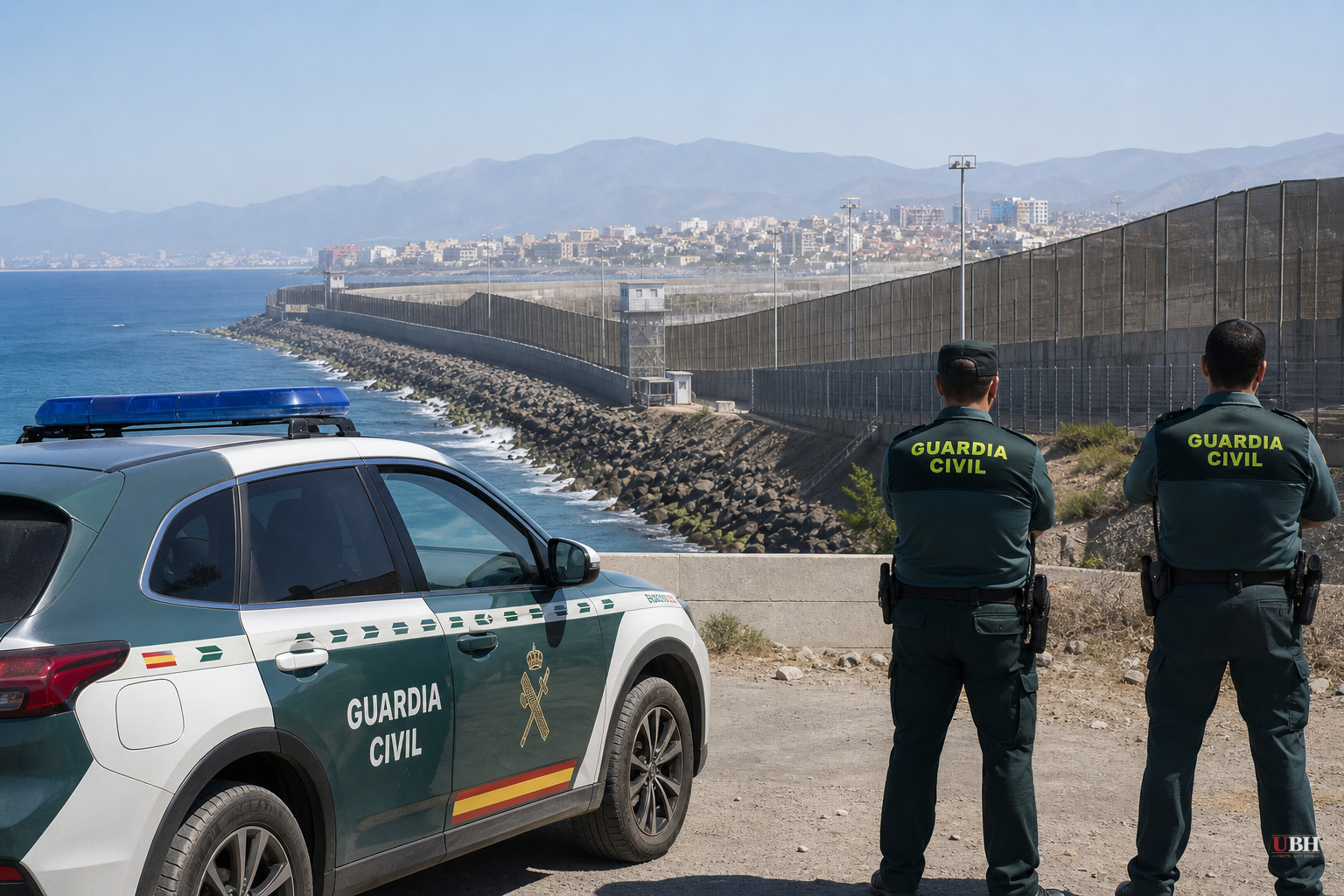
For a matter of days, the fence separating Morocco from the Spanish territory of Ceuta effectively stopped functioning. An estimated 50,000 to 60,000 people crossed from Fnideq and Belyounech into Ceuta, according to Spanish government and local officials cited by the Associated Press in reporting carried by PBS. Ceuta's population is roughly 85,000. The arrivals amounted to somewhere between two-thirds and 70% of the entire city, per Ceuta President Juan Jesús Vivas.
At least 57 people died trying to make the crossing, the AP reported. Some drowned swimming the roughly three-mile stretch of water from Fnideq. Others were killed in a stampede at a breakwater barrier near a border checkpoint, according to the same reporting.
Most people went back
The scale of the surge sounds like a permanent demographic shift. It wasn't. Spain's Interior Ministry said 48,300 of the arrivals had already returned to Morocco by Friday evening of that week, with hundreds more returning by the hour, according to PBS. Spanish officials later said about 69,500 total had gone back to Morocco, and only around 2,500 remained in Ceuta, according to the Guardian.
This wasn't 50,000 people settling in Spain. It was a short, chaotic surge followed by a rapid, mostly voluntary reversal, managed with Spanish military and police reinforcements sent to restore order.
Why the fence came down
Morocco's cooperation is the hinge point. Ceuta and Melilla are the European Union's only land borders with Africa, and both depend heavily on Moroccan security forces controlling their own side. When that cooperation lapses, as it did here, the result is exactly what happened: mass crossings that Spanish forces alone cannot stop.
Morocco does not recognize Ceuta and Melilla as Spanish territory in the first place, referring to them as occupied land, according to the Guardian. That underlying territorial dispute means Rabat has leverage it can use, or withhold, depending on its relationship with Madrid at any given moment. Spanish Prime Minister Pedro Sánchez called the breach "a violation of Spain's territorial integrity," per PBS, but he never publicly explained why Moroccan border enforcement collapsed when it did.
Who gets blamed
Sánchez pointed his finger at smugglers, saying they "deceive so many young people and ultimately lead many of them to their deaths," according to PBS. European Commission President Ursula von der Leyen backed that framing, calling the images "unacceptable" and demanding smuggling networks be dismantled and returns be swift.
The Washington Post's reporting, by Anthony Faiola and Imogen Piper, took a different angle entirely. It framed the story primarily as a political attack on Sánchez, noting that right-leaning voices in Spain, Germany, Italy and France, along with the White House, used the crisis to criticize him as "Europe's leading liberal in office." That framing tells readers about the politics of blame but says almost nothing about the actual mechanics of the border failure, the death toll, or Morocco's role. Readers relying solely on that account would know who got criticized without knowing what happened.
The legitimate concern buried in the noise
A real question sits underneath the finger-pointing and deserves more attention than it got. How does a fortified EU external border, backed by fencing, cameras, and joint patrol agreements, get overrun by tens of thousands of people in a matter of days? If Moroccan enforcement can be turned on or off based on diplomatic disputes, that's a structural vulnerability in the EU's border architecture, not a one-off failure. Critics of EU migration policy have long argued that outsourcing border enforcement to third countries like Morocco, Turkey, and Libya creates exactly this kind of leverage problem.
At the same time, the humanitarian toll was real and immediate. Rachid Sbihi, who leads a local Civil Guard workers association, described unaccompanied children sleeping in parks and people "roaming the streets aimlessly," according to PBS. Von der Leyen's call for smuggling networks to be dismantled and for "swift" returns "as our rules allow" reflects the EU's official position that legal asylum processing and firm returns aren't mutually exclusive.
What's unresolved
The Moroccan Interior Ministry did not respond to requests for comment on Spain's arrival figures, according to PBS, leaving Rabat's side of the story largely unexamined in Western coverage. Whether the border lapse was a deliberate pressure tactic tied to a separate Spanish-Moroccan diplomatic dispute, or simply a failure of Moroccan crowd control, has never been fully settled in the public record from these accounts. Since 2014, the International Organization for Migration has recorded more than 35,000 migrant deaths and disappearances in the Mediterranean, a reminder that Ceuta's death toll, however shocking, is part of a much larger and grimmer pattern along Europe's southern frontier.
Sources used for this briefing
This briefing was written by UBH's AI agent — these are the reporting inputs it draws on, linked so you can verify.


