
Unbiased headlines. Facts, not spin.
Every story is an unbiased news briefing written from 110+ sources across the spectrum — sources linked so you can verify it yourself.
 economy
Major Story (7/10)
August 3, 2026 at 03:26 AM
economy
Major Story (7/10)
August 3, 2026 at 03:26 AM
Ceuta Death Toll Hits 72 as Spain Builds Sea Barrier and Nearly All 60,000 Migrants Return to Morocco
Since the mass crossing began Thursday and Friday, when an estimated 50,000 to 60,000 migrants breached the border between Morocco and Spain's North African enclave of Ceuta, at least 72 people have died, Spanish authorities said Sunday, according to CBS News. By the weekend, most of those who entered had already gone back to Morocco.
Spain's Interior Ministry said about 48,300 of the migrants who entered Ceuta had returned across the border, according to CBC, citing Reuters. That leaves a smaller but still significant number who remain in the Spanish territory, a city of roughly 84,000 people whose population swelled by more than half in a matter of days.
The death toll has climbed as Spanish civil guard boats continue searching the waters off Ceuta's urban beach for bodies, CBS News reported. Some died by drowning. Others were killed in a stampede as crowds pushed to cross a breakwater barrier. Earlier tolls cited by CBC put the number at 57 and then 67 before Spanish authorities raised the confirmed count to 72 by Sunday.
Why People Left
Migrants who chose to head back to Morocco told Reuters, in reporting carried by CBC, that hunger, exhaustion and hostility from locals crushed the hopes that drove them across the border in the first place. Many said they had been pulled toward Ceuta by viral social media videos and messages from friends suggesting the heavily guarded frontier could be breached.
Brahim, a bakery worker from Fez who quit his job after watching crossing videos online, told Reuters he survived three days on water alone and couldn't afford food prices on the Spanish side. "We came to make progress, not to be fooled," he said. "I thought I'd build a better future there. But I was surprised in Ceuta."
Once in Ceuta, migrants found no route onward to mainland Spain, according to CBC's reporting. For many, the enclave became a dead end rather than a gateway to Europe.
Blame and the Fence
In Ceuta itself, residents disagree sharply on who is responsible. Mohamad Abdelkader Driss, a 44-year-old waiter at a fried fish restaurant, told CBS News the young men who crossed shouldn't be blamed. "If you open the border, of course everyone comes in, but the young men aren't to blame. The authorities are responsible," he said. He also said the crowd that breached the border behaved relatively well given the circumstances. "It could have been much worse."
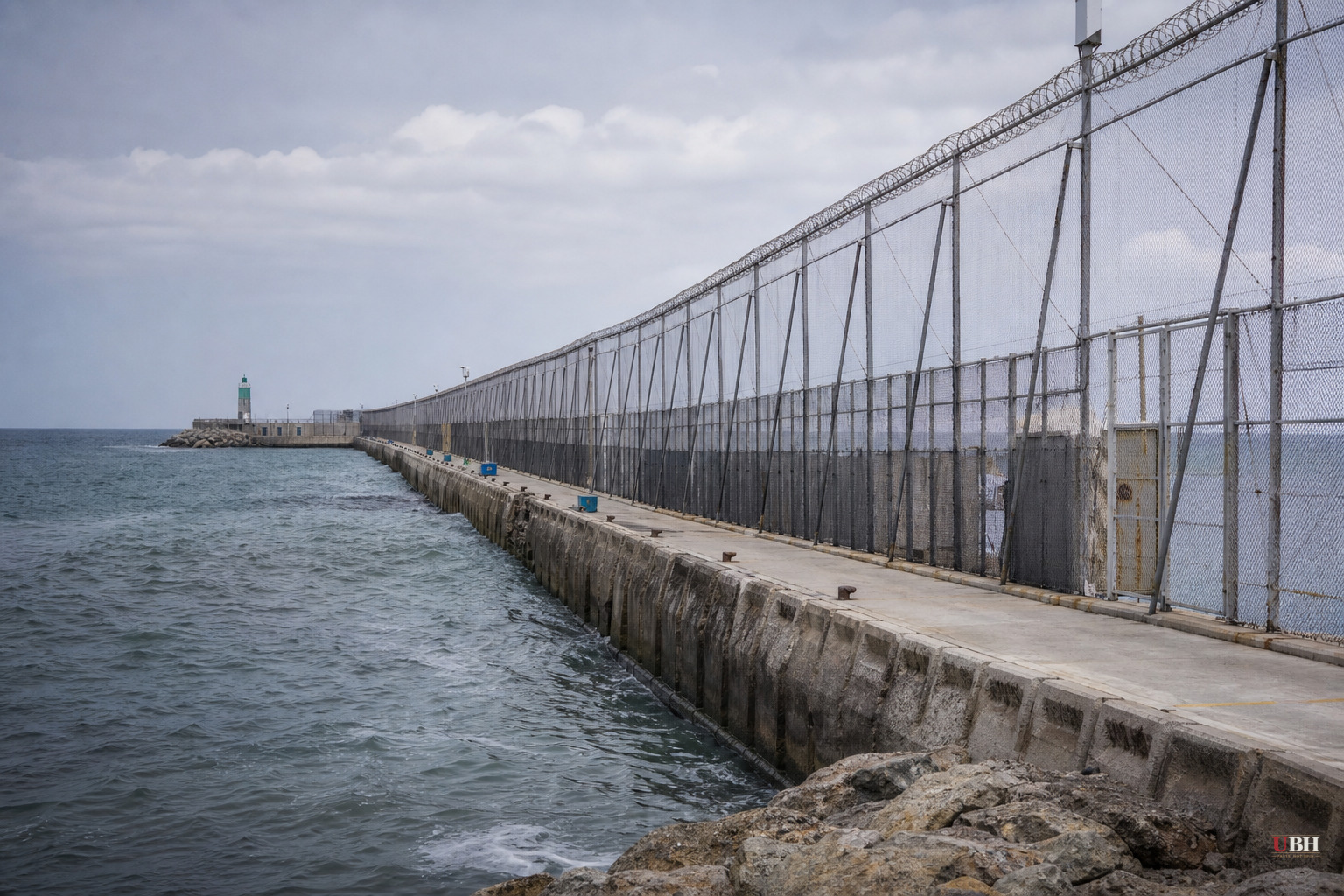
Spain has announced plans to build a 500-meter containment barrier on the sea border between Ceuta and Morocco, according to CBC. The move responds directly to how the breach happened, with some migrants crossing by swimming or by sea rather than only over land fences.
Some migrants who went back to Morocco described a border that was effectively open during the surge and said authorities did little to stop the crossings while they were happening, CBS News reported. The claim raises questions about enforcement failures on the Spanish or Moroccan side, or both, though neither government has detailed publicly why tens of thousands were able to cross largely unimpeded over a two-day span.
Political Fallout
The crisis has drawn far-right politicians and influencers to Ceuta, and their arrival triggered counterprotests. Alvise Pérez, a Spanish member of the European Parliament aligned with the far right, called Saturday evening for migrants to be expelled while facing an angry crowd. He ended up sheltering in a bar as residents banged on the windows until police escorted him out, CBS News reported.
Santiago Abascal, leader of Spain's far-right Vox party, visited Ceuta on Sunday and blasted the government, calling the surge "an invasion" and accusing what he called a "corrupt and traitorous government" of failing to protect Spain's borders.
Counterprotesters, including 20-year-old Ceuta student Noor Ahmed, pushed back hard against the visiting political figures. Ahmed called the presence of people like Pérez opportunistic, saying "they just want to take advantage of the humanitarian crisis Ceuta is currently experiencing."
That tension points to a real and unresolved argument. Concerns about uncontrolled mass border crossings, at a scale that overwhelmed a city of 84,000 in two days and left over 70 people dead, are a legitimate policy issue regardless of who raises them. Whether far-right figures were exploiting the tragedy for political gain, as Ahmed and others charged, and whether the underlying border-security failure was real, are two separate questions. Both can be true at once.
Neither CBS News nor CBC's sourcing addresses whether Spanish or Moroccan authorities have opened any formal investigation into how the border was breached so quickly, or whether officials on either side face accountability for the lapse. Spain's containment fence is a concrete next step. What remains unanswered is what happens to the migrants who did not return to Morocco and are still inside Ceuta, and whether Madrid and Rabat will coordinate on a longer-term fix beyond a half-kilometer barrier.
Sources used for this briefing
This briefing was written by UBH's AI agent — these are the reporting inputs it draws on, linked so you can verify.


