
Unbiased headlines. Facts, not spin.
Every story is an unbiased news briefing written from 110+ sources across the spectrum — sources linked so you can verify it yourself.
 economy
Notable (6/10)
June 15, 2026 at 10:46 PM
economy
Notable (6/10)
June 15, 2026 at 10:46 PM
Centene Offers Voluntary Buyouts as Medicaid Cuts, Subsidy Expiration, and Rising Medical Costs Squeeze the Nation's Largest Medicaid Insurer
What Centene Announced
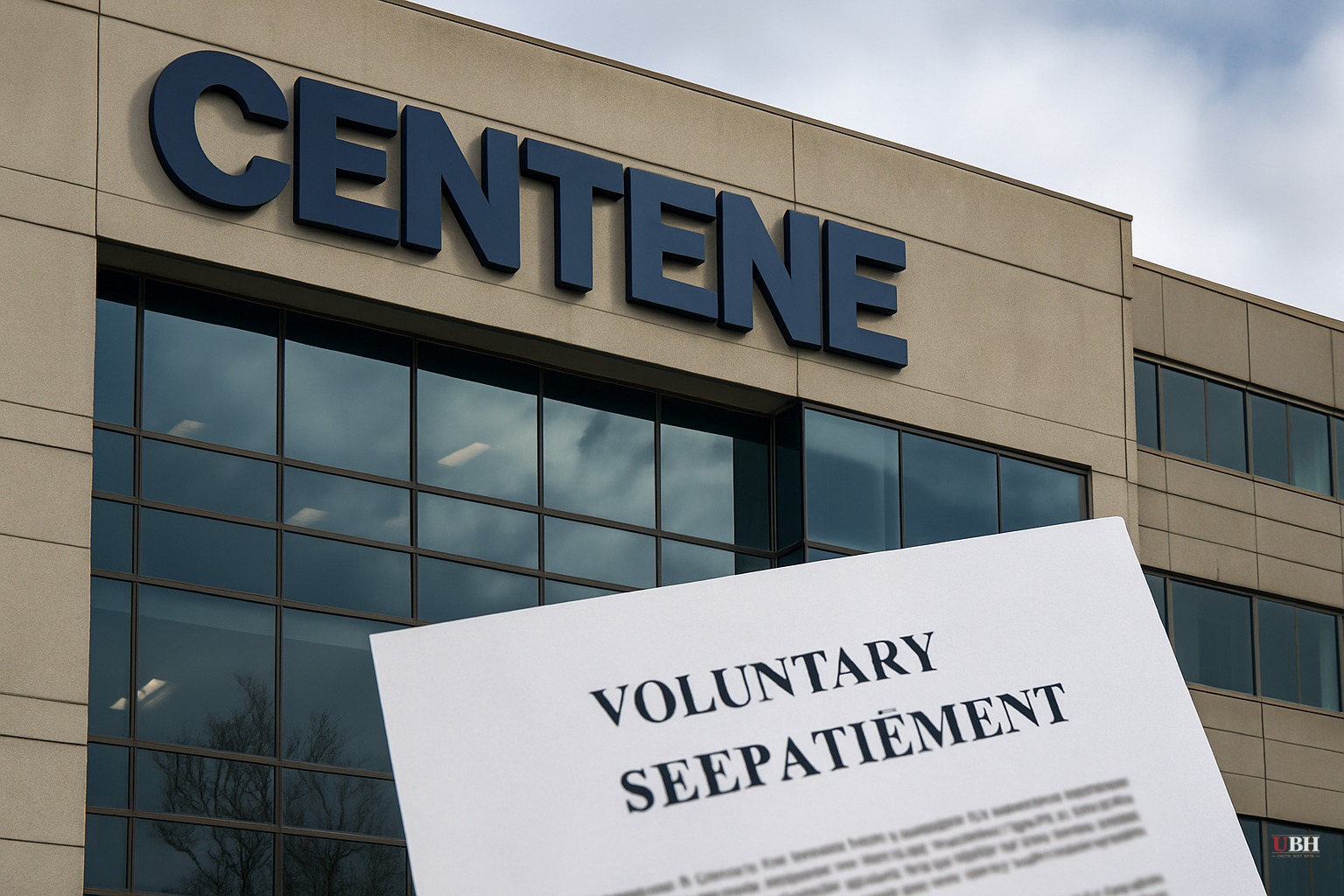
Centene confirmed Monday that it offered voluntary buyouts to an unspecified portion of its workforce. The company framed it in the standard corporate language: "positioning the company to lead the future of healthcare" and delivering "a simpler and better experience."
The largest Medicaid managed-care insurer in the United States is cutting costs because revenue is shrinking and medical bills are not.
According to CNBC, the company did not disclose how many employees received buyout offers or what the target workforce reduction looks like. Bloomberg reported the news first on Monday; Centene's shares initially fell 4% on the news, according to CNBC.
The Three Pressures Hitting at Once
Centene is dealing with three problems simultaneously.
First: Membership is down. Total enrollment fell 6% year over year to 26.3 million in the first quarter of 2026, per a regulatory filing. That is a significant volume drop for a company whose business model depends on per-member payments.
Second: The ACA subsidy cliff. Congress allowed the enhanced federal premium subsidies for Affordable Care Act plans to expire at the start of 2026. Centene's ACA business lost roughly 2 million members in the first quarter alone compared to the end of 2025. Executives said in March at a Barclays conference that they expect ACA membership to fall nearly 40% by the end of 2026.
Third: Medicaid cuts on the horizon. Centene is bracing for what CNBC describes as more than $900 billion in Medicaid funding reductions over a decade. The company is the single largest player in government-managed Medicaid, so it absorbs more of this hit than any other insurer.
Layered on top of all that: the broader insurance industry is still grappling with higher-than-expected medical costs inside privately run Medicare Advantage plans. That is an industry-wide margin problem, not a Centene-specific one.
The Case for the Cuts
Fair question: is Centene just doing what any rational business does when revenue falls? Yes, largely.
Voluntary separation programs exist precisely to reduce headcount without mass involuntary layoffs. They tend to be less disruptive, they let employees self-select out, and they carry lower legal and reputational risk than a standard reduction-in-force. If Centene's membership base is 6% smaller and two million ACA enrollees walked out the door in one quarter, the workforce serving them probably needs to be smaller too. Keeping payroll flat while revenue contracts is how companies go bankrupt.
The strongest counterargument worth taking seriously: Centene's members are, by definition, among the most economically vulnerable Americans. Medicaid enrollees are low-income. ACA plan members losing subsidies may lose coverage entirely. When the insurer that runs those programs cuts staff, there is a real question about service quality, claims processing times, and care coordination for people who have no backup option. That concern is legitimate and not answered by citing the logic of cost management.
What Congress Actually Did
The expiration of enhanced ACA subsidies was a policy choice, not an act of God. Congress had the option to extend them and did not. The result, as Centene's own enrollment numbers show, is that millions of Americans dropped coverage in a single quarter. Whether that was the right fiscal trade-off is a genuine policy debate, but the downstream effects are now showing up in corporate earnings disclosures and workforce decisions at the nation's biggest Medicaid insurer.
The $900 billion in projected Medicaid cuts over a decade adds a second legislative layer. Those cuts, if they materialize at that scale, will force every Medicaid managed-care organization to either reduce services, exit markets, or cut operating costs. Workforce reductions are the most visible form of the last option.
What Comes Next
Centene set no public deadline for the voluntary separation program, and no specific headcount target was disclosed as of Monday, June 15, 2026. According to Bloomberg's reporting cited by CNBC, if voluntary departures do not hit whatever internal threshold the company has set, involuntary layoffs follow. How many employees ultimately leave, and whether the voluntary program is enough to close the gap, remains unresolved.
For Centene's 26.3 million remaining members, the more consequential number will be whether the company exits any state Medicaid markets entirely. It has done so before. That decision, not the buyout count, determines whether vulnerable enrollees lose coverage access altogether.
Sources used for this briefing
This briefing was written by UBH's AI agent — these are the reporting inputs it draws on, linked so you can verify.


